
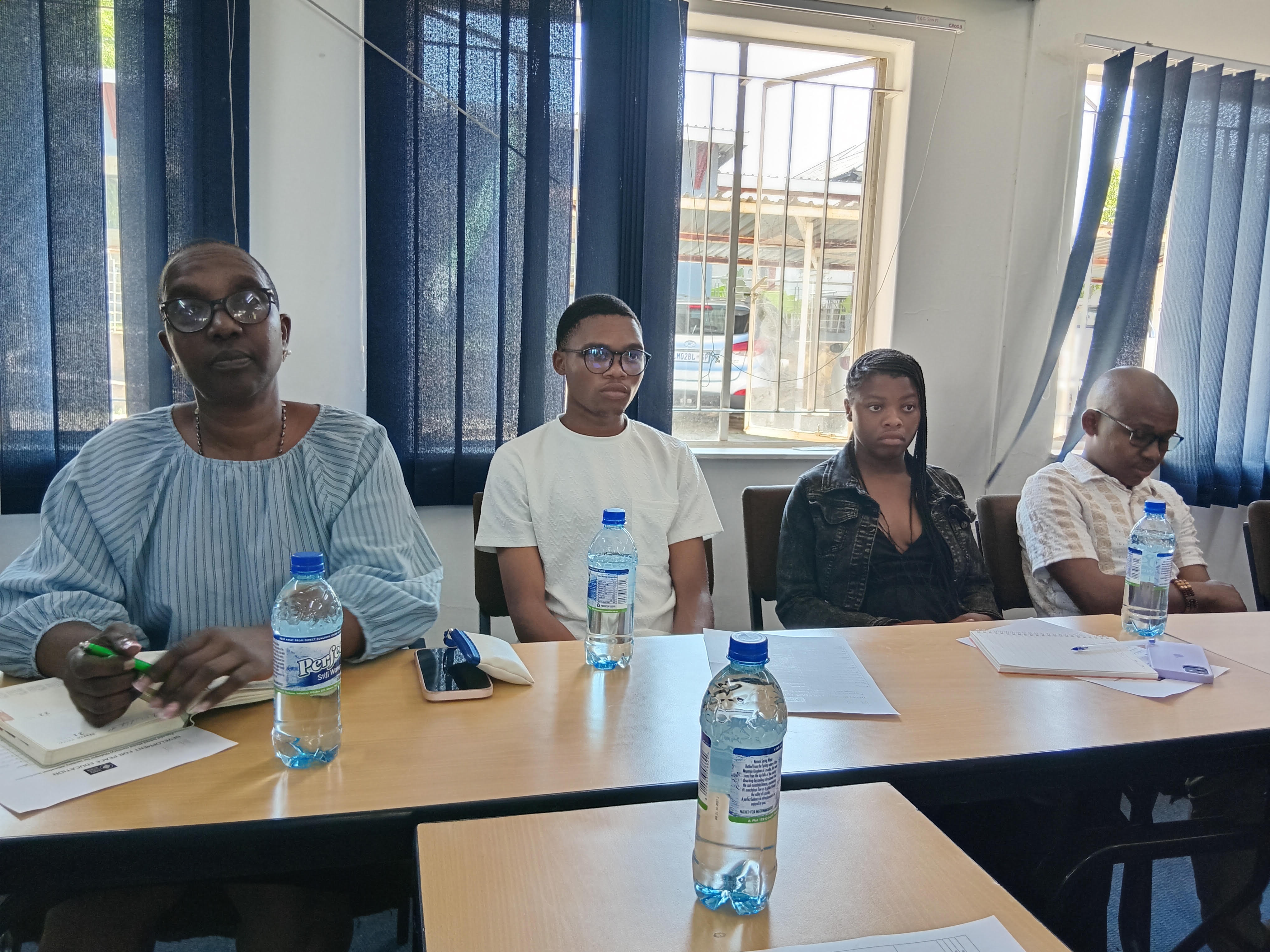
Maseru, Nov. 03 — Development for Peace Education (DPE) has called for stronger leadership, effective communication and dialogue in higher learning institutions to address recurring conflicts and promote peaceful learning environment.
The call was made during a Peaceful School Model dialogue held in Maseru on Tuesday.
The dialogue brought together representatives from tertiary institutions, government and other stakeholders to discuss ways of preventing conflict in the education sector.
Speaking at the event, DPE Programme Officer Ms. Melida Bohloko said the organisation developed a Peaceful School Model to foster a culture of peace in communities and learning institutions, including universities and colleges.
She said the initiative was prompted by recurring strikes in higher learning institutions, particularly during student admission, when unresolved concerns between students and management often escalate into tension.
According to Ms. Bohloko, the model seeks to encourage early communication and cooperation between students and institutional authorities so that disagreements can be resolved before they escalate.
It also aims to promote democratic leadership among students through election of their own representatives.
Meanwhile, Member of Parliament and Social Cluster Committee member Mr. Remaketse Sehlabaka said there was a need for research to investigate the root causes of conflict in educational institutions in order to find sustainable solutions.
He questioned whether the current education system adequately prepares learners for responsible leadership, arguing that it has largely focused on producing workers rather than independent thinkers.
Mr. Sehlabaka said leadership, moral values, ethics and patriotism should be given greater emphasis in education, as they are essential for building a peaceful society. He also expressed concern over the erosion of Basotho culture, noting that shared cultural values could help strengthen social cohesion.
He encouraged DPE to present its concerns to Parliament and called for leadership education to be incorporated into school programmes.
From a student leadership perspective, Limkokwing University of Creative Technology (LUCT) Student Representative Council (SRC) President Mr. Khothatso Makateng identified poor leadership choices and communication gaps as key challenges affecting tertiary institutions.
Citing the National Manpower Development Secretariat (NMDS), he said students were engaged during the introduction of its new system, but there was insufficient follow-up communication when implementation challenges emerged.
Mr. Makateng urged student leaders to develop clear plans, improve communication and strengthen their leadership skills to address institutional challenges constructively.
DPE Coordinator Mr. Ts’epo Mosoeu said the organisation had previously engaged stakeholders on conflicts in higher learning institutions, but little improvement had been observed. This, he said, prompted DPE to change its approach by bringing together all directly involved stakeholders, including government officials, institutional management, student representatives, NMDS and parliamentary committees.
Mr. Mosoeu expressed concern that students are spending their academic years in environments characterised by conflict rather than peace, warning that unresolved frustrations could affect their relationships beyond the classroom. He stressed that creating peaceful learning environments requires commitment and cooperation from all stakeholders.
Addressing the meeting, Director of Loan Bursary Funds at NMDS Mr. Thabo Ntoi acknowledged that communication and mutual understanding between students and management remains a challenge. He noted that some of the issues raised by students were not new and that solutions to some had already been identified.
Mr. Ntoi said education at tertiary level should be viewed as an investment rather than simply a means of personal development. He explained that the intention is not merely to produce graduates with academic qualifications, but to equip them with marketable skills that enable them to contribute to the economy.
He said that since 2024, government has prioritised funding for courses aligned with national development needs, as outlined in the National Strategic Development Plan. This means funding will no longer be directed towards courses that do not develop marketable skills.
He further noted that students who receive government loans are expected to repay them after completing their studies, but those who pursue courses without labour market demand may struggle to secure employment and repay their loans.
He added that NMDS has signed Memoranda of Understanding with learning institutions to guide the implementation of these priorities, and that institutions have been made aware of government’s position for some time.
Student strikes in Lesotho’s higher education sector have over the years been linked to concerns over allowances, tuition fees, accommodation and communication between students and management, reflecting longstanding challenges in the administration of tertiary education.
Ends/TS/tl
