
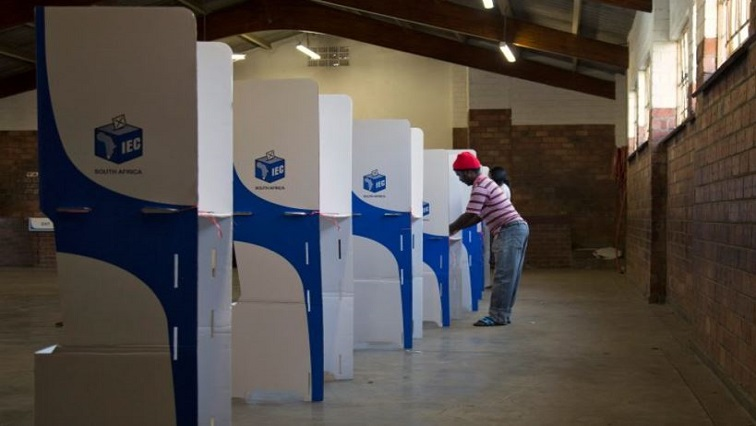
Maseru, Noc. 05 — The African National Congress (ANC) is maintaining a narrow lead over the Democratic Alliance (DA) as South Africa continues counting votes following Wednesday’s Local Government Elections.
The latest available results, recorded at approximately 06:32 on Thursday, November 5, indicate that 15 percent of the country’s 23,696 voting districts had been counted, with the ANC leading the national proportional representation ballot with 32 percent, followed closely by the DA at 31.3 percent.
The uMkhonto weSizwe Party (MKP) was in third position with five percent, followed by the Economic Freedom Fighters (EFF) at 4.9 percent, Freedom Front Plus (FF+) at 4.6 percent and the Patriotic Alliance (PA) at 4.4 percent.
Although the ANC is ahead nationally, the early results point to a highly competitive election, with opposition parties making their presence felt in several parts of the country.
The results tracker showed the ANC leading in six provinces, while the DA was ahead in two and the MK Party in one, although counting was still underway in several areas.
The election has attracted considerable attention as it presents another important test for the ANC, which has experienced a gradual decline in electoral support over the past decade amid growing public dissatisfaction with service delivery, unemployment, crime and corruption.
In the 2021 Local Government Elections, the ANC received approximately 46 percent of the national vote, marking the first time since the advent of democracy in 1994 that it failed to secure an outright majority in a national election of this kind. This represented a significant decline from the 62 percent it received in the 2011 municipal elections.
The DA, meanwhile, has continued positioning itself as the ANC’s main challenger, while parties such as the EFF, MK Party, ActionSA and the Patriotic Alliance are competing for support across different municipalities.
SA holds Local Government Elections every five years to elect representatives who serve in municipal councils across the country.
Unlike national elections, which determine the composition of Parliament and provincial legislatures, municipal elections determine who governs local authorities responsible for providing essential services such as water and sanitation, electricity, refuse collection, local roads and other community infrastructure.
Voters elect ward councillors to represent their respective communities and also vote for political parties through the proportional representation system, which determines the distribution of additional council seats.
The composition of municipal councils subsequently determines which political parties can govern, with parties required to negotiate coalitions where none secures an outright majority.
The 2026 elections are particularly significant because several major metropolitan municipalities are expected to remain highly contested, raising the possibility of coalition administrations.
In the previous municipal elections, coalition arrangements became increasingly important in cities such as Johannesburg, Tshwane and Ekurhuleni, where no single party secured an outright majority.
The latest results are therefore being closely watched, particularly in major metropolitan areas where political control could have implications for service delivery, municipal stability and governance.
The Electoral Commission of South Africa (IEC) is continuing with the counting and verification process, with the final results expected within seven days of the elections.
Until then, the emerging figures remain provisional and the national political picture could change as more voting districts are processed.
Ends/MP/tl
