
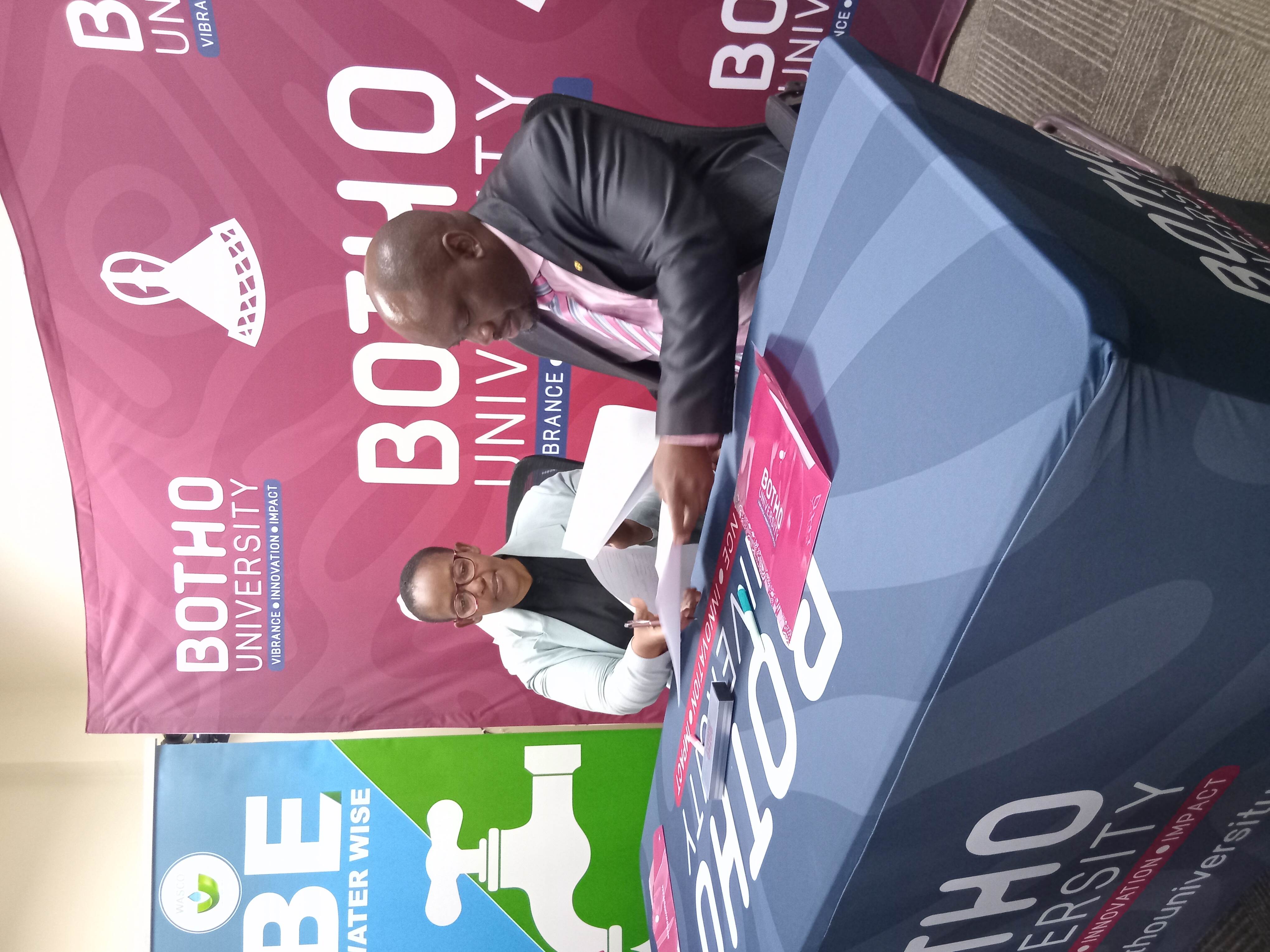
MASERU, Sept. 15 — Botho University and the Water and Sewerage Company (WASCO) have partnered to strengthen the link between higher education and the workplace, with a focus on giving students practical experience and preparing them for future employment.
Speaking at the signing of a Memorandum of Understanding (MoU) in Maseru on Tuesday, Botho University Country Director Ms. Makhosi Hlalele described the partnership as a bridge between academia and industry rather than merely a formal agreement.
She said academia could not be separated from industry, adding that higher education could not exist as an isolated space of theory while communities and industries dealt with complex real-life challenges.
“Real life does not happen solely in the four walls of the classroom. It happens when students confront genuine, pressing issues facing our nation,” she said.
She said the partnership would give students an opportunity to engage with real-world challenges, including sustainable water management, urban infrastructure resilience and digital transformation.
She indicated that the partnership came at a critical time when there was a rapid shift in the global labour market.
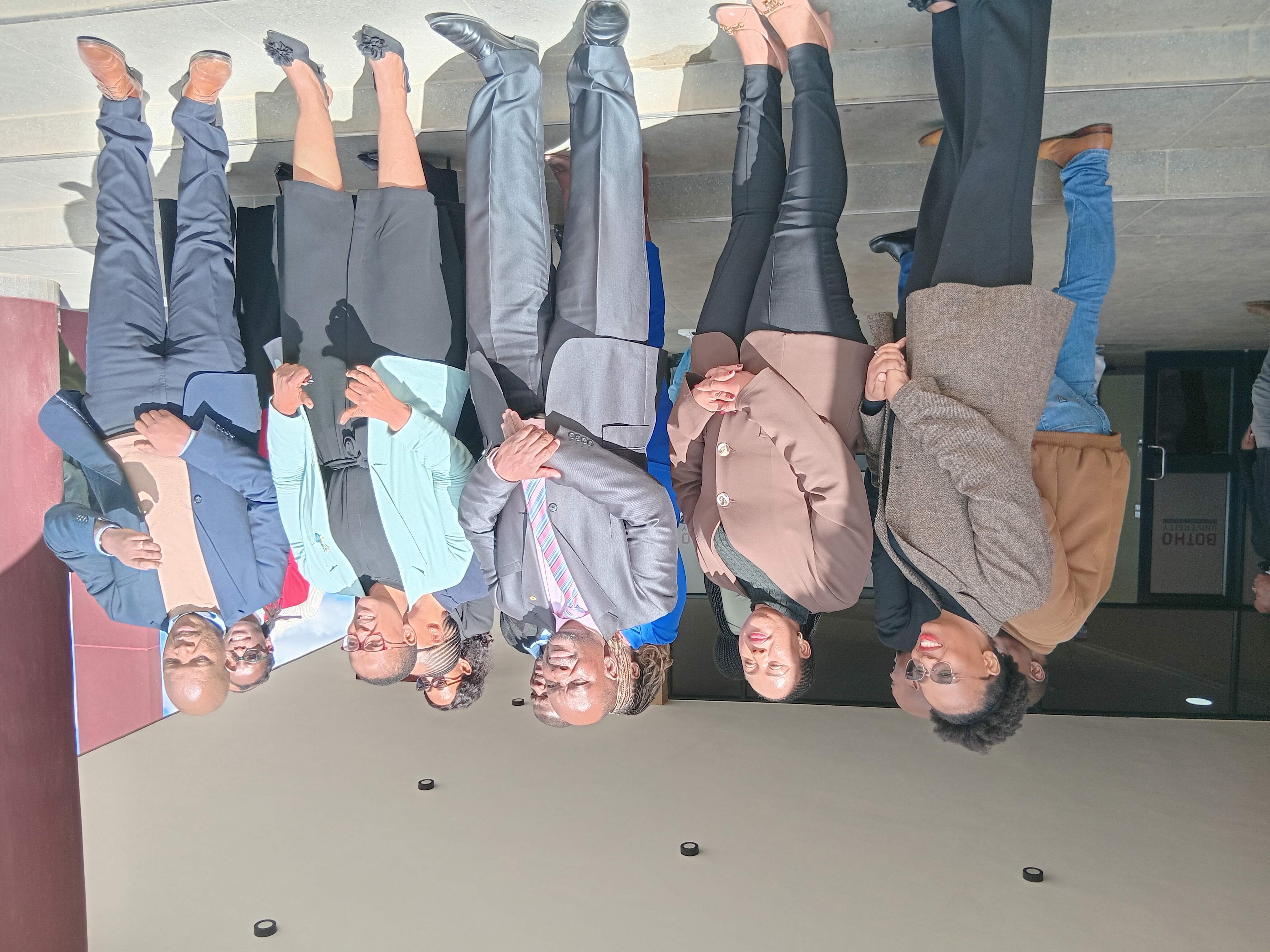
Ms. Hlalele said Botho University practised what it called challenge-driven education, an approach that encouraged students to apply classroom knowledge to practical problems facing society.
Speaking at the same event, Manager in the Faculty of Engineering and Technology Mr. William Nkomo said the partnership represented an important step towards strengthening the connection between education and the world of work.
He said the university was committed to producing graduates who were not only academically qualified but also possessed the practical skills, professional competencies and experience needed to contribute meaningfully to industry and national development.
“Our partnership with WASCO provides an excellent platform to achieve this objective,” he said.
He said the MoU would facilitate collaboration in areas including student engagement and experiential learning, research and innovation, professional development, knowledge sharing, industry engagement, guest lectures, curriculum relevance and graduate employment opportunities.
For students, he said, the partnership would provide valuable exposure to the real working environment and enable them to apply knowledge and skills acquired in the classroom to practical challenges.
He added that the university would also benefit from industry insights that could help it continuously improve the relevance of its academic programmes.
“For us all, this collaboration provides an opportunity to engage with emerging talent, contribute to skills development, share valuable industry expertise, and potentially identify talented graduates who can contribute to the organisation’s future growth and development,” he said.
Mr. Nkomo stressed that the value of the partnership extended beyond the two institutions, saying it represented an investment in developing skilled, innovative and employable young professionals who could contribute to Lesotho’s socio-economic development.
He said the university looked forward to a partnership that would be practical, mutually beneficial and sustainable, rather than an agreement that would simply be signed and left unused.
“We believe that by working together, we can transform collaboration into real opportunities for our students,” he said.
Meanwhile, WASCO Chief Executive Officer Mr. Lebohang Makara said the partnership came at a time when the organisation was looking at new ways of improving its capabilities and responding to rapid technological changes.
He said working with the university would enable WASCO to learn from young people while also exposing students to the realities of the workplace.
Mr. Makara said innovation and impact were among the key areas the organisation wanted to focus on, particularly as it sought to improve the efficiency and effectiveness of its operations.
He said WASCO needed to keep pace with developments in the world, including artificial intelligence, acknowledging that younger generations had grown up with technological capabilities that differed from those of previous generations.
“The younger generation are far more advanced than where we were when we were their age. And that’s a fact. That’s what we need to acknowledge. And the question is, what are we going to do about this?” he said.
He said the partnership should not result in another MoU that would simply gather dust in a drawer, but should lead to tangible programmes and opportunities.
Mr. Makara said WASCO was committed to identifying ways in which the partnership could contribute to both the organisation’s development and the future of students.
He said the organisation was also looking towards launching a programme under the partnership, adding that the collaboration would provide an opportunity to explore new ideas and approaches.
The collaboration comes amid growing calls for stronger links between institutions of higher learning and industry to ensure that graduates are equipped with practical skills that respond to the changing demands of the labour market.
Ends/TS
