
MASERU — Marking the 20th anniversary of the Aif for Trade Initiative, the World Trade Organization (WTO) members adopted a declaration on October 30 repositioning the initiatives as “Aid for Trade: partnerships for trade and development”. The declaration was adopted at a meeting of the Committee on Trade and Development which wrapped up the two day 10th Global Review of Aid for Trade held at the WTO headquarters in Geneva.
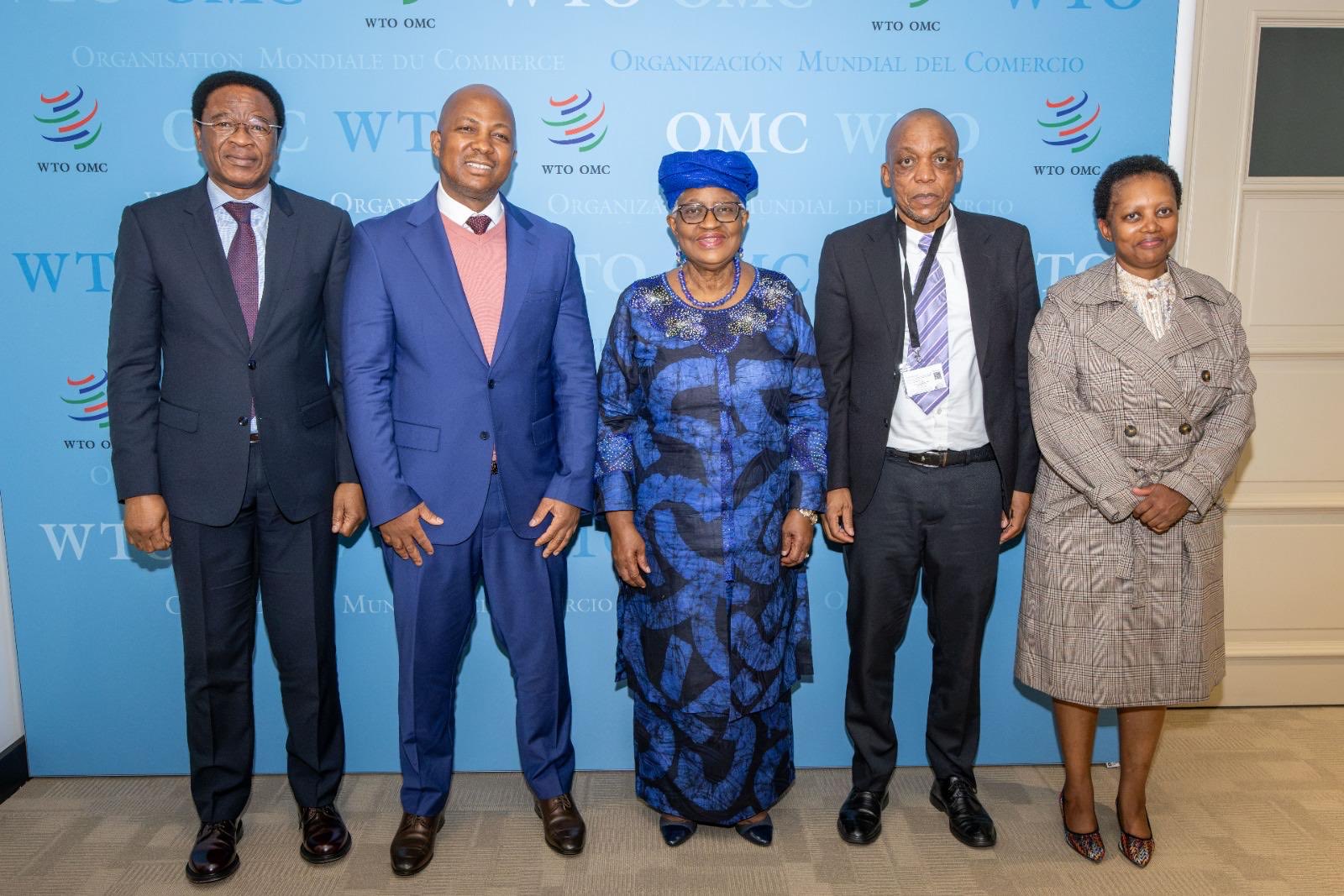
Lesotho was represented by Minister of Trade, Industry and Business Development Mr. Motlatsi Maqelepo accompanied by Ambassador and Permanent Representative to the Swiss Confederation, the United Nations Office in Geneva, the WTO and other international organizations in Switzerland Mr. Ts’iu Khatibe.
The declaration recognises the importance of technical assistance and capacity building for implementing WTO rules and facilitating the integration of developing economies, including least developed countries (LDCs), into the global trading system. It acknowledges the evolving development cooperation context and recognises the need to explore, attract and scale up additional resources through trade and development cooperation, including by leveraging grant, concessional finance and blended finance to catalyze effective private sector partnerships.
“This is an example of how we are working to renew the WTO, brick by brick,” WTO Director-General Ngozi Okonjo-Iweala said in welcoming the declaration.
“Members made this declaration possible. The challenge now will be to make it count, to work together to do much more for growth and development worldwide. So let us carry today’s spirit beyond this room into greater opportunities people can see and seize,” said the Director-General.
Ambassador Elmer José Germán Gonzalo Schialer Salcedo of Peru, Chair of the Committee on Trade and Development, said: “This declaration is a result of active engagement of all members. The leadership of Australia and Barbados has been exemplary. This is the first multilateral outcome on this topic after 20 years and it gives a renewed impetus to this initiative.”
Members also considered a communication by India on trade-related capacity-building. The communication highlighted India’s South-South and triangular cooperation efforts, including through the Indian Technical and Economic Cooperation (ITEC) Programme, which has helped strengthen the skills of over 80,000 participants since 2014.
The Chair encouraged members to maintain momentum and to keep working on building stronger partnerships that help expand trade opportunities for all. “Discussions over the past two days show what sustained support can achieve, and they also remind us how much more remains to be done,” he said.
During his meeting with the WTO Director General Okonjo-lweala, talks focused on Lesotho’s potential to leverage international aid and strategic investments for economic value addition, job creation, better trade and regional growth.
He highlighted that a changing global economy marked by high interest rates, rising public debt and shifting donor priorities requires Lesotho to move beyond traditional low-cost concessional financing toward new models of public-private partnership and productive economic investment.
Aid for Trade aims to help developing economies tackle trade-related obstacles, strengthen their capacity to trade and build the infrastructure they need to integrate into the international trading system. It is part of Official Development Assistance (ODA), comprising both grants and concessional loans. Aid for Trade accounts for one-fifth of total ODA.
Meanwhile reports have shown that African Continental Free Trade Area (AfCFTA) has the potential to increase intra Africa trade by 25 percent by 2040 while boosting income by up to 20 percent by 2035 and create up to 30 million jobs.
Developing economies represent two-thirds of WTO members. Supporting their greater integration into global trade is a major priority for the WTO. WTO agreements have special provisions aimed at helping developing economies implement WTO rules while WTO technical assistance and other WTO-supported initiatives are aimed at increasing their capacity to trade.
Ends/AT/tl
