
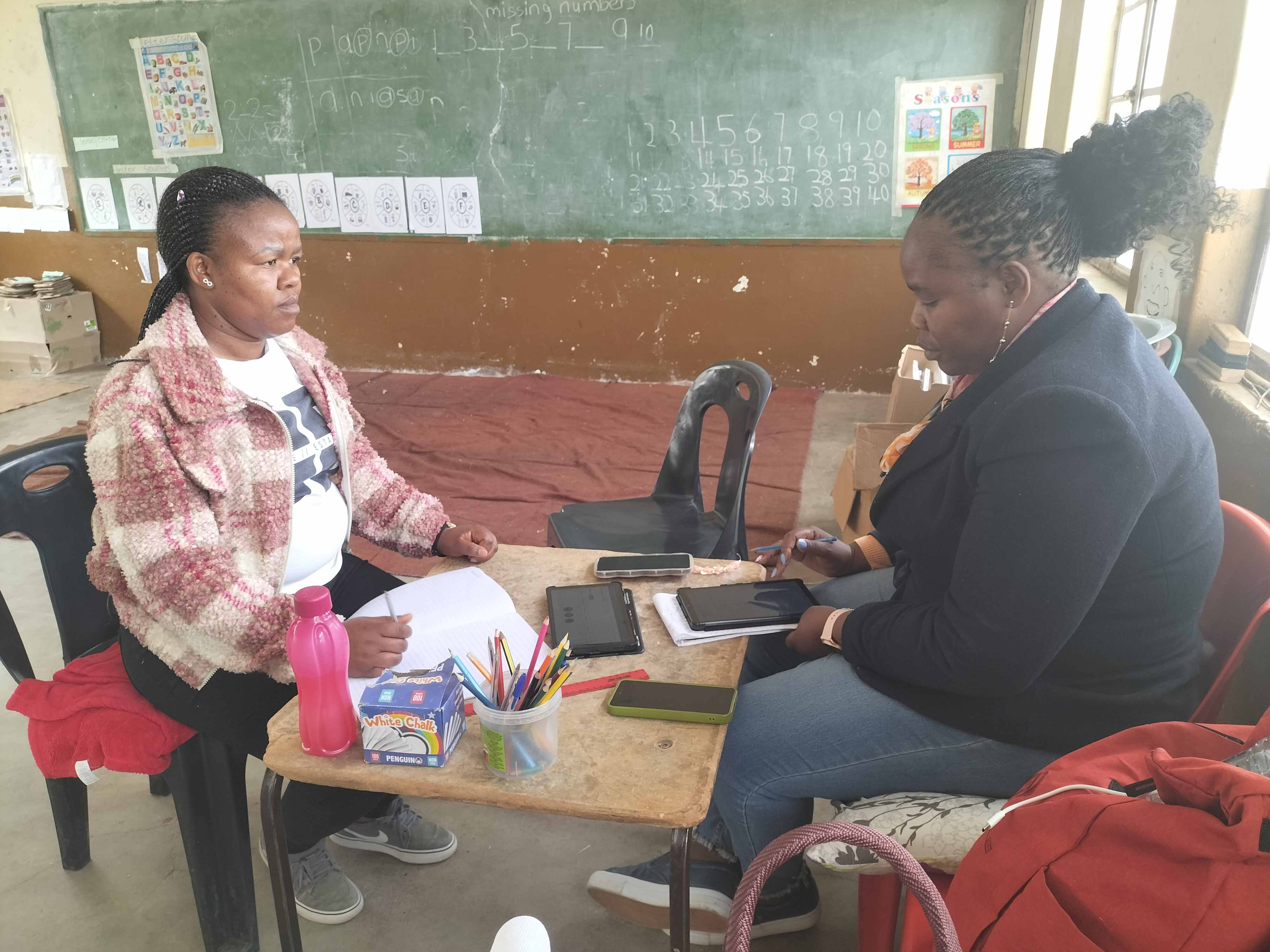
BEREA, Sept — The Network of Early Childhood Development of Lesotho (NECDOL) is conducting a campaign to strengthen the capacity of reception class teachers to use digital devices to assess children’s learning and development progress.
The initiative forms part of NECDOL’s continued support for foundational education and focuses on teachers in schools with reception classes and selected Early Childhood Care and Development (ECCD) centres.
According to NECDOL Programmes Manager Ms. Ma-Lord ‘Mefane, the organisation is implementing the School Readiness Initiative (SRI), which provides capacity-building programmes for teachers.
Ms ‘Mefane said since the inception of the SRI programme in 2020, with support from the Federer Foundation, its primary focus has been to improve the quality of early childhood education.
She said in the past, children would transition to primary school mainly because they had reached the required age, without an assessment of their development and readiness for Grade One.
She said the SRI programme has three pillars: joint responsibility, school readiness and teacher competence.
Ms. ‘Mefane explained that joint responsibility recognises that children’s education requires a multi-sectoral approach, with parents, communities and other stakeholders playing a role in promoting children’s healthy development and education.
On school readiness, she said the programme focuses on whether schools have appropriate facilities to support children’s learning and development, including playgrounds, age-appropriate toys, toilets and activities that promote holistic and cognitive development.
She said such activities also help children develop problem-solving and critical-thinking skills.
Ms. ‘Mefane said teacher competence is a critical component of the SRI programme, adding that teachers have been provided with tablets equipped with programmes to facilitate teaching and learning.
She said the digital tools include a child assessment component that enables teachers to monitor individual children’s progress.
Through the tools, teachers can identify children’s strengths and weaknesses and detect possible learning difficulties at an early stage, allowing appropriate support to be provided.
Ms ‘Mefane said the SRI is an effective programme adopted by the Government and is being implemented in legally registered schools and ECCD centres.
She encouraged unregistered schools and ECCD centres to take the necessary steps to register so that they can benefit from opportunities provided through the programme.
Meanwhile, Tsoela-pele Community Primary School Reception Class Teacher Ms. Malefu Mokitimi said although it was initially difficult to understand how to use the tablets, they have proved to be sophisticated tools that have made teaching and learning easier.
Ms. Mokitimi said the programme plays an important role in guiding children through learning activities while helping teachers assess their cognitive development.
She added that the digital learning tools enable teachers to monitor each child’s progress and prepare them for Grade One.
Ms. Mokitimi applauded NECDOL for its continued support in implementing the programme in collaboration with the Ministry of Education and Training.
According to NECDOL, the School Readiness Initiative has so far reached all districts in the country.
Ends/RM
