
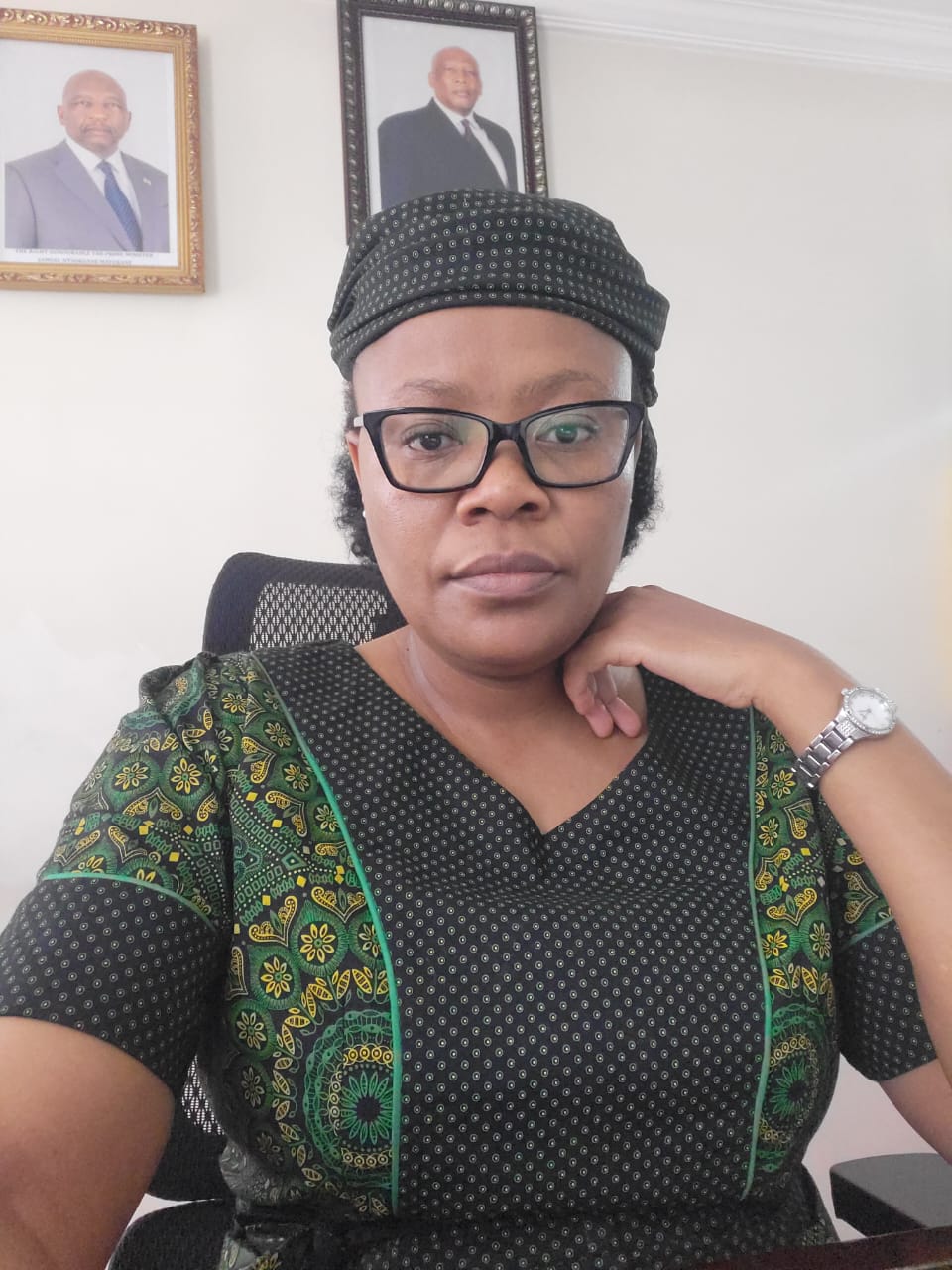
Addis Ababa, Nov. 25 — Lesotho’s Ambassador to Ethiopia, H.E. Nts’iuoa Sekete, has challenged young Basotho to pursue specialised fields of study through the 2027 Mauritius–Africa Scholarship Scheme, saying the country needs skilled professionals to drive economic growth and address persistent skills shortages.
The Government of Mauritius has opened applications for the scholarship, which offers opportunities for full-time studies at diploma, undergraduate, Master of Philosophy (MPhil) and doctoral levels.
In the 2026 scholarship cycle, only four Basotho secured scholarships against Lesotho’s reported allocation of 50, a development H.E. Sekete said should concern the country amid high youth unemployment and the need for specialised skills.
“We cannot afford to underutilise educational opportunities when our country faces significant skills shortages and high youth unemployment,” she said in an interview with the Agency.
She urged prospective applicants to look beyond conventional career choices and consider specialised programmes that are either unavailable or not widely offered in Lesotho.
H.E. Sekete said the country’s Extended National Strategic Development Plan identifies agriculture, manufacturing, mining, tourism, technology, innovation and infrastructure development as critical drivers of economic growth, requiring deliberate investment in the skills needed to develop these sectors.
Among the programmes offered at participating Mauritian institutions are mechatronics engineering, robotics and automation, precision engineering, food science and technology, chemical engineering, physics with specialisation in renewable energy, financial technology (FinTech), actuarial studies, cybersecurity, telecommunications engineering with networking, animation and visual effects, game design, digital film production, statistics and data analytics.
She said qualifications in mechatronics, robotics, automation and precision engineering could help modernise manufacturing, improve industrial productivity and diversify the country’s industrial base beyond traditional textile production.
Food science and technology, meanwhile, she said could strengthen agro-processing, food preservation, food safety, nutrition and commercial agriculture, while supporting the production of value-added goods for export.
She further said chemical engineering could contribute to mineral beneficiation, industrial processing, water treatment and the development of new manufacturing industries.
She said studying physics with a specialisation in renewable energy could help Lesotho harness its hydropower, solar and wind energy resources and position itself as a competitive green economy.
She also identified FinTech and actuarial studies as important for modernising financial services, expanding financial inclusion, strengthening insurance markets and developing innovative investment products.
She said cybersecurity and telecommunications engineering with networking could support the country’s digital transformation, protect critical national infrastructure and strengthen its participation in the global digital economy.
In the creative sector, she animation and visual effects, game design and digital film production could unlock opportunities in the creative industries, promote local storytelling and create employment in international digital markets.
Statistics and data analytics, she added, could strengthen evidence-based planning, economic forecasting, business intelligence and technological innovation.
Ambassador Sekete said the country needs a generation capable of designing industrial machinery, developing agricultural technologies, processing minerals locally and building secure digital platforms to turn its natural resources into commercially viable products.
She further challenged prospective applicants to consider how their chosen qualifications could help solve national problems and create employment opportunities. “I therefore challenge every prospective applicant to ask themselves: What problem can I solve for Lesotho through the qualification I choose? What industry can I help establish? What expertise can I bring home that our country currently needs?” she asked.
She emphasised that technical and vocational qualifications were equally important, noting that Lesotho needed highly skilled technicians and industrial specialists alongside university graduates.
The ambassador particularly encouraged young women to pursue engineering, science, technology and mathematics, including disciplines traditionally dominated by men.
She also urged young people from rural communities and disadvantaged backgrounds not to exclude themselves from the opportunities, stressing that talent was not determined by geography or family circumstances.
The 2027 scholarship scheme provides financial assistance towards tuition fees, a monthly living allowance of 16,500 Mauritian rupees and return airfare, subject to its terms and conditions.
Prospective applicants have been urged to begin identifying suitable programmes, applying to eligible Mauritian institutions and preparing the required documentation early, as some participating institutions have admission deadlines preceding the national application deadline.
Ambassador Sekete has also appealed to parents, teachers, school principals, career guidance counsellors, youth organisations and the media to disseminate information about the scholarship across all ten districts.
She expressed appreciation to the Government and people of Mauritius for their continued investment in African human capital, describing the initiative as an example of meaningful South–South cooperation.
She called on young Basotho to be ambitious and venture into fields beyond those with which they are familiar, saying the country’s economic future would partly depend on their willingness to acquire new knowledge and expertise.
“Let us not import tomorrow the expertise we have an opportunity to develop today,” she said, urging young people to apply, encourage others to do the same and share the opportunity.
Applications in Lesotho must be submitted to the Lesotho National Commission for UNESCO by Friday, March 12, 2027, at 4:30 p.m.
Further information and application forms are available at https://tertiaryeducation.govmu.org/te/index.php/mass/.
Ends/MPM/tl
