As artificial intelligence reshapes photography, design and publishing, Basotho creatives are losing work while the country’s copyright regime remains stuck in 1989.
Qacha’sNek, Aug. 14 — In a small print shop in Lesotho, graphic designer ’Maleballo Motaung spends up to three days repairing posters that Artificial Intelligence (AI) software created in less than a minute.
Clients arrive with AI-generated logos and designs downloaded from their phones, expecting only printing services. The creative work that once paid her bills has increasingly become unpaid correction work.
Across Lesotho, photographers are losing corporate contracts, designers are redesigning AI-generated artwork for free, and entrepreneurs are replacing creative professionals with algorithms. Yet while AI is rapidly reshaping the country’s creative economy, the law governing copyright was written in 1989, decades before machines could generate images, music, text and designs on command.
That growing disconnect has placed Lesotho in an increasingly precarious position: a country with an artificial-intelligence policy for the future, but a copyright regime from the past.
Motaung, founder of SkyInk and a graphic designer by profession, says the introduction of AI has brought both opportunities and losses. “For some clients, they come with their own AI-generated designs for either logos or posters and require only printing services from me,” she says. “Before AI, they would pay for both design and printing.”
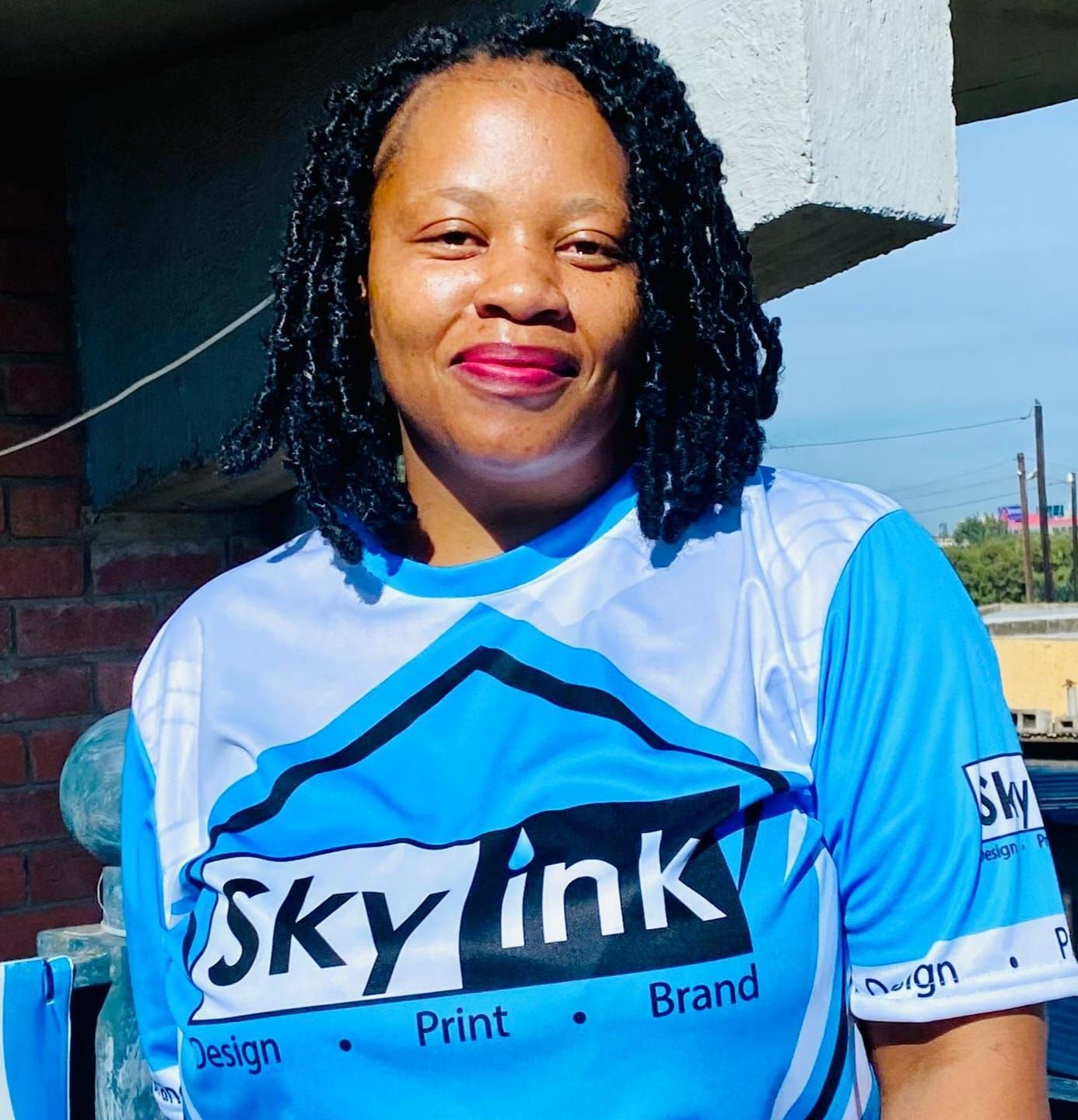
The result has been a significant decline in design income. She says AI-generated designs are often incompatible with commercial printing because of colour profiles, shadows and other visual elements that do not translate properly into ink. “Every time they bring AI designs, I have to redesign them,” she says. “Unfortunately I do it for free because they don’t understand that it is not compatible with printing.”
What AI produces in minutes can take her up to three days to recreate manually. “There is a lot that AI includes which we don’t when designing, so it takes a lot of time to redesign,” she says.
Although printing large volumes of AI-generated material has helped sustain her business, she says original design work has declined sharply.
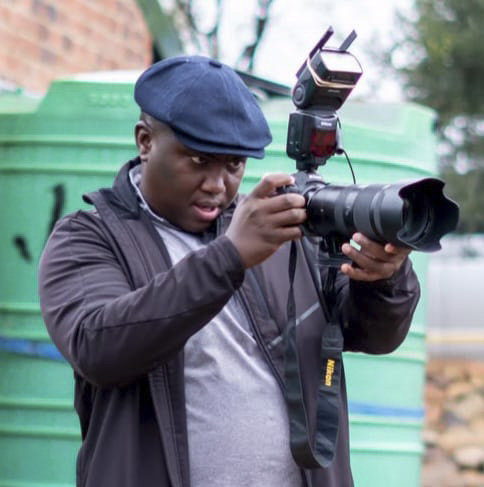
Photographer Khotsofolang Koloi says AI has transformed photography in equally dramatic ways. On the positive side, he says, AI has dramatically improved editing speed and workflow efficiency. “What would take a photographer hours, even days to edit, AI tools do in a blink of an eye and often with excellent results depending on the prompt the user gives,” he says.
But the same technology also makes image manipulation easier and intellectual-property claims more difficult. “With AI, the photographs could be easily altered so much that it could be almost impossible to make an IP claim,” he says.
Koloi says he knows photographers whose contracts with major corporate clients were terminated after companies opted for cheaper AI-generated content instead. “For corporations, AI-produced content is way cheaper and comes with fewer obligations,” he says. “When photographs are used for commercial purposes, individuals who are photographed have to give consent and at times be paid, whereas AI-generated content can be used with no or fewer requirements.”
He fears the profession itself is being devalued. “I think in time it is also going to make the price of photography significantly go down.” His greatest concern is not only job losses, but also the absence of legal protection.
“AI is a threat to our career,” he says. “The more AI becomes good, the more it is going to be difficult for us as photographers and content creators to get jobs. Something in terms of laws and policies has to be urgently developed to save our career.”
He also believes many photographers do not fully understand that they own copyright in their work. “Most photographers don’t understand that they have rights over their work,” he says. “Once they have been paid for the initial production of the work, for them that’s the end of the matter.”
While creatives worry about losing work, AI users are embracing the technology for the opposite reason. Thabiso Ralitomoso, who uses AI to generate images, designs, text and music, says AI has become his preferred creative tool because it is affordable, accessible and saves time. “Prompting AI is more convenient than having to go and explain what I need to another person, and it even enhances what I wanted,” he says.
Like many users, he assumes that because he wrote the prompt, the resulting work belongs to him. “I consider the AI work as my own because the result is basically my prompt output,” he says. He says he would be disappointed if he could not claim ownership of AI-generated content.
That assumption, however, is precisely where Lesotho’s copyright debate becomes legally complicated.
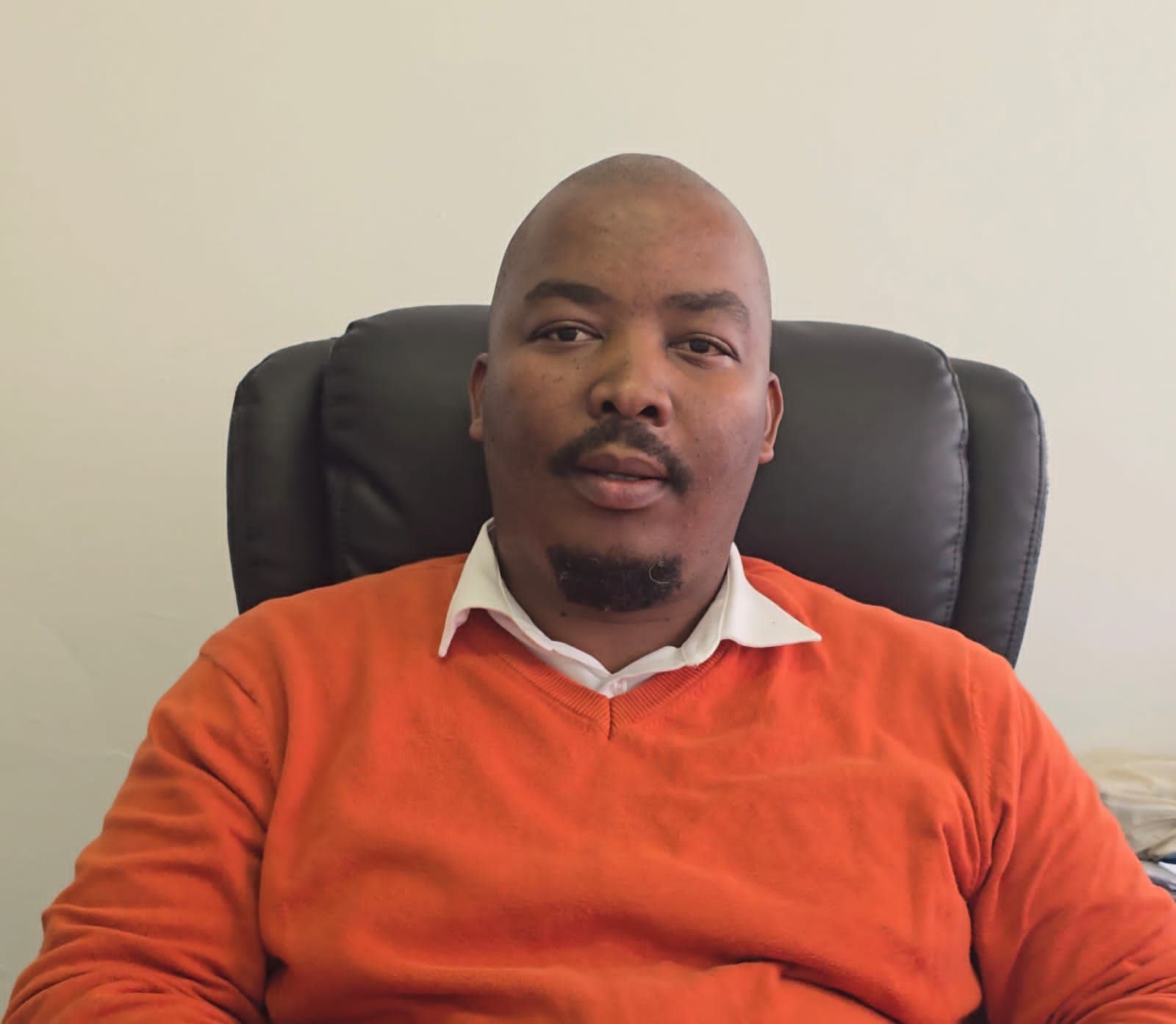
According to Advocate Maema Chaka, Chief Executive Officer of the Lesotho Copyright Society of Authors and Artists (LESCOSAA), copyright protects original expressions created by the human mind. “For something to be considered an original production, it has to show your input in a form of creativity,” he says. “We protect expressions, and a prompt is the same as an idea, which is not protected by law.”
In other words, entering instructions into an AI system does not automatically make a person the copyright owner of the resulting image, song or text. “AI-generated content doesn’t fall under the protection of copyright as it protects creations of the human mind, not the output generated by AI,” Advocate Chaka says.
He says the distinction between an idea and its expression is fundamental to copyright law.“Prompt is equated to an idea or concept,” he says. “What copyright protects is the expression of that idea.”
The legal uncertainty has major implications for businesses and creators increasingly relying on AI tools. A company using AI to generate a logo may assume ownership of that design, but under Lesotho’s current copyright framework, that assumption is not clearly supported by law.
Advocate Chaka argues that AI becomes even more problematic because many generative AI systems are trained using existing copyrighted works.
“Our country needs policies to regulate usage of AI so that collective management organisations will know a way to license generative AI companies,” he says. “The companies train their AI models using protected work, and to use protected work in any way, one needs authorisation of the owner’s work.”
He believes Lesotho’s creative industry is not ready for AI. “There are already very low levels of awareness in relation to copyright in the creative industry and intellectual property in general,” he says. “Our law is already highly lacking and we need to reform it.”
Lesotho’s principal copyright legislation, the Copyright Order, 1989 (Order No. 13 of 1989), protects original literary, artistic and scientific works and grants copyright owners exclusive economic rights over reproduction, distribution, adaptation and communication of their works.
The Copyright Regulations, 2015 define an author as the creator of an original literary, artistic or scientific work and recognise original literary, artistic, musical, dramatic and scientific works.
Photography is explicitly protected as an artistic work. Yet neither the Copyright Order nor the Regulations expressly addresses generative artificial intelligence. “The current Law barely covers the digital space because back then there was no AI,” Advocate Chaka says. “Our law is outdated as it doesn’t cover a lot of things that happen in the digital space.”
He argues that Lesotho should modernise its legislation to align with major international copyright instruments, including the WIPO Copyright Treaty (WCT), the WIPO Performances and Phonograms Treaty (WPPT) and the Beijing Treaty on Audiovisual Performances.
The gap becomes even more significant because AI-generated works may incorporate or reproduce protected material created by others, raising difficult questions about infringement, derivative works and compensation.
The copyright questions surrounding AI are not unique to Lesotho.
The World Intellectual Property Organization (WIPO) has identified artificial intelligence and intellectual property as a major emerging policy issue, including questions about human creativity, authorship and the use of copyrighted works in AI systems.
International copyright authorities are increasingly examining how much human creative input is necessary for AI-assisted material to qualify for copyright protection.
The United States Copyright Office has similarly concluded that copyright protection depends on sufficient human creative contribution. Across Africa, governments are beginning to confront the same dilemma.
The African Union adopted its Continental Artificial Intelligence Strategy in 2024, promoting an Africa-centred approach to AI governance that emphasises ethical, responsible and equitable development and use of the technology.
Ironically, Lesotho has positioned itself as a participant in that continental conversation.
The government says Lesotho’s Artificial Intelligence Policy of 2025 is designed to promote ethical AI development, deployment and use while establishing a governance framework for implementation across sectors. The policy forms part of the broader Lesotho National Digital Transformation Strategy 2024–2030, which aims to accelerate digital transformation across the economy.
In July 2026, Lesotho told the United Nations Global Dialogue on Artificial Intelligence Governance that its AI policy prioritises capacity-building, AI-ready data, openness, interoperability, digital infrastructure and human oversight.
Yet the country’s principal copyright law remains largely unchanged from 1989. Kenya offers a revealing comparison.
Unlike Lesotho, Kenya’s Copyright Act expressly provides for computer-generated works and defines the author of a computer-generated literary, dramatic, musical or artistic work as “the person by whom the arrangements necessary for the creation of the work were undertaken.”
Kenyan copyright authorities have publicly acknowledged that modern AI systems create new legal challenges because they can make creative decisions with far less direct human intervention than earlier computer tools.
The Kenyan Copyright Tribunal has also considered AI-related copyright questions, indicating that AI-assisted works may receive protection where there is sufficient human creative contribution, even though purely AI-generated works remain legally contentious.
Those developments illustrate the questions now confronting Lesotho: What constitutes sufficient human involvement? Who qualifies as the author? And is existing copyright legislation adequate for generative AI?
For many Basotho creatives, the debate has moved beyond technology and into survival.
Designers are restructuring their businesses, photographers are losing contracts, publishers are experimenting with AI-assisted production, and entrepreneurs are embracing tools that reduce costs and increase speed.
Lesotho has an AI policy, a digital-transformation strategy and ambitions to participate in Africa’s emerging AI economy.
What it does not yet have is a copyright framework that clearly answers whether AI-generated works can be owned, how AI companies may use copyrighted material, how creators should be compensated, or how infringement should be enforced in an era of machine-generated creativity.
Artificial intelligence is already reshaping who gets paid, who gets replaced and who owns the results. The question is no longer whether AI will become part of Lesotho’s creative economy. It already is.
The greater danger is that while Basotho artists, photographers and designers continue producing the work on which AI systems increasingly rely, the country still lacks a legal framework capable of determining who owns that work, who may use it, and who should be paid for it.
’Mapule Motsopa
Ends
