
Chinese Modernisation is a political slogan advanced by the Chinese Communist Party (CCP) touting an approach to modernisation which is apparently at odds with Western-style development and highlighting the virtues of the Chinese political and economic model.
It is a path to development that blends economic development, technological progress, societal unity, and cultural self-confidence. It provides self-reliance, long-term orientation, prosperity for everyone, as well as an alternative to the traditional Western approach to development.
This model has made China the world’s top player by pulling millions of people out of poverty and supporting infrastructure, green energy, and digital technology. What is even impressive about Chinese modernisation is how its influence has spilled over the borders of China to even my home country of Lesotho.
This article stems from my personal observations as a Mosotho who has seen how China’s approach to development has touched lives here. I explore what Chinese modernisation means to me, how it inspires hope among our people, and how Chinese-funded or -supported projects are reshaping our communities.
Through the highlighting of specific cases from industries such as infrastructure, healthcare, education, and agriculture, I seek to establish the fact that Chinese modernisation is not merely an internal policy but an international influence advocating transformation, particularly for the developing nations such as Lesotho.

Chinese modernisation to me is not only an economic model but a philosophy of development rooted in national sovereignty, coordination, and mutual respect. It teaches us about the belief that a nation can develop without having to compromise its cultural identity and sustainable change can be brought about through win-win cooperation.
What makes this model truly inspiring is how it reaches everyday people, those who have long been left behind. In Lesotho, we now see roads, clinics, schools, and farms transforming lives, communities, and futures.
China’s approach to development is win-win cooperation and non-interference in sovereignty, and this has made China one of the most reliable partners of Lesotho. China invests in no pure aid but invests in the long term by building resilient infrastructure and building capacity.
Chinese modernisation key projects that have changed lives in Lesotho are countable, such as Maseru District Hospital (popularly known as Queen II) and Eye Clinic was completed in the year 2023 and offers specialist care like surgery and ophthalmic care. It has reduced patient spill over at large hospitals and empowered regional health workers with additional skills to supplement the healthcare capacity of Lesotho.
The second is Chinese Scholarship and Human Resource Training, resumed in the year 2006, whereby dozens of Basotho students are provided scholarships to study in China on engineering, medicine, information technology, and diplomacy. These graduates comeback home endowed with crucial skills to fortify our human resource and add to the nation’s development.
The third is Mpilo Boulevard Road Project that was completed in 2022 and funded by the Chinese government through the Forum on China-Africa Cooperation (FOCAC). This major road upgrade brought relief from traffic congestion in the capital, increased access to the Queen Mamohato Memorial Hospital, and helped ease operations for businesses in the area. Safer and faster travel has been afforded to thousands of commuters.
The other one is the existing Ha Mpilo-Sehlabathebe Road Project links the remote mountain communities to the rest of the country, facilitates tourism in the Sehlabathebe National Park, and expands access to markets, schools, and medical facilities.
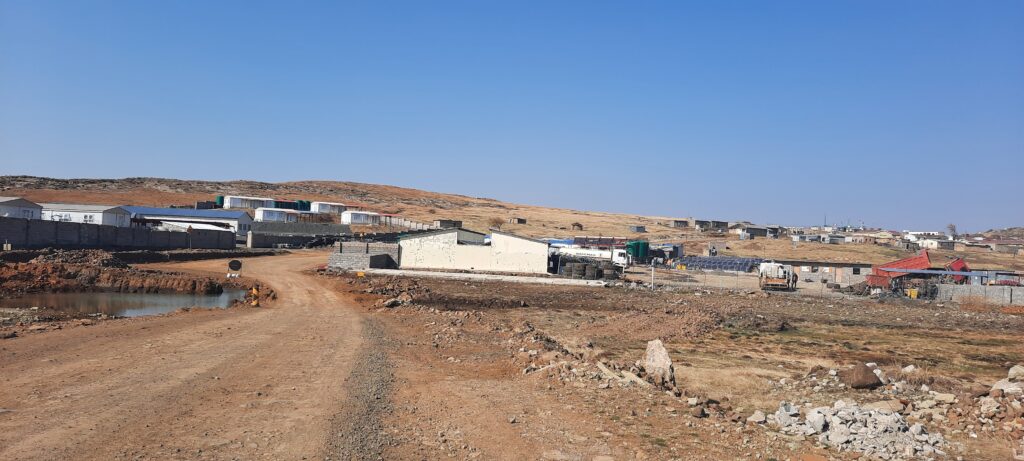
Last but not the least is Agricultural Technical Cooperation Project that was launched in 2019 in Berea district between the Ministry of Agriculture and Chinese Agricultural Experts, Basotho farmers are learning modern farming techniques such as greenhouse cultivation, pest management, and the use of high-yield seeds. This has improved food production, boosted incomes, and increased national food security.
In conclusion, to me, Chinese modernisation is not just something that happens in a distant land, it is a living reality that brings hope and opportunity to my country. It proves that with vision, planning, and partnerships based on mutual respect, meaningful development is possible, even for small, landlocked nations like Lesotho.
These developments are something beyond physical infrastructure, they represent lifelines, opportunities and forces of change. They remind us progress does not need to be at the expense of our sense of self or sovereignty.
As Lesotho enters its development trajectory, China’s strategy and collaboration are a lamp to follow. And as we build a better future for our citizens, we embark on the journey armed with the knowledge that we are never alone on the journey.
Ends/KP/ml
