
Maseru, May 05 — Health Journalists have called on government and health agencies to cut red tape around data and expert access, saying delays are undermining their ability to report accurately during public health emergencies.
The call came during a media training workshop in Maseru where the Ministry of Health, together with the World Health Organisation (WHO) is working to bridge the gap between scientific evidence and the public.
For journalists on the health beat, the biggest story is often the one they cannot tell because data has not been provided.
“One of the challenges faced by media personnel is access to timely information and data.
“The long processes we follow while seeking experts on certain issues means we sometimes publish late, or with gaps. And in health, gaps get filled by rumors,” said Ms. Nokofa Hlabathe, a journalist presenting at the workshop.
Ms. Hlabathe described chasing statistics on disease outbreaks or pandemic through multiple offices, often receiving responses days after public anxiety had already spread on social media.
Mrs. Mamoshe Limpho Makotoko Theko, another participant, linked the problem to skills and trust. “Reporting accurate news is important in the media, and that goes well with trained and skilled journalists. That is why training like this matters,” she said, adding that training alone is not enough if they cannot reach the right people when the story breaks.
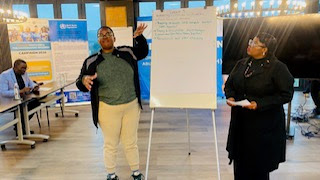
Media practitioners took the stage to emphasise the critical role of accurate reporting in shaping public understanding and protecting the right to health.
They highlighted how responsible journalism can bridge the gap between scientific evidence and community action, ensuring that health policies remain transparent, inclusive and grounded in facts.
“When a mother in Mokhotlong hears on social media that a vaccine is dangerous, we need the District Health Manager on the line that same hour, not next week. Otherwise, we are reporting the rumor, not the science,” said Mrs. Nthabeleng Seitlheko.
WHO Representative Dr. Innocent Nuwagira earlier said that journalists are frontline health workers whose words reach families before doctors do.
Journalists responded by asking the ministry and WHO to designate health media focal points, publish routine datasets online, and set 24 hour response targets for press queries during outbreaks.
The Ministry of Health has not yet responded publicly to the requests made. However, officials present acknowledged the concerns and said improved media engagement is part of the Ministry’s new communication strategy.
As they put it, “Give us the data, give us the expert in 10 minutes, and we will give the public facts. Make us wait three days, and someone else will give them fear.”
Ends/KP/tl
