
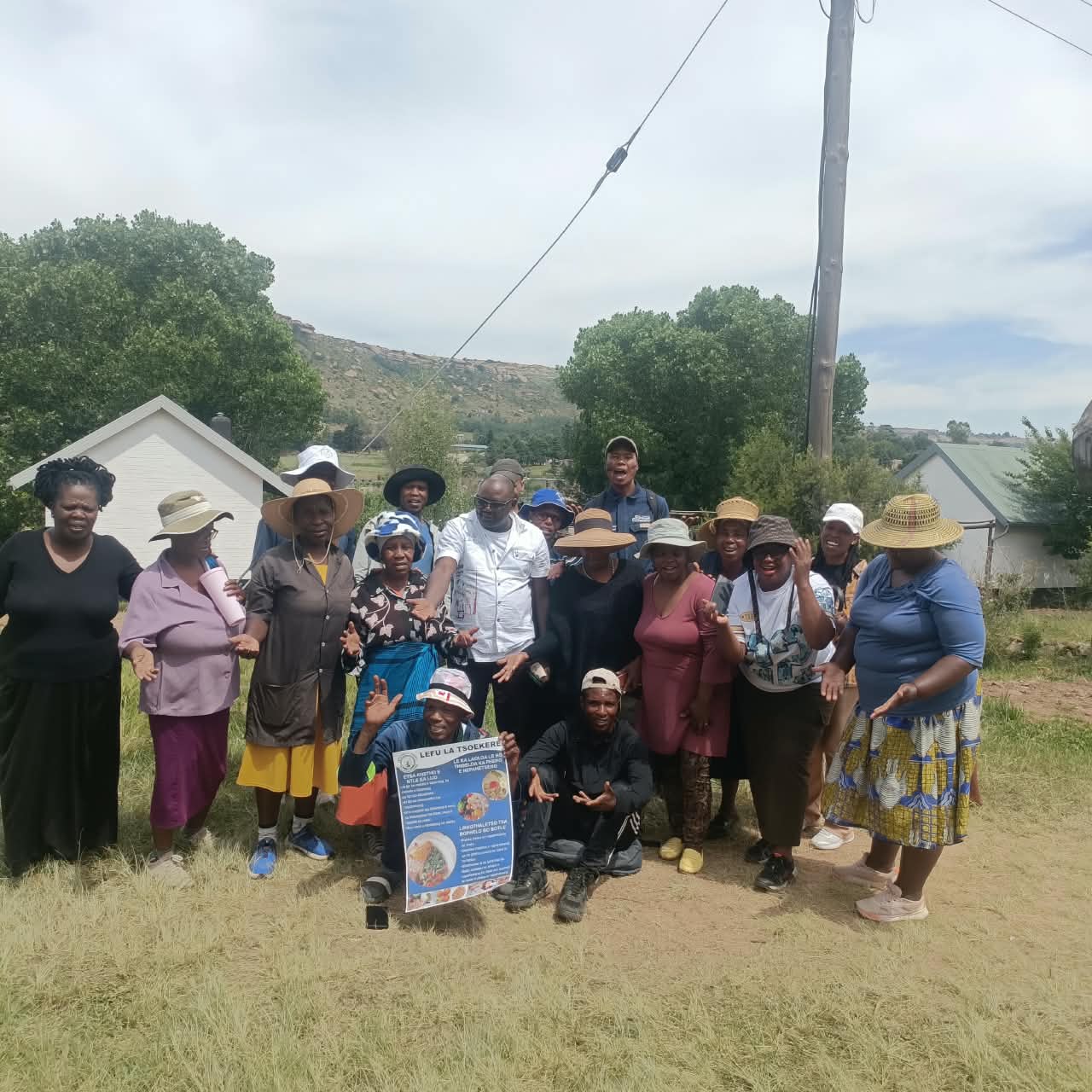
Berea, Nov. 12 — Agricultural Assistants from Maqhaka Resource Centre have joined forces to equip farmers from its sub-centres with modern agricultural skills aimed at improving productivity, strengthening agribusinesses and creating sustainable livelihood opportunities.
The collaboration culminated in a two-day agricultural training workshop at Maqhaka Resource Centre, which concluded on Thursday.
The workshop brought farmers together to gain practical knowledge on crop production, market opportunities, soil management and ways of reducing post-harvest losses.
Agricultural Assistant Ms. ‘Mampho Malefane said the training aimed to sensitise farmers on the profitability of squash production, encourage market-oriented farming and help them identify business opportunities in available markets.
She explained that the training incorporated the Smallholder Horticulture Empowerment and Promotion (SHEP) approach, which encourages farmers to plan production collectively, purchase inputs as a group and coordinate market supply to reduce costs and maximise profits.
Ms. Malefane said collective production and purchasing could help farmers overcome individual financial limitations, while coordinated planting schedules would ensure a consistent supply of produce to the market and improve their bargaining power.
The training covered modern squash production techniques aimed at maximising yields per unit area.
These included vine training, pinching of female flowers, fruit-set management, cushioning and covering fruits to maintain quality, as well as general crop management and pest and disease control.
Farmers were also trained in tomato production techniques, including pest and disease management and ways of maintaining market-preferred fruit sizes through double-stem and triple-stem production systems.
On post-harvest management, the workshop addressed ways of reducing losses in horticultural and cereal crops, with emphasis on proper handling and storage to preserve produce quality and market value.
Other topics included soil health assessment, the importance of soil testing, crop-specific fertiliser recommendations and the 4R fertiliser principle, which promotes the right fertiliser source, rate, time and place of application.
Participants were further sensitised on integrated pest management (IPM), appropriate chemical handling and application practices, as well as the management of phytotoxicity associated with improper chemical use.
The training also encouraged farmers to incorporate traditional soil fertility practices, particularly composting, to restore soil health and minimise soil degradation.
The workshop further emphasised informed crop selection, production cost analysis, marketability and profitability, with particular attention to high-value crops such as butternuts, pumpkins and watermelons.
The training was facilitated by Agricultural Assistants ‘Mampho Malefane, Mareli Matooane, Matsepang Lehlola and Mawetsi Sefubanyane.
Through such collaborative engagements, Maqhaka Resource Centre seeks to strengthen agricultural extension support to farmers, promote collective action and improve the commercial viability of smallholder farming.
The broader objective is to build stronger agribusinesses, improve household livelihoods and create employment opportunities through productive and market-driven agriculture.
Ends/TES
