
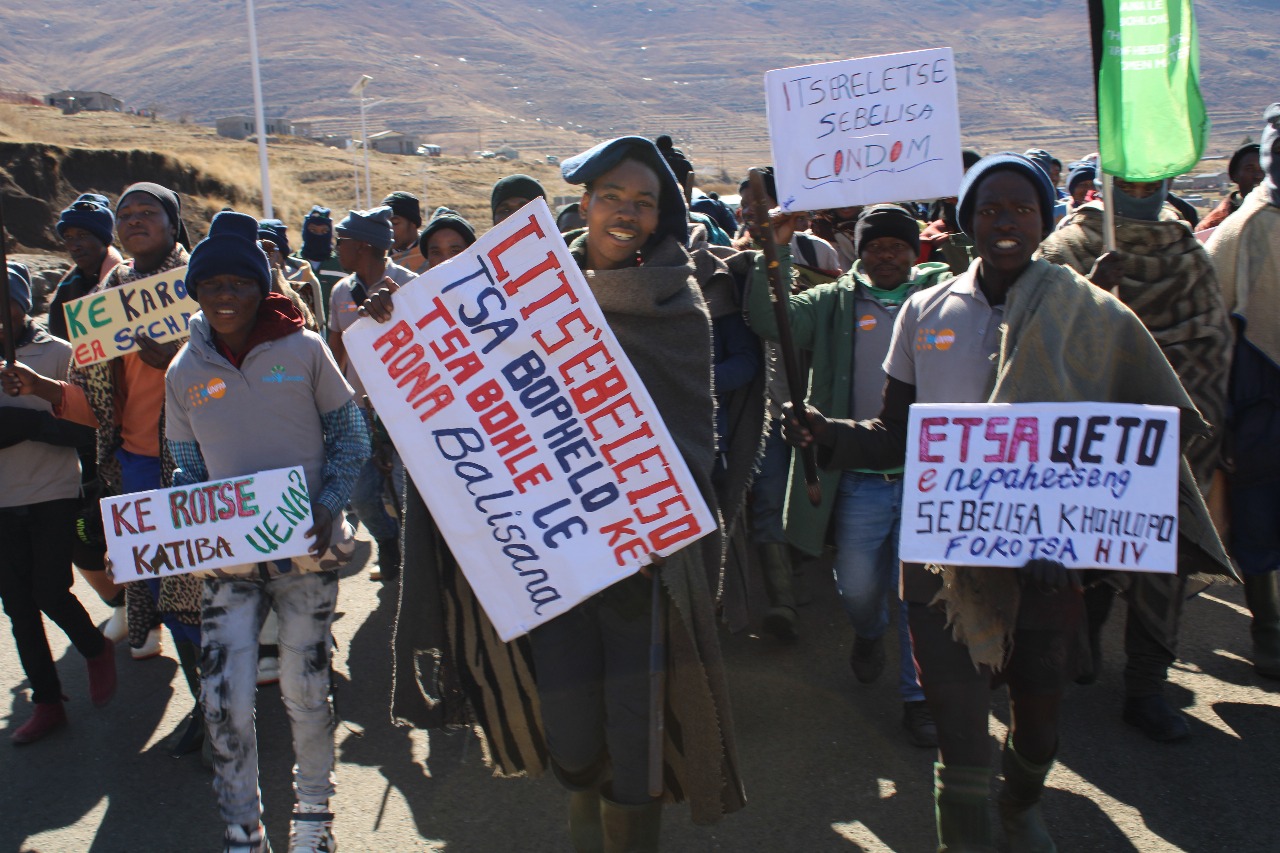
Qacha’s Nek, Nov. 27 — In Lesotho, conversations about sexual and reproductive health most often focus on girls, but behind that long-standing emphasis boys are growing up with urgent needs of their own.
For adolescent boys, puberty, first relationships and sexual curiosity can be uncharted territory. Without clear guidance they risk misinformation, unhealthy behaviour and even legal trouble.
Across communities a quiet crisis is unfolding. Boys tell stories of confusion, secrecy and shame. Parents confess discomfort. Educators say they lack the training to hold difficult conversations. And in courtrooms some young men find themselves entangled in legalities they barely understand, accused of statutory rape yet convinced they were in consensual relationships.
Fourteen-year-old Thabo* is in early puberty. His voice cracks. Hair is appearing where it never did before. Emotions come and go like weather. “Sometimes I catch myself wondering, ‘Is this normal?’” he says, his voice low. He confesses he does not know how to talk about it with friends or parents.
“I am too embarrassed. I do not want anyone to laugh,” he says. At his school life-skills classes mention puberty, but usually in relation to girls, periods, hygiene. “They never really talk about boys changing. No one explains what to expect apart from a deep voice and pubic hair, nothing about erections,” he adds.
Lebohang* aged 16 has a 15 year-old girlfriend. They hang out and talk, and he jokes that he is practically in love.
But when sex comes up he feels uncertain. “We have kissed. But sometimes she says she wants more, and I do not know what that means, for us, or for me,” he says. He does not know about Lesotho’s age-of-consent law. He worries about making a mistake and fears being judged if he asks too many questions.
Tšoane, a 17 year old has impregnated a girl. His eyes drop when he speaks about the pregnancy. “Everything happened fast, we were just talking, then we tried for the first time and she got pregnant even though we did it how my friends said it is done, standing to avoid pregnancy,” he recalls.
He says he tried to convince her to go to the clinic, but she was scared. He, too, was scared not just about the baby but about responsibility, stigma and how his parents would react. He is unsure what he is supposed to do now or where to go for help. “I do not know how to be a good father,” he admits.
Life-Skills Based Sexuality Education (LBSE) teacher from Qacha’s Nek said she was assigned to teach the subject without any training.
A woman, who is also a Sesotho and English teacher, said most activities are learner centered and needed an experienced teacher.
“Sometimes it gets tricky when I am not familiar with the content. It is an open discussion that needs me to think on my feet,” she said.
Another LBSE teacher said it is not easy to teach the subject as some children laugh while others express shock when he delivers the content.
“I was not sure what their reaction meant but now there is a huge difference as they understand the subject and relate to real life situations and examples,” he said.
However, he shared similar sentiments about lack of resources to teach the subject.
“As a teacher I have to find ways to teach children without up to date teaching aides, although it seems to be working as EUP (Early and Unwanted Pregnancies) cases are no longer as prevalent.”
Parents feel the strain of this growing problem but say they do not know how to respond. Mrs. ’Makabelo Lepheana, 40, voices the pain plainly. “I see pregnant teenagers, some by their peers, others by older men. Yet it’s still so hard to talk to my teenage boy and girl about it. I’m afraid to be open,” she confesses. She points to love for money and men, ignorance about laws, and the abandonment of parental responsibility as key drivers of teenage pregnancy. “Even when we highlight the dangers of reckless behaviour, some children just don’t listen,” she laments.
Mr. Nkoe Mothala, 74 echoes that fear, saying modern parenting norms have changed how adults can intervene. “In this era of democracy, we’re told we shouldn’t discipline our children, it’s seen as abuse. We’re left powerless,” he says, remembering a time when teenage pregnancy was rarer and boundaries were clearer. “Back then we didn’t even stand close to girls in public. We were taught to respect boundaries, and the consequences of dating young were clear.” He argues this shift has given youth a false sense of security. “Children today know they can get away with unruly behaviour because authorities will side with them,” he says.
Mr. Lisema ’Malane, 68, who stays with his grandson, says he feels equally defeated. “We are losing control over our children. I don’t know what to do anymore,” he admits with deep sadness. “When I was young we just didn’t talk about sex or relationships. I’m worried I could say something wrong and talking about it is as though I am encouraging it. Teachers should handle it, they know better and for those who don’t attend school, there should be a means for nurses to teach them about these things.”
Government officials and partners have tried to respond after realizing that boys have been left behind in SRHR interventions. Mrs. ’Mathato Nkuatsana, Adolescent Health Programme Manager at the Ministry of Health (MoH), says boys’ lack of SRHR information stems in part from not visiting health facilities.
She said the ministry runs an Adolescent Health Programme targeting young people aged 10–24. Within that, she says there are girls-focused interventions such as menstrual health education and boys’ clubs intended to share information about male bodies. She says the Ministry of Education and Training (MoET) drives in-school programmes, including LBSE, and that the health ministry has developed herders’ clubs for out-of-school boys and a national Male Engagement Strategy in collaboration with the Ministry of Gender, Youth and Social Development (MGYSD) to coordinate interventions addressing SRHR, gender-based violence, child marriage and HIV through the support of United Nations Population Fund (UNFPA).
Following the strategy development, stakeholders developed a Male Engagement Guide, a tool used by facilitators and organisations that work with men. It outlines SRHR and GBV issues linked to harmful masculinities and provides strategies for addressing them.
She said it is piloted in Mokhotlong.
The strategy follows their findings from a 2023 analysis published by the ministry, which showed that most interventions target women and girls, leaving men behind.
She also said they have male-friendly services in most clinics and all hospitals.
She further said there are outreach designed to reach males where they are, which is the most preferred.
Despite these efforts turnout is low and behaviour change is hard. “They still don’t understand consent,” Mrs. Nkuatsana says.
She describes social and cultural barriers that limit males’ engagement: reluctance to be seen at clinics where females wait, the difficulty of scheduling outreach in pastoral areas so herdboys can attend, and a deeper reluctance to seek help until illness is severe. “Males die more than females because they don’t go to health facilities. They go when the situation is bad,” she says.
She said the ministry is rolling out peer-to-peer programmes and training nurses to work at initiation schools in the hope of changing the narrative, but she warns the survey after five years will confirm whether these approaches work.
Lesotho has a long policy history: life-skills education was introduced in 2004, revised in 2012 to include sexuality. Initially offered from Grade 5 to Grade 10, it was neither examinable nor compulsory and now offered across all grades, and in 2024 cabinet approved a Prevention and Management of Learner Pregnancy policy to advance SRHR among learners.
The subject was introduced in schools in response to three major challenges affecting learners: Early and Unintended Pregnancies (EUP), child marriage, and new HIV infections.
However, the Lesotho Demographic and Health Survey (LDHS) 2023-24 indicate that unintended pregnancies and child marriage remain persistent challenges with 19 percent of girls in Lesotho affected by child marriages. A staggering 16 percent of women aged 25-49 were married by their 18th birthday.
The study shows 17 percent of adolescent girls aged 15 to 19 have already begun child-bearing, revealing that more work is needed to translate policy into measurable outcomes.
The subject provides comprehensive knowledge, develops skills, values and attitudes needed for full and healthy lifestyles, it helps learners make responsible choices and decisions, reduces sexual and reproductive health risks such as unintended pregnancies, STIs and HIV infections and helps children abstain from/delay having sexual relationships and avoid having multiple relationships.
Experts define sexuality education as more than information about intercourse; it is about body image, gender, relationships, the values and decision-making skills that shape healthy lives.
UNFPA and other partners have also focused on the boy child. Ms. ’Maseretse Ratia, UNFPA’s National Programme Analyst for Adolescents and Youth, says men’s uptake of services is limited, with Voluntary Medical Male Circumcision (VMMC) being the only well-coordinated service. Services related to STIs are poorly utilised, and many men prefer to use traditional medicines or over-the-counter remedies even when their health conditions worsen.
Ms. Ratia said under the adolescent programme, UNFPA supports an initiative for adolescent boys and young men who are herders. Implemented by Help Lesotho since 2014 in Thaba-Tseka, the programme provides Comprehensive Sexuality Education (CSE), Social Behaviour Change Communication, and builds self-awareness among herders.
“We teach them their SRHR rights so that they understand their responsibility to test for HIV, screen for STIs, seek treatment, and start antiretroviral therapy if they are HIV-positive. Through this programme we have engaged more than 1,500 herdboys,” she said.
She noted positive outcomes, including many herdboys accessing health services for the first time. The programme has also encouraged the MoH to provide outreach services in remote cattle-herding areas and offer services in villages after herdboys finish work.
“It’s a huge development in terms of services for men,” she said.
Ms. Ratia acknowledged that men are often left behind in SRHR programming. Current approaches typically position men only as protectors of women rather than as beneficiaries in need of support. “Programming needs to change. Men should not be seen only as perpetrators of GBV. An adolescent boy must first be recognised as a human being who deserves to be engaged as a beneficiary of the programmes designed by any stakeholders bringing interventions,” she said.
She added that many misconceptions persist regarding sexuality.
“Boys lack knowledge more than girls. They engage in sexual activities based on myths, which puts their lives at risk. When it comes to GBV, our education teaches a girl how to say no, but we do not teach boys to understand what a no means, or how consent works. As a result, boys often lack crucial knowledge and may unknowingly end up on the wrong side of the law.”
She also revealed that boys have lower literacy levels than girls.
Furthermore, many programs are donor-driven and rushed, despite behaviour change requiring time and consistent engagement.
“Males’ perceptions can be alarming. Some still believe that a girl wearing a short skirt wants to be raped, or that proposing love requires beating the girl. In rural areas, myths and negative perceptions are widespread,” she explained.
She said pre-assessments among herdboys show beliefs that it is acceptable to beat a woman when she is ‘wrong’, or to engage in sexual activity with partners regardless of circumstances.
Across the region, several countries have moved faster than Lesotho in integrating boys into SRHR education. Botswana, for example, strengthened its life skills curriculum to include masculinity, consent, and boys’ emotional development, while also rolling out adolescent-friendly clinics that actively target young men.
South Africa and Rwanda have taken similar steps, reporting improvements in boys’ understanding of consent and reductions in sexual offences involving minors. In contrast, Lesotho’s slower inclusion of boys has allowed misconceptions about sexuality, consent, and responsibility to persist leaving boys vulnerable to risky behaviours and, in some cases, to criminal charges they did not fully understand.
“Unfortunately, our programs are not intensive enough to challenge these perceptions until boys themselves realise they are wrong,” Ms. Ratia said.
She added that SRHR programming requires skilled personnel, yet many organisations lack proper training and use approaches that do not align with effective community behaviour-change models. “Engaging a boy while leaving out the parents or guardians is a waste of time. Norms are rooted in communities. Without engaging elders and community leaders, there will be no change. Traditional forums, especially initiation schools, play a major role. If the environment children grow in does not promote respect and positive norms, we are wasting our time. Children reflect their communities,” she said.
Regarding LBSE, she said significant progress has been made. Teachers have been trained, and UNFPA has supported the Lesotho College of Education (LCE) to offer a distance-learning course in LBSE. UNFPA working in collaboration with UNESCO, she said LCE has enrolled 803 teachers in a capacity-building programme.
“We believe that when teachers are certified rather than simply attending workshops, they will work harder to understand what needs to be done. This is progress for LBSE delivery,” she concluded.
Help Lesotho’s Programs Director, Mr. Sello Matsoso, revealed that the herdboy programme, established in 2014, was introduced because men were being neglected and left behind in SRHR interventions. Although Help Lesotho is based in Leribe, the programme also operates in Thaba-Tseka, Botha-Bothe and Berea in an effort to bridge this gap and empower males.
He explained that the programme targets boys and young men aged 13 to 24, and they do not work with those younger than 13 due to the age appropriateness required when discussing SRHR. Across all participating districts, the programme has reached more than 5,000 herdboys.
“We have a number of success stories because our approach is unique. We don’t impose; instead, we engage and challenge the boys’ way of thinking, and this has yielded positive results. It is not easy to work with them, but when you approach them with respect, it becomes easier,” he said.
The programme runs for six months. In the first month, herdboys attend a five-day intensive training where they learn about their rights and the rights of women and girls, gender, communication and healthy relationships, self-esteem, peer pressure and goal-setting. Mr. Matsoso said that CSE is also used to teach them about changes in their bodies and what those changes mean. “Most of them, when they experienced an erection, believed it means they must engage in sexual activities,” he noted, highlighting the extent of misinformation among the boys.
He added that they also work to create demand for SRHR services by engaging parents and employers, strengthening communication between herders and the adults responsible for them.
After the initial training, he said facilitators meet with the herdboys every month to reinforce the information and develop their leadership skills so that they can share what they learned with peers and community members, ultimately becoming champions for rights and positive behaviour.
“What herdboys know is aggression, which is why they are often aggressive towards girls, but through the programme we are changing that narrative,” he said.
He added that although hygiene is not one of the core components of the programme, it is included as an additional support, along with the distribution of items such as blankets, socks and gumboots. “Considering our beneficiaries, we look at other elements that can supplement the programme,” he noted.
Yet the justice system increasingly bears witness to the consequences of silence. Qacha’s Nek Magistrate Court Crown Counsel ’Mants’ebo Mofoka explains that in Lesotho criminal responsibility generally starts at 18 and statutory rape prosecutions are based on age rather than developmental maturity.
When accused are under 18, she said probation officers handle the cases, and when both complainant and accused are young, issues of consent and perceived dating complicate prosecutions. “We have a lot of cases where the accused and complainant are said to be dating but the prosecution is solely based on the law,” she says.
She said the district has recorded a rise in statutory rape cases, many involving adolescent boys and young men who did not fully understand the age of consent or what constitutes legal sexual activity. She notes that some boys believe that consent is only verbal, or that a girl’s silence or compliance removes legal responsibility.
“We see many cases where boys genuinely did not know that having sex with a minor whether she agreed or not is a criminal offence,” she explained. This, she argued, highlights the urgent need for boys to receive clear, age-appropriate SRHR education that explains not only consent but also the laws designed to protect minors.
Without this knowledge, boys remain vulnerable, not only to risky sexual behaviours, but also to being criminalised for actions they do not fully understand.
She identifies knowledge gaps not only among adolescents but among older men too. “The difference is older men know it’s wrong,” she says, calling for education from households to communities and for children to be taught about consent and the responsibility to confirm age. She said the justice sector sensitises the public not only about sexual offenses but also about other crimes.
The data that exist underline the urgency of action but also the invisibility of boys’ experiences.
National estimates show adolescent fertility at roughly 71 births per 1,000 girls age 15–19 in 2023, a rate that places Lesotho among countries in the region with persistently high adolescent fertility. The national AIDS council’s 2024 estimates document a small decline in adult HIV prevalence from 19.3 percent in 2022 to 18.5 percent in 2023, and broader UN and UNICEF reporting continues to show that Eastern and Southern Africa remains the global epicenter of adolescent HIV, where adolescent girls are six times more likely than boys to acquire HIV. These figures underscore that while girls bear the immediate physical consequences of early pregnancy and disproportionate HIV risk, boys are frequently present in the picture yet undercounted and underserved.
Programming that treats boys as secondary or only as protectors of girls misses the point. Boys need information, safe spaces, respectful adults to answer their questions, and sustained community engagement that addresses the cultural myths that still circulate: that an erection means a boy must have sex, that a skirt invites assault, that proposing love requires domination. Pre-assessments with herdboys revealed troubling beliefs and gaps that short, donor-driven programmes struggle to shift. Behaviour change takes time, and facilitators capable of sustained community work are scarce.
According to a 2018 WHO profile of adolescent health in Lesotho, HIV prevalence among 15- to 19-year-olds is estimated at around 4.8–5.4 percent. WHO Regional Office for Africa states that Life-skills and SRH education reach many adolescents, but significant gaps remain especially around legal rights, consent, and access to services.
Thabo, Lebohang, and Tšoane are just three boys navigating the complex realities of growing up male in Lesotho. Their stories reveal confusion, fear, and the urgent need for guidance. As schools, communities, and health services slowly adapt, one thing is clear: empowering boys with knowledge about their bodies, their rights, and the responsibilities that come with them is not optional, it is essential for the health and safety of all young people in Lesotho.
*Names changed to protect identities.
’Mapule Motsopa
