
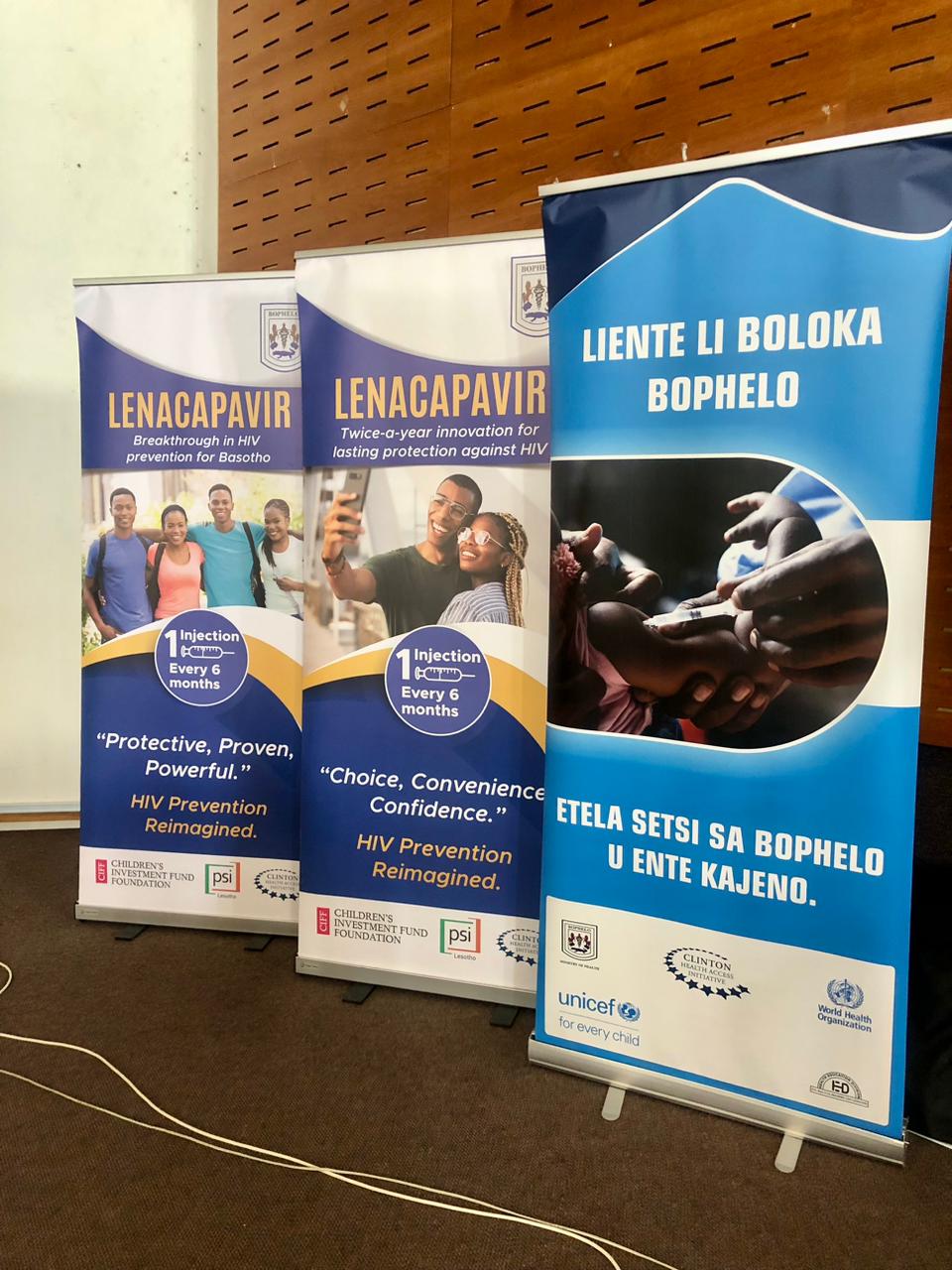
MASERU — The Ministry of Health says Lenacapavir is an additional HIV prevention option and not a replacement for existing methods, emphasising that individuals remain free to choose what works best for them, including condoms, daily Oral Pre-Exposure Prophylaxis (PrEP) or other prevention approaches.
Speaking during a media engagement, Dr. Nthuseng Marake from HIV and AIDS Programme, described Lenacapavir as a highly effective long-acting PrEP that prevents HIV acquisition among HIV-negative individuals.
Dr. Marake said clinical trials have shown that Lenacapavir offers strong protection against HIV infection and has been found to be safe and well tolerated among participants. The injection is administered once every six months and was thoroughly studied before being considered for public use.
Dr. Mabene Tsotako, representing the PrEP Task Team, explained that Daily Oral PrEP remains an appropriate option for HIV-negative individuals aged 18 years and above who are at substantial risk of infection. She said it can be used alongside contraceptives and is suitable for diverse groups, including transgender persons.
Dr. Tsotako added that individuals wishing to discontinue oral PrEP are advised to continue taking it for at least seven days after their last sexual intercourse.
She indicated that most users of Daily Oral PrEP experience no side effects, although some may report mild symptoms such as nausea, vomiting, fatigue and dizziness, which usually subside within one to two weeks.
Among its advantages, she said, are high effectiveness with good adherence and its wide availability globally. However, daily adherence may be challenging for some people and pill bottles may limit privacy.
Meanwhile, Mr. Molemo Makhetha, also from HIV and AIDS Programme, spoke about Cabotegravir Long-Acting (CAB-LA), an intramuscular injection administered every two months.
He said the World Health Organisation recommends CAB-LA for individuals at substantial risk of HIV as part of a comprehensive HIV prevention package, similar to oral TDF-based PrEP.
Mr. Makhetha explained that CAB-LA reduces the risk of HIV infection while offering improved privacy and less frequent dosing.
However, he noted disadvantages such as the time it takes for the drug to leave the body after discontinuation, possible delays in HIV detection and potential risk of drug resistance. Reported side effects include injection site pain, swelling, redness, headache and fatigue.
The Ministry reiterated that all PrEP methods discussed are intended for HIV-negative individuals and form part of a broader national strategy to strengthen HIV prevention efforts in Lesotho.
Ends/MOM
