
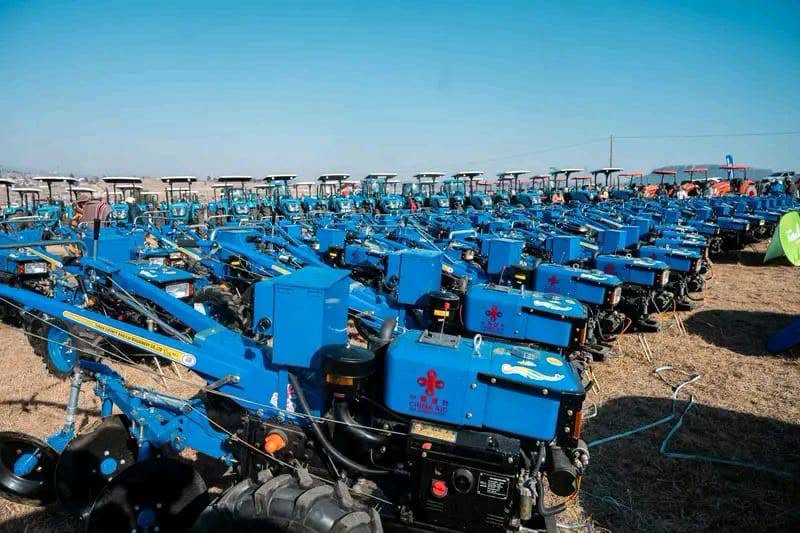
Qacha’sNek, Aug. 11 — With summer cropping approaching, farmers in Qacha’s Nek are looking to newly acquired agricultural machinery to increase production, reduce labour-intensive farming and turn their fields into more productive sources of food and income.
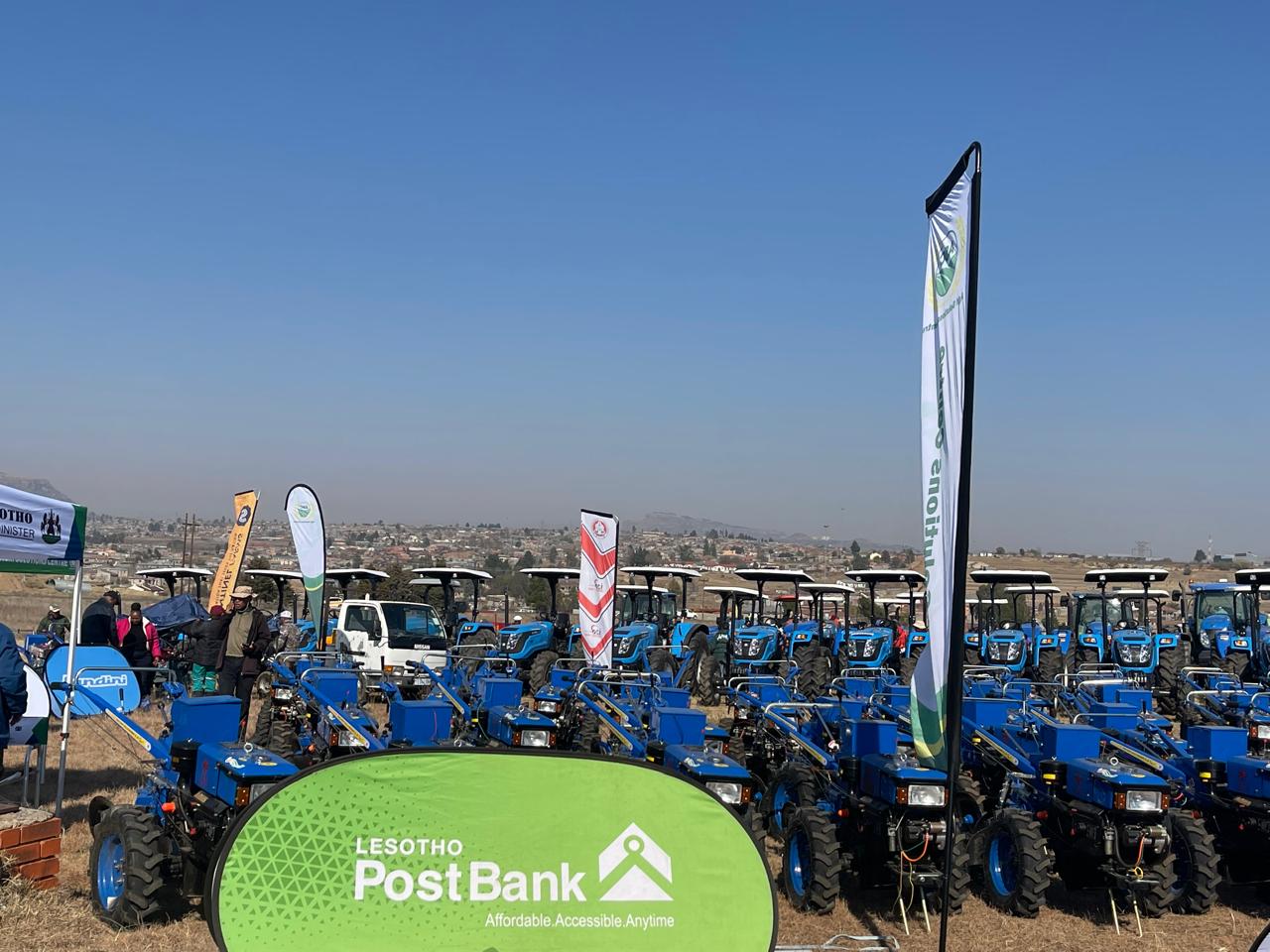
About 11 farmers and farmer associations in the district are among beneficiaries of a national agricultural machinery support programme through which the Ministry of Agriculture, Food Security and Nutrition (MAFSN), in partnership with Lesotho PostBank (LPB), distributed walk-behind tractors to farmers across the country.
The beneficiaries, drawn from five resource centres, comprise five youth, four women and two farmer associations.
The youth beneficiaries are Fekelephe Poola from Matebeng Resource Centre, Relebohile Letele and Chopo Makoae from Qhoalinyane, Liteboho Hlephe from Thaba-Chitja and Thoko Makhaola from Matebeng.
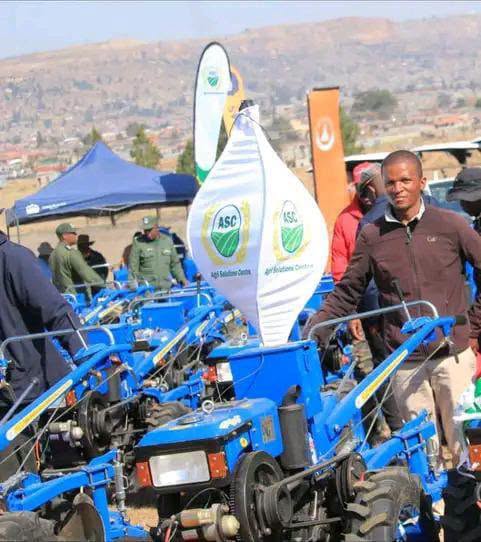
The four women are ’Malikomo Monyane from Matebeng, Nthabiseng Maqalika from Thaba-Chitja, ’Makekhotsofetse Mohanoeng from Sehlabathebe and ’Mampeo Thamae from Letlapeng, while the two farmer associations are Rankakala Falimehang Potato Association and Mosaqane Irrigation Scheme, both from Letlapeng.
For the local beneficiaries, the machinery comes at a time when many are already demonstrating the potential of small-scale farming to support livelihoods and contribute to food production.
One of them, Mr. Liteboho Hlephe of Tebellong, said he ventured into farming around 2013/14 but became more intentional about it in 2020.
He described the tractor as a major boost to his farming ambitions, saying it would push him to increase production. “I am very happy because what they did for us is very huge. It was an amazing boost which I saw myself achieving in four years from now, and this says production has to increase going forward,” he said.
Another beneficiary, Ms. Nthabiseng Maqalika of Ha Sterling, said she produces vegetables and grains and expects the machinery to make her work easier.“I really didn’t see it coming. I am excited and proud to have been selected amongst the beneficiaries,” she said.
Ms. Maqalika said unemployment drove her into farming around 2023, adding that agriculture had since become an important means of making a living.
She encouraged young people to consider farming as an avenue for economic opportunity rather than viewing it only as subsistence activity. She said her winter crop had performed well and she was now looking forward to the summer season, particularly with the current snowfall expected to provide moisture for crops.
For Mrs. ’Malikomo Monyane of Matebeng, Ha Lelingoana, the new equipment could help ease the physical demands of producing vegetables and grains. “I am glad because the tractor will ease my job. I used to work so hard without it. It wasn’t something I was thinking about, but I am glad I received it,” she said.
Mrs. Monyane is already preparing for the next cropping season while harvesting her previous crop. She said she had already secured 27 bags of maize, each weighing 80 kilogrammes, from two fields.
“My harvest is very good this year,” she said, adding that her cabbage crop was also performing well and that she had already started selling it.
The Qacha’s Nek Department of Crops District Horticultural Officer (DHO), Mrs. ’Malikomo Mafoea said the district was asked on June 10, 2026, by MAFSN headquarters to submit a list of farmers who were actively engaged in production, including youth, women and farmer associations.
“After sending the list, headquarters brought in a group which went for inspection in all the resource centres, and it was only last week when we were informed of the 11 who were said to qualify for the walk-behind tractors,” she said.
She said the district office was not aware of the criteria used to select the beneficiaries but welcomed the support and urged recipients to make maximum use of the machinery.
“We are happy for the recipients. I appeal to them to make use of the equipment going forward. The ministry is available to guide them,” she said.
Mrs. Mafoea said farmers would need to intensify production as they prepare for the summer season, particularly amid projections of El Niño conditions.
She added that the department would meet farmers ahead of the season to advise them on suitable crops and water collection for irrigation.
“Our offices are open to guide them, and they can come to seek help,” she said.
The support to Qacha’s Nek forms part of a wider national initiative aimed at improving agricultural productivity through access to machinery and finance.
Speaking during the official handover ceremony in Maseru on Friday, MAFSN Principal Secretary, Dr. Khothatso Ts’ooana, said the Government of Lesotho (GoL), through the ministry and in partnership with LPB, was supporting the farming community with agricultural machinery and equipment to advance agricultural development.
The walk-behind tractors were distributed among youth, women and farmer associations in all 10 districts, with 48 youth, 30 women and 22 associations receiving the machinery.
In addition, 40 farmers were supported by LPB through the Tractor Finance Guarantee Scheme to purchase tractors and implements.
Dr. Ts’ooana said the equipment was expected to contribute to food production and job creation while helping to address poverty. “The equipment is expected to help in food production and job creation to end poverty in the country,” he said.
The initiative also aligns with the African Union’s Agenda 2063, which identifies modern agriculture, increased productivity and production, food security and inclusive economic growth among the continent’s development priorities.
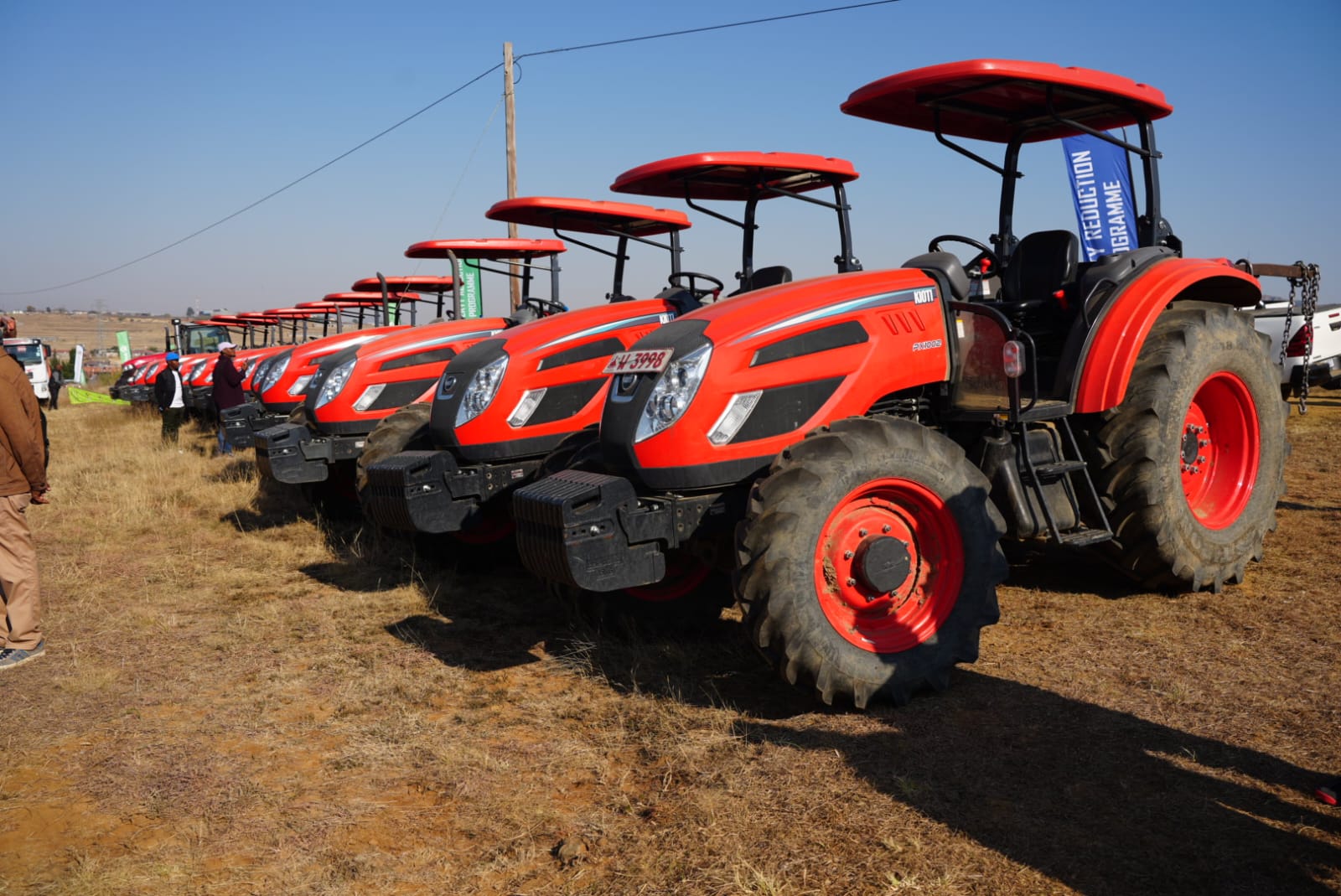
He said tractors donated by the Republic of China and the Republic of South Korea were also allocated to various institutions. The Lesotho Defence Force (LDF) received four tractors, the Lesotho Mounted Police Service (LMPS) received four, the Lesotho Correctional Service (LCS) received four, the Lesotho Agricultural College (LAC) received two, and Lerotholi Polytechnic received one.
“We wish them all the best and hope they will transform the agricultural sector in Lesotho,” he said.
For Qacha’s Nek farmers, the significance of the machinery will ultimately be measured not by the handover ceremony, but by what happens in the fields in the months ahead.
The coming cropping season will therefore offer the first real test of whether mechanisation can translate into bigger harvests, stronger livelihoods and greater food security.
Ends/MAPM
