
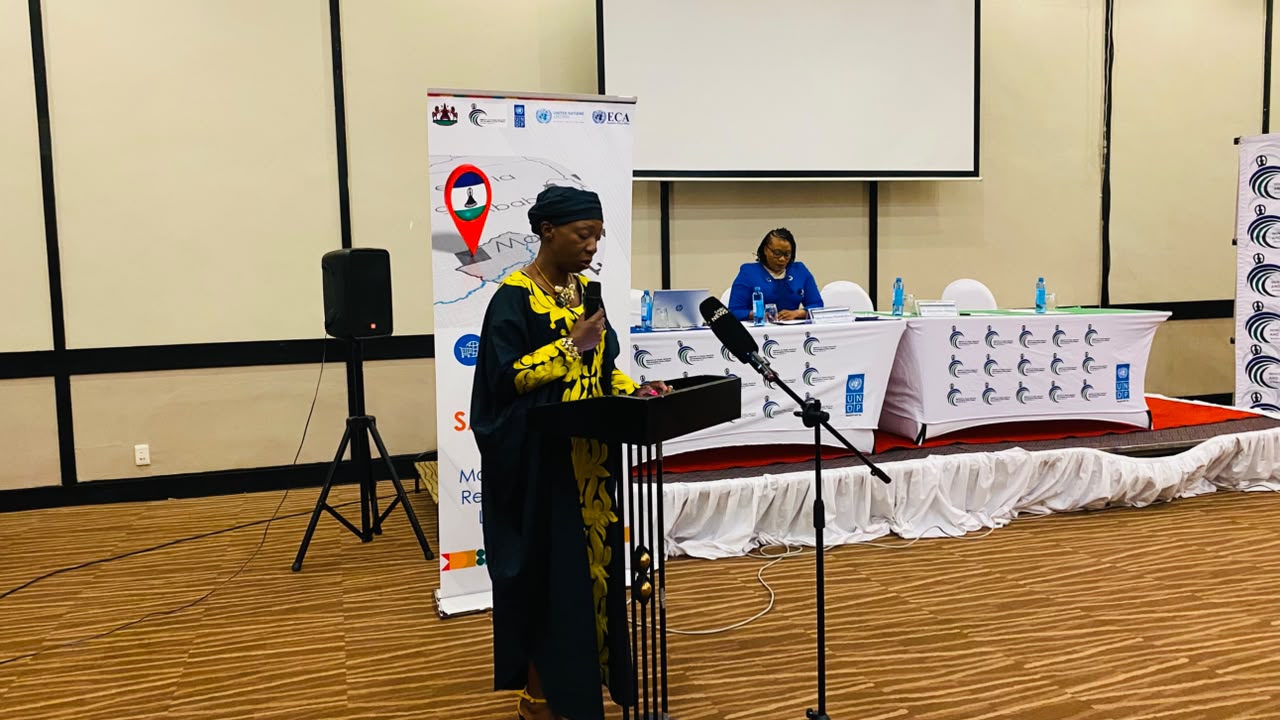
Maseru, Sept. 28 — Lesotho’s small and medium-sized enterprises (MSMEs) have been urged to look beyond the domestic market and position themselves to take advantage of opportunities presented by regional trade agreements and the African Continental Free Trade Area (AfCFTA).
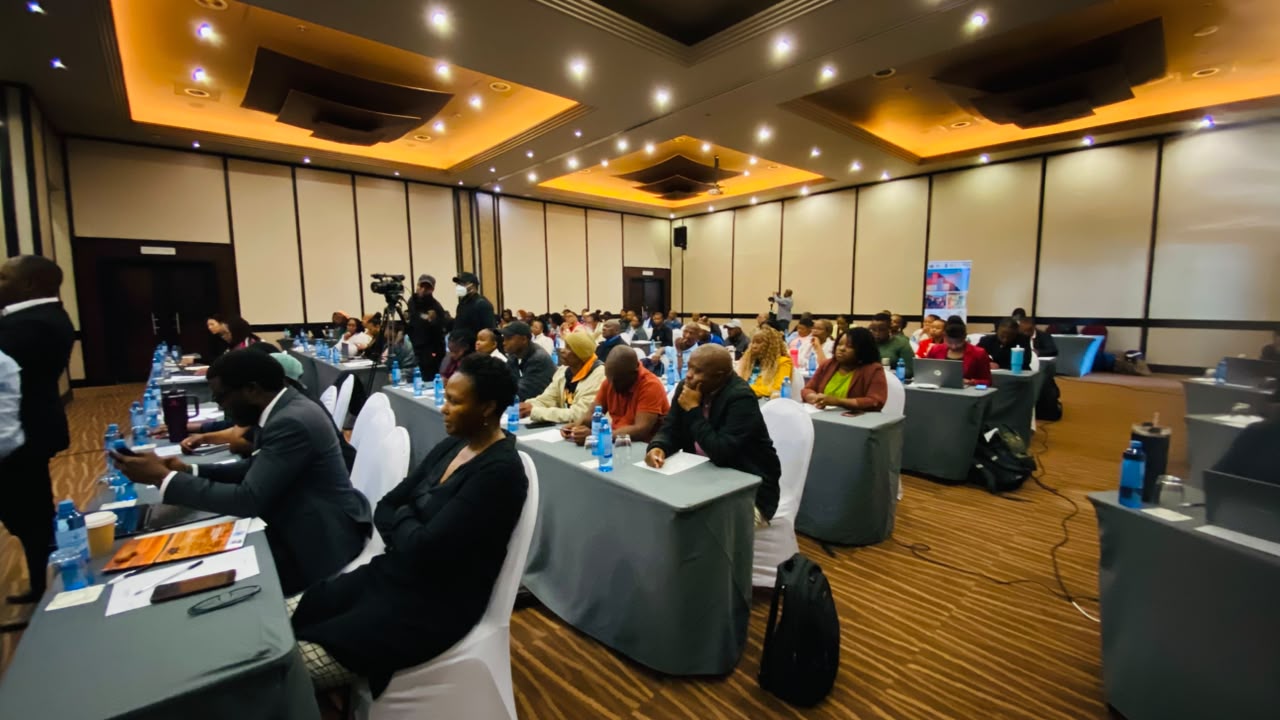
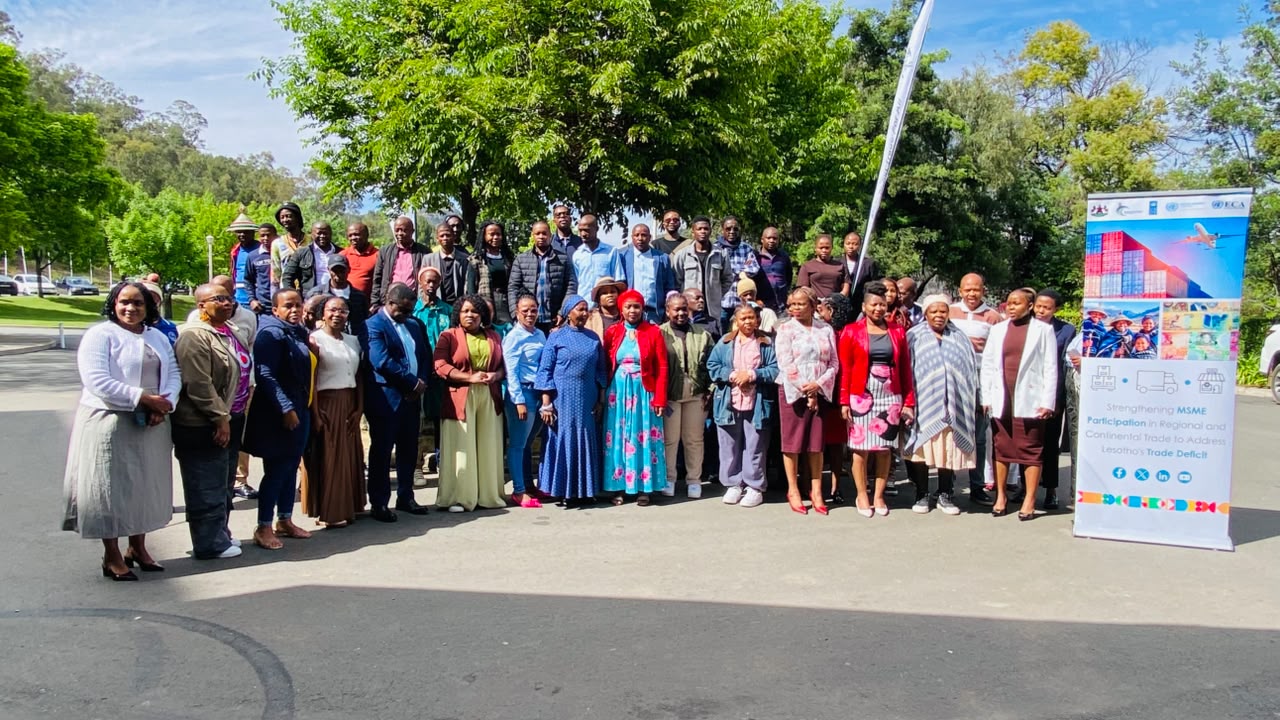
The call was made as a three-day workshop on Enhancing the Capabilities of Lesotho MSMEs to Leverage Regional Trade Agreements and the African Continental Free Trade Area (AfCFTA) got underway in Maseru today.
The workshop is organised in partnership with United Nations agencies, notably the United Nations Economic Commission for Africa (UNECA) and the United Nations Development Programme (UNDP), to strengthen the capacity of local businesses to participate more effectively in regional and continental markets.
The discussions also place MSME development within the broader Sustainable Development Goals (SDGs), particularly those relating to poverty reduction, decent work and economic growth, industry and innovation, and partnerships for development.
In her opening remarks, UN Resident Coordinator Dr Jacqueline Olweya said international trade has long been an important driver of economic development, with globalisation expanding markets, enabling countries to specialise and creating opportunities for businesses to participate in regional and global value chains.
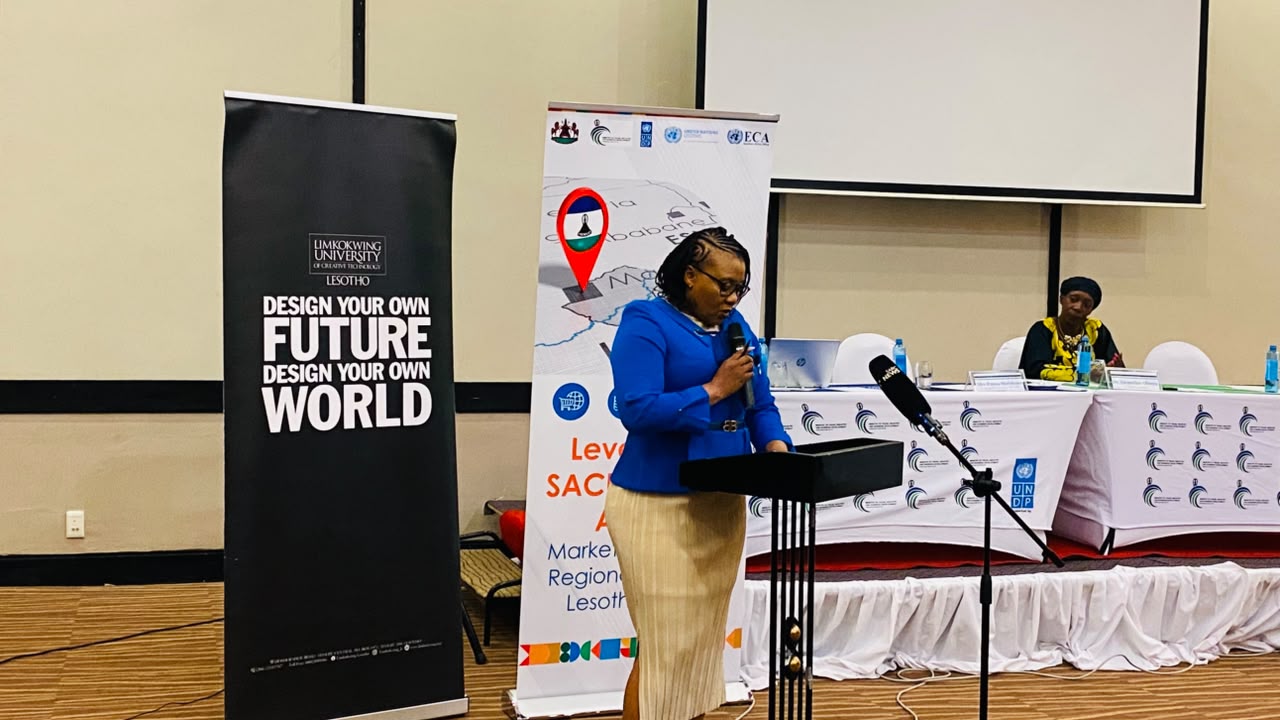
She, however, noted that the international trading environment is changing, with geopolitical tensions, shifting trade policies, tariffs and supply-chain disruptions creating new uncertainties for businesses and countries.
“These developments reinforce the importance of strengthening Africa’s own markets and productive capacities,” she said.
Dr Olweya highlighted the importance of MSMEs to Lesotho’s economy, citing findings from the 2023 FinScope MSME Survey, which estimates that 107,753 MSME owners operate 138,723 enterprises and that the sector employs approximately 255,420 people.
She said strengthening MSMEs should therefore not be viewed solely as a private-sector development objective, but as an important component of Lesotho’s broader economic transformation and sustainable development agenda.
According to Dr Olweya, strengthening the sector can contribute to expanding productive capacity, diversifying exports, generating employment and creating sustainable livelihoods.
She said this also speaks directly to SDG 8 on Decent Work and Economic Growth and SDG 9 on Industry, Innovation and Infrastructure.
Dr Olweya further highlighted Lesotho’s trade position, saying the country’s trade performance demonstrates both opportunities and vulnerabilities that need to be addressed.
“In 2024, merchandise exports were approximately M16.28 billion (US$992 million), compared with imports of M30.43 billion (US$1.855 billion), resulting in a trade deficit of about M14.16 billion (US$863 million). South Africa accounted for approximately R9.60 billion (US$585 million) of exports, followed by the United States at M4.23 billion (US$258 million) and Belgium at M3.90 billion (US$238 million),” she said.
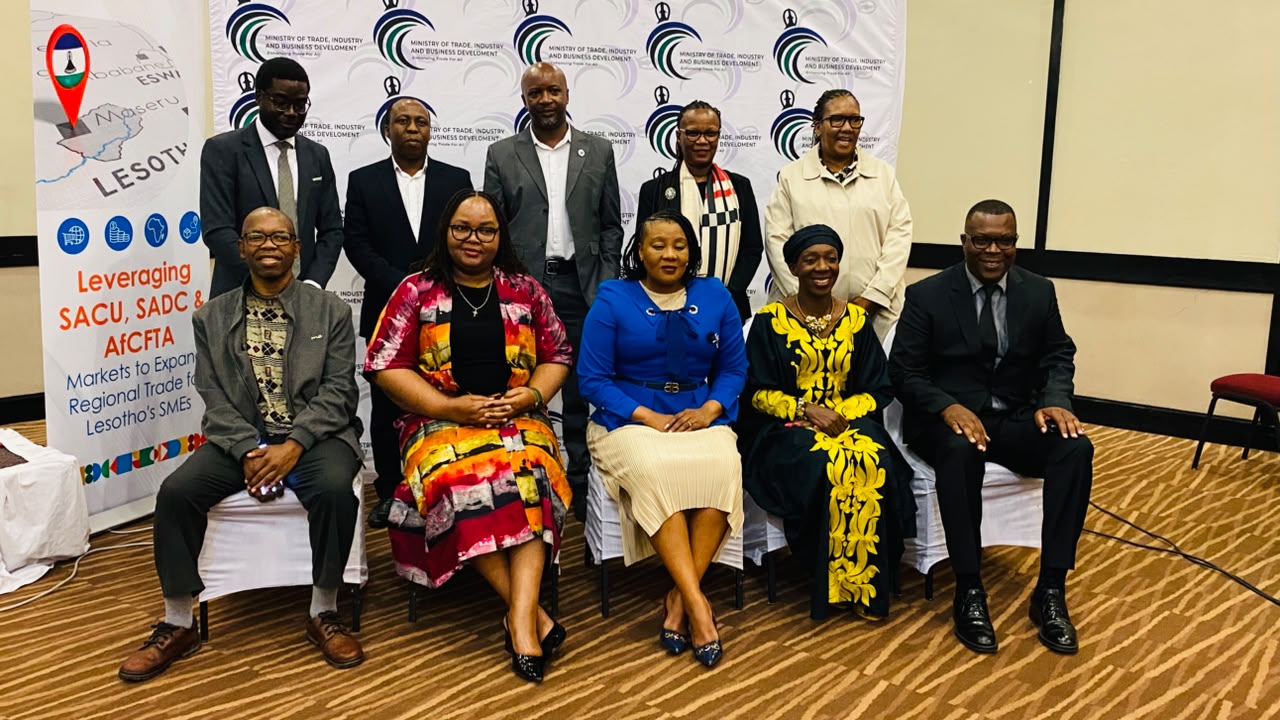
The Principal Secretary in the Ministry of Trade, Mrs Palesa Matobako, expressed appreciation for the workshop, saying it is aligned with Lesotho’s National Strategic Development Plan II Extended, which pursues private-sector and export-led economic growth.
She said the Government has placed MSME development at the centre of its national agenda, noting that sustainable private-sector-led growth cannot be achieved without a competitive and resilient MSME sector.
Mrs Matobako highlighted the opportunities presented by AfCFTA, saying the agreement provides access to a market of more than 1.3 billion people, with a combined GDP of approximately M55.79 trillion (US$3.4 trillion).
She said the agreement presents opportunities for Lesotho businesses to diversify their export markets, integrate into regional value chains and scale up their operations.
Such expansion, she noted, can contribute to employment creation, enterprise development and greater economic participation.
She also acknowledged UNDP’s financial assistance in developing Lesotho’s National AfCFTA Implementation Strategy and Action Plan, which she said provides a roadmap for the country’s implementation of the continental agreement.
“Government remains committed to this process, and we look to our partners to walk this journey with us,” she said.
During a session on the Introduction to ICT Market Tools, Mr Lira Khalala identified limited national supply and market-access conditions among the major challenges constraining Lesotho’s participation in regional and international trade.
Khalala, however, said these challenges also present opportunities for local entrepreneurs to develop businesses capable of supplying markets beyond Lesotho.
He pointed to Lesotho’s history in the manufacturing sector, particularly the large number of Basotho who have previously worked in factories, saying the country still possesses valuable human capital that can contribute to economic growth if effectively harnessed.
He stressed the need to increase production capacity, including through the establishment of plants and processing facilities, to enable Lesotho to add value to products rather than relying primarily on the production and export of raw materials.
He encouraged entrepreneurs to recognise that their potential market extends beyond Lesotho, pointing to opportunities in larger African markets and emerging premium market segments.
Khalala identified market-access conditions as one of the major challenges facing Lesotho businesses, but noted that such conditions can be influenced through policy and strategic interventions.
He encouraged entrepreneurs to develop the right attitude, work ethic, knowledge and skills, while cautioning against viewing access to finance as the first step in developing a business.
He advised entrepreneurs to first establish what they can produce, identify who needs their products or services and determine where those markets are located before seeking financial resources.
He also stressed the importance of conducting market research before entering new markets, particularly to understand consumer demand, competition, regulations and other market conditions.
Participants were introduced to digital market-intelligence tools, including Trade Map and the Export Potential Map, which can assist entrepreneurs in identifying products with export potential, understanding international demand and exploring possible markets.
Khalala said the tools can help entrepreneurs align their products and services with local and international demand and make more informed decisions when considering expansion beyond Lesotho.
Meanwhile, Dr Johansein Rutaihwa of the SADC Secretariat highlighted the importance of having a clear understanding of how MSMEs are classified across different countries.
He explained that MSME classification is generally based on factors such as the number of employees and annual turnover, although classification systems may differ from one country to another.
He cited South Africa as an example of a country with a different MSME classification approach.
Dr Rutaihwa also highlighted the importance of compliance and reporting mechanisms within the regional system, noting that countries are expected to submit reports on their MSME-related positions and developments.
He encouraged entrepreneurs and other stakeholders to seek accountability and remain informed about their countries’ reports and developments in order to understand how MSME policies and commitments are being implemented.
The three-day workshop is positioning MSME development not only as a trade and private-sector issue, but also as part of a wider development agenda aimed at expanding productive capacity, creating decent employment, strengthening innovation and building sustainable livelihoods.
By strengthening the ability of Basotho enterprises to access regional and continental markets, the engagement seeks to contribute to a more diversified and inclusive economy while supporting Lesotho’s progress towards its Sustainable Development Goals and broader national development priorities.
Ends/TES
