
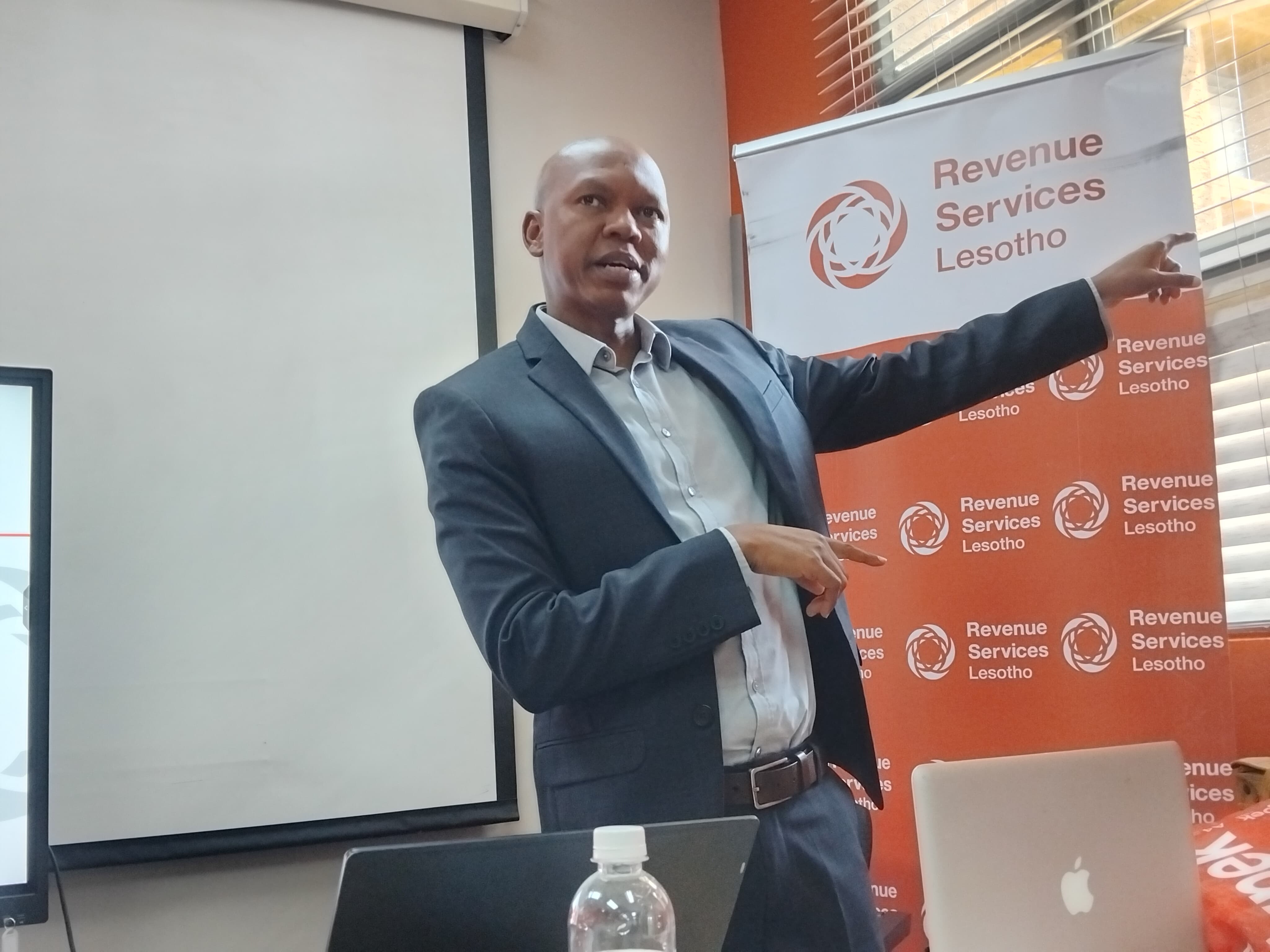
MASERU – Journalists have been urged to embrace artificial intelligence (AI) as a tool for improving the accuracy and efficiency of reporting while ensuring that journalistic judgment, ethics and verification remain central to their work.
The call was made during a tax journalism training workshop held in Maseru on Tuesday.
The workshop aims to make tax journalism practical, understandable and immediately useful in the newsroom.
Speaking during the media engagement, Revenue Services Lesotho (RSL) Public Relations Manager, Mr. Pheello Mphana, said AI should complement rather than replace journalists, stressing that technology could not substitute journalists’ instincts, curiosity, ethical responsibilities and duty to verify information.
“AI is a tool that cannot replace journalistic judgment,” he said.
Mr. Mphana said journalists remain responsible for checking facts, confirming sources and presenting information with integrity, particularly as the rapid development of AI and other technologies continues to reshape the media landscape.
He said the media also plays an important role in making complex economic issues understandable to ordinary citizens.
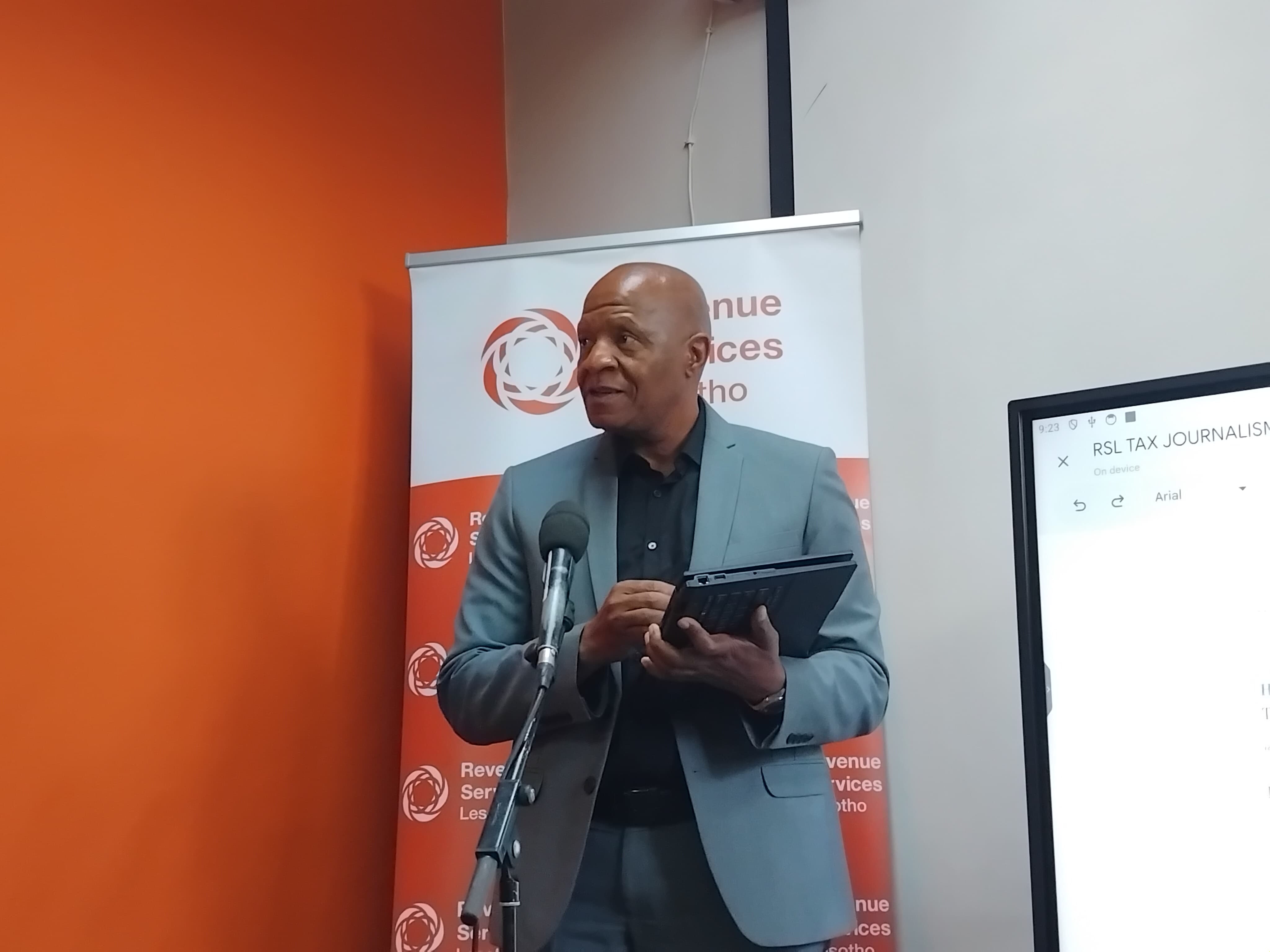
Issues relating to taxation, customs, revenue, trade and public finance, he said, should be explained in ways that enable citizens to understand how government revenue contributes to public services such as hospitals, clinics and schools.
According to Mr. Mphana, a better understanding of taxation could help citizens view it as a contribution to national development rather than simply a financial burden.
He identified informing, educating and entertaining as key functions of the media, adding that journalists also have a responsibility to hold institutions and public officials accountable.
Through accurate reporting, he said, the media empowers citizens to make informed decisions, builds awareness and simplifies complex issues, particularly those relating to public finance, education and national development.
Mr. Mphana further noted that media content, including news stories, programmes, music and other creative works, helps bring communities together while reflecting their culture and experiences.
However, he stressed that these functions carry a responsibility to provide information that is accurate, fair and responsibly presented.
“At RSL, we are embarking on a number of initiatives intended to improve citizens’ well-being,” he said, adding that accurate and informed reporting can help amplify such efforts.
He said the media plays an active role in public decision-making and will continue to inform citizens about developments in public services and government programmes.
Meanwhile, RSL Senior Taxpayer and Client Education Officer Mr. Mohale Motenalapi said people often verify information through radio, newspapers and television.
“When the public is educated, it becomes easier for them to understand what we do,” he said.
Mr. Motenalapi explained that taxes are compulsory payments imposed by government on individuals and businesses to fund public services and national development.
He said paying taxes is a legal obligation for different categories of taxpayers, including employees, sole traders and business partners.
Clarifying customs matters, he said customs duties are charged on goods brought into the country and not on individuals themselves.
He added that Value Added Tax (VAT) is levied based on where goods are consumed, meaning goods destined for consumption in Lesotho are generally subject to VAT in Lesotho.
Mr. Motenalapi noted that RSL was established under the Revenue Services Lesotho Act No. 14 of 2001 and became operational in January 2003.
He said the institution consolidated functions previously carried out by the Income Tax, Customs and Excise, and Sales Tax departments.
He also urged journalists to familiarise themselves with the national Artificial Intelligence Policy, which provides a framework for the development and use of AI in Lesotho.
Ends/TS
