
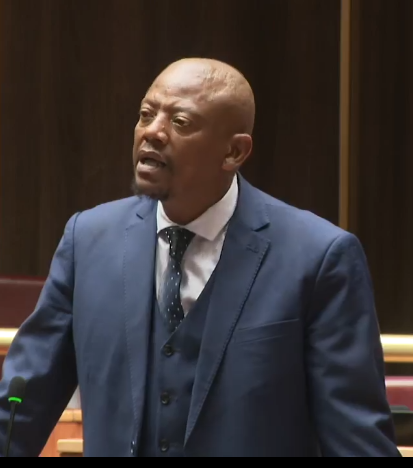
Maseru, May 12 — The Principal Chief of Kueneng, Chief Peete Lesaoana Peete, has tabled a Motion before the Senate calling on the Government to advocate for the use of Artificial Intelligence (AI) among Parliamentarians in a bid to improve service delivery and enhance efficiency in public institutions.
Presenting the Motion, Principal Chief Peete said Artificial Intelligence, if properly programmed and regulated, has the potential to transform operations across various sectors in the country.
He noted that AI-driven systems could help reduce delays and improve the delivery of public services, including the issuance of passports and other government documents.
He explained that unlike human beings, AI systems do not rely on emotions or physical conditions to perform tasks, saying this could help ease the burden on government workers and ensure consistent service delivery.
Chief Peete further stated that the adoption of AI would also strengthen Parliament’s legislative processes by helping lawmakers introduce policies and laws that are responsive to changing times and global developments. He noted that currently, policy reforms and amendments often take too long, making it difficult for legislation to keep pace with technological, economic and social changes taking place across the world.
He also indicated that some countries are now using Artificial Intelligence to assist in teaching and learning in schools, saying the technology has in some cases proven to be more effective because it is able to work consistently without emotions or attitude. He said some learners fail certain subjects not because they are incapable, but because some teachers are unable to accommodate different learning speeds and levels of understanding.
According to Chief Peete, AI systems can detect a learner’s level of understanding and adapt lessons according to the learner’s pace without frustration, thereby helping improve learning outcomes and providing equal opportunities for students with different abilities.
He stressed the importance of Lesotho becoming an active participant in the development and use of AI technologies rather than remaining merely consumers. He said countries and individuals who produce AI solutions stand to benefit economically through innovation, trade and job creation, while consumers only purchase technologies developed elsewhere without gaining long-term economic advantages.
He also highlighted the opportunities AI presents for young people, saying with the right support and training, the youth can use AI technologies to create employment opportunities, improve their livelihoods and contribute meaningfully to economic growth.
He added that people living with disabilities could also benefit greatly from AI, noting that technology can help enhance skills, improve access to information and create flexible working opportunities beyond the traditional office environment.
However, Chief Peete cautioned that while AI is a powerful tool for development, it can also be misused if left unregulated. He therefore called on the Government to establish proper regulatory frameworks and policies to ensure the responsible and ethical use of Artificial Intelligence in Lesotho.
Globally, governments and institutions are increasingly integrating AI into sectors such as healthcare, education, agriculture, finance and governance to improve productivity and decision-making.
Experts have also warned that while AI presents significant economic opportunities, safeguards are necessary to address concerns relating to misinformation, privacy and cybersecurity.
Ends/KP/tl
