
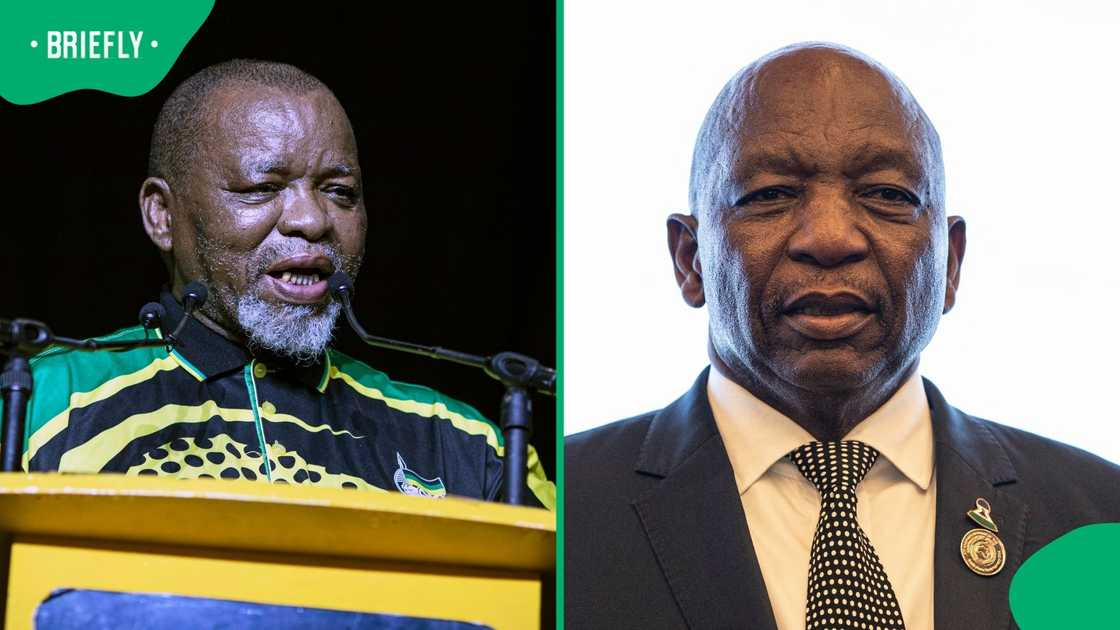
Maseru, Feb.26- Relations between the Kingdom of Lesotho and the Republic of South Africa (SA) remain structurally strong despite recent political tensions, political analyst Mr. Thuso Mosabala has said.
In his analysis following remarks by South Africa’s Minister of Mineral and Petroleum Resources, Gwede Mantashe, directed at Lesotho’s Prime Minister, Ntsokoane Matekane, Mosabala noted that the two countries remain deeply interconnected economically and geographically.
He explained that Lesotho relies heavily on trade routes through South Africa, customs revenue from the Southern African Customs Union (SACU), and cooperation under the Lesotho Highlands Water Project.
“South Africa, in turn, depends on Lesotho for critical water supply and regional stability,” Mosabala said.
He indicated that when a senior minister such as Mantashe makes strong allegations, it may create diplomatic discomfort. However due to the fact that the two countries are highly interconnected, such tensions are generally managed through dialogue rather than confrontation.
“This is what we call interdependence. Both sides need each other, so they are unlikely to allow rhetoric alone to damage long-term cooperation,” he said.
Mosabala further observed that public reaction may be stronger than official reaction. In South Africa, illegal mining is widely viewed as a serious security and economic challenge, prompting political leaders to adopt strong rhetoric to reassure domestic constituencies.
“In Lesotho, however, such statements may be perceived as unfair or disrespectful, particularly given the long history of labour migration between the two countries,” he added.
He explained that the concept of “two-level games” helps clarify the situation, noting that leaders often communicate to two audiences simultaneously — domestic voters and foreign governments.
“Strong statements may be aimed more at domestic politics than at changing foreign policy. At the official level, unless remarks translate into formal government action, they are likely to remain a political irritant rather than escalate into a diplomatic crisis,” he said.
Mosabala noted that illegal mining is not solely a Lesotho–South Africa issue, but a broader regional economic and security concern. For decades, Basotho workers were employed in South African mines.
As formal mining employment declined, informal and illegal activities increased, suggesting that the challenge is partly economic rather than purely criminal.
He cautioned that framing such matters primarily as security threats can heighten tensions. Nevertheless, escalation remains unlikely, as both countries would incur losses from serious diplomatic conflict.
“They share trade, infrastructure and regional commitments through bodies such as the Southern African Development Community (SADC). Cooperation is more beneficial than confrontation,” he said.
On possible steps forward, Mosabala suggested that both governments should treat illegal mining as a joint law-enforcement and development issue rather than engaging in blame.
“This requires improved intelligence sharing and coordinated policing efforts,” he said.
Secondly, he stressed the importance of addressing the economic roots of the problem by expanding legal employment opportunities and supporting regional development initiatives.
Thirdly, he advised leaders to communicate cautiously, warning that public accusations can inflame nationalist sentiment, particularly in relationships characterised by economic imbalance.
“Quiet diplomacy and regular bilateral meetings are more effective. Strong institutions and continuous dialogue reduce misunderstandings and prevent political rhetoric from escalating into diplomatic disputes,” he added.
Mosabala noted that history explains much of the current sensitivity. Lesotho’s economy has long been tied to South Africa’s mining sector through labour migration. During apartheid, relations were strained at times, but cooperation deepened after 1994. Economic integration through SACU and joint projects such as the Lesotho Highlands Water Project have reinforced enduring ties.
He emphasised that although the relationship has historically been unequal in terms of size and economic power, it remains deeply interconnected. Past tensions did not rupture relations because both countries benefit from stability.
“Recent developments should be viewed as part of a longstanding pattern — moments of political strain within a fundamentally interdependent and resilient partnership,” he said.
In simple terms, Mosabala concluded, geography and economics make long-term cooperation between Lesotho and South Africa not only desirable, but necessary.
Meanwhile, Mantashe has accused Prime Minister Matekane of holding a two-hour meeting with illegal miners in Bloemfontein without the knowledge of the South African Police Service (SAPS) or the government. He further alleged dishonesty on the part of the Lesotho government and indicated that investigations are imminent.
In response, the Government of Lesotho issued a statement clarifying its position. It stated that South Africa had been informed of the Prime Minister’s visit to Bloemfontein through the Department of International Relations and Cooperation via diplomatic communication.
The Government further explained that the venue for the Revolution For Prosperity (RFP) diaspora conference attended by the Prime Minister was provided free of charge by the municipality. It added that the police and relevant stakeholders were informed and that preparatory meetings were convened prior to the conference.
Ends/PM/BM
