
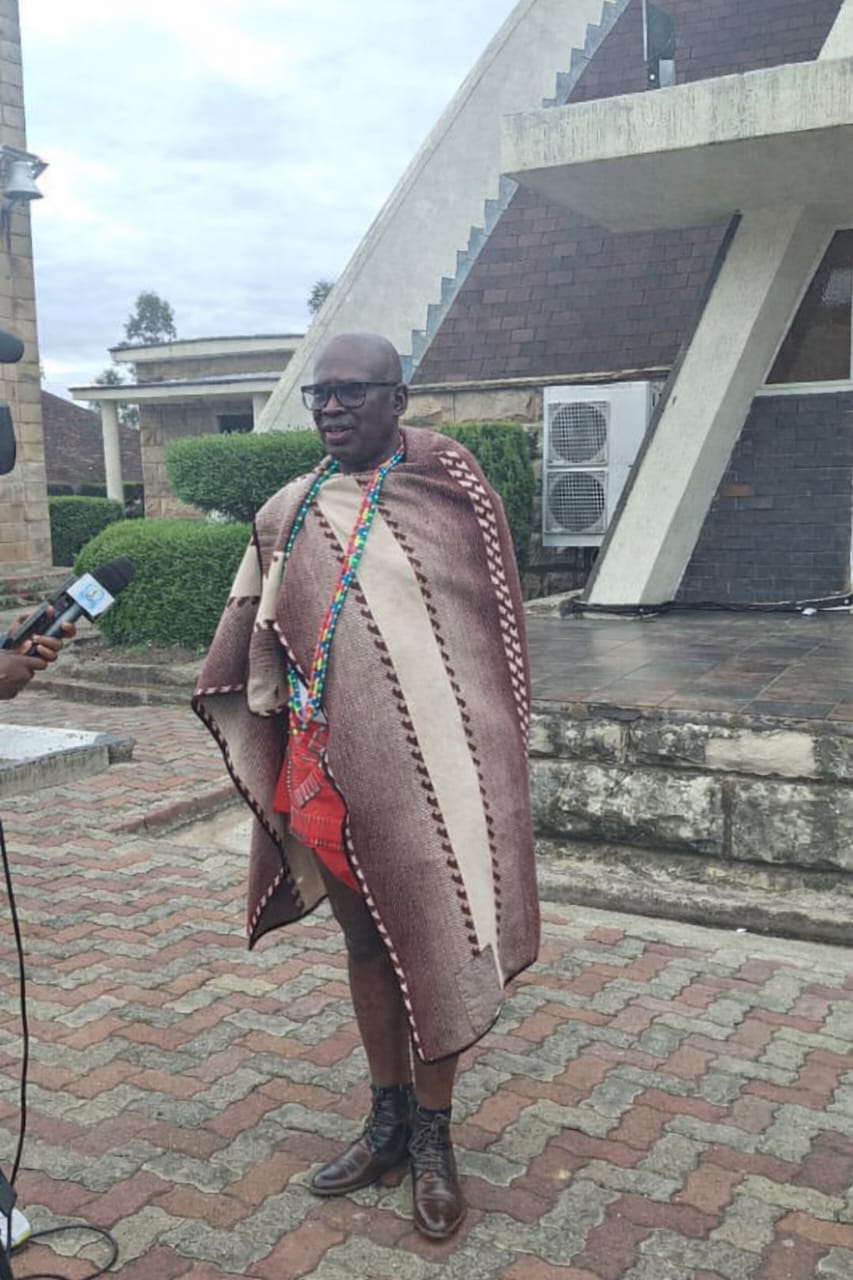
Maseru, Mar.09 – As Lesotho prepares to commemorate 60 years of independence, many Basotho are looking forward to the celebrations. However, concerns remain that Sesotho, the country’s national language, continues to struggle for recognition and appreciation both locally and internationally.
In an interview on Monday, Mr. Ratokelo Nkoka said many Basotho do not place sufficient value on their own language. He noted that mistakes made in Sesotho are often overlooked, while errors in English are quickly judged as a sign of ignorance.
According to Mr. Nkoka, fluency in English is widely perceived as a sign of intelligence, a mind-set he believes has contributed to declining respect for Sesotho.
“Some Basotho argue that Sesotho offers little benefit, particularly in terms of career opportunities,” he said. “Yet institutions of higher learning such as the National University of Lesotho (NUL) and the University of the Free State (UFS) continue to include Sesotho in their academic programmes, while other universities in South Africa are also promoting African languages, including Sesotho.”
Mr. Nkoka emphasised that language plays a crucial role in preserving culture, as values, traditions and social norms are transmitted through it. He also dismissed the commonly held belief that Sesotho lacks vocabulary.
“That is not true,” he said. “Sesotho is a very rich language with a wide range of expressions.”
He further observed that while it may not be entirely accurate to say Basotho remain psychologically colonised, there appears to be a growing sense of embarrassment about their identity, with some people admiring foreign cultures more than their own.
Mr. Nkoka stressed that speaking English should not be equated with intelligence, adding that Basotho who claim to be educated but cannot speak their own language raise important questions about cultural identity.
He pointed to countries such as Scotland and Eswatini as examples of nations that actively preserve and promote their cultural heritage, including traditional attire and language.
Mr. Nkoka also expressed concern that even traditional leaders, who are expected to be custodians of Basotho culture, appear to be doing little to promote the use of Sesotho.
Meanwhile, Mr. Ratabane Ramainoane said the responsibility to safeguard the language rests largely with the Ministry of Education, which should ensure that Sesotho is strengthened from the earliest levels of schooling, including pre-primary education.
He added that the Ministry of Culture must also play a central role in preserving and promoting the Sesotho language and Basotho cultural heritage.
Mr. Ramainoane cited Israel as an example of successful language revival. The Hebrew language had nearly disappeared during periods of foreign rule, but after independence the country deliberately reintroduced it through education and national policy. Similarly, Welsh continues to be widely used in Wales alongside English as an important part of national identity.
Lesotho will mark 60 years of independence this year after spending 98 years under British colonial rule. Formerly known as Basutoland, the country gained independence in 1966 and was renamed the Kingdom of Lesotho.
Basutoland became a British protectorate after King Moshoeshoe I sought protection from Queen Victoria during conflicts with the Boers in the 19th century.
Ends/MP/BM
