
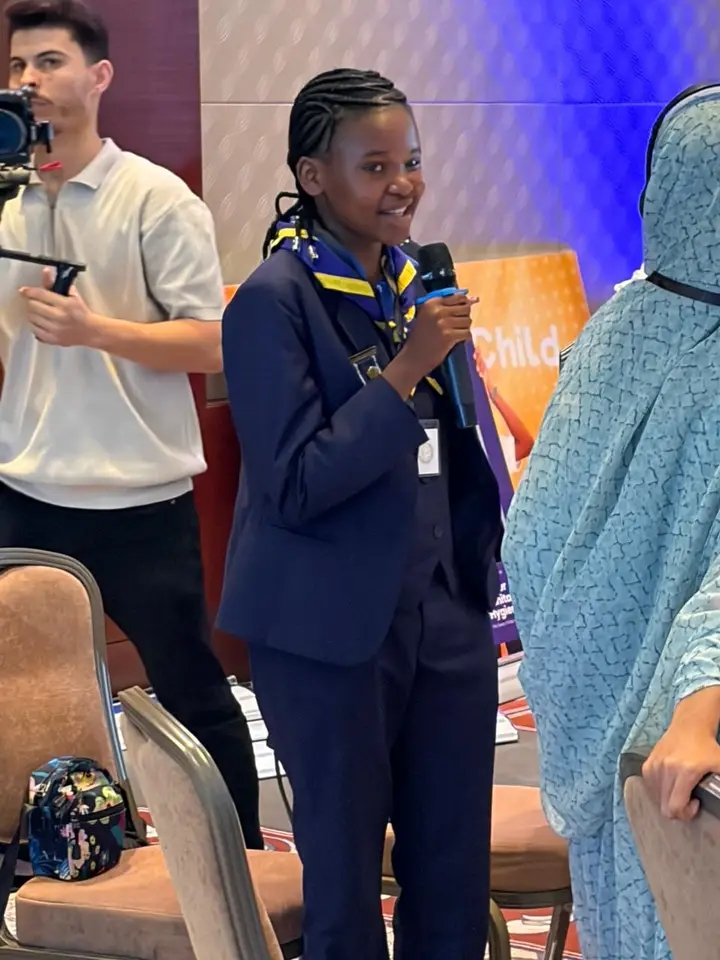
Maseru, June 17 — Delegates at a pivotal two-day youth training workshop in Tripoli, Libya organized by the African Committee of Experts on the Rights and Welfare of the Child (ACERWC) have officially adopted a comprehensive outcome statement demanding urgent infrastructure investment to guarantee clean water for all African children.
The high-level symposium focused on the strict implementation of the African Charter on the Rights and Welfare of the Child. Held in collaboration with UNICEF ahead of the annual commemoration of the Day of the African Child on June 16, the event brought together youth advocates, civil society organizations (CSOs) and key development partners to address the continent’s critical Water, Sanitation and Hygiene (WASH) deficits.
A central theme of the discussions was the stark gap between natural resource wealth and actual community access.
‘Masentle Molapo, a youth delegate from Lesotho and also Lesotho Girl Guides Association (LGGA) Ranger in an interview on Tuesday, highlighted a profound regional paradox.
She said, “although Lesotho possesses abundant water reserves, a severe lack of infrastructure means a lot of children still have little to no access to clean drinking water.”
She emphasized that this structural failure disproportionately impacts the most vulnerable. She said children with disabilities face the heaviest burden, as they are often physically unable to travel the long distances required to reach alternative, distant water sources.
Workshop participants issued a direct call to action for African governments, reminding state actors that water is a fundamental human right. The newly adopted outcome statement outlines how water scarcity directly undermines broader continental goals like AU Agenda 2063.
She noted that she learned from the workshop that children’s rights are entirely interconnected. She cited that violating a child’s right to clean water systematically violates their rights to health, safety and quality education.
She said moving forward, they are going to have a coordinated campaign to take the knowledge acquired in Tripoli back to their respective home countries.
She said to bridge the gap between regional policy and local communities, advocates plan to launch localized gatherings, policy dialogues and targeted peer-to-peer awareness campaigns. She stressed that while individual advocacy is valuable, a united youth front is essential to hold governments accountable and ensure the sustainable realization of WASH goals across the country and continent.
The children’s outcome statement among others highlighted that states must protect water sources and the environment by treating wastewater, fixing leaking pipes, and protecting groundwater and seawater.
They said the states should ensure industries and individuals that pollute water are held accountable. “They also should increase awareness among children on the importance of not wasting water, protecting water from pollution and use schools, communities and media to help children learn about WASH and their rights.
They also called for adoption of sustainable and climate-resilient solutions to water scarcity, including harvesting and storing rainwater during times of drought, planting trees, discussing desertification and reusing and treating water for agriculture.
They emphasised that children and youth should be involved in developing solutions and environmental initiatives, learn from successful African experiences such as large-scale water projects that have improved access to water and benefit from Africa’s natural resources.
“States should create a child led WASH scorecard and take it to schools so that children can support implementation of WASH”, they said.
Moreover, they made a call to civil society organizations to collect data on children who benefit from WASH, keep track of the progress and support all the children who are left out.
They said CSOs must have awareness campaigns about preserving safe WASH; create safe environments through protecting their (children) rights and providing safe spaces as well as to listen to children’s opinions and interventions.
They further called on the community including parents and guardians to preserve water resources and avoid contaminating rivers, lakes, seas and other water sources.
They mentioned that parents and guardians should educate children on the importance of a clean environment and access to safe and clean water. They added that they should also work together as communities to promote environmental hygiene, cleanliness and community-based projects that improve access to WASH.
The Day of the African Child, established by the Assembly of Heads of State of the former OAU in 1991, continues to honour the 1976 Soweto student uprising while advancing the protection and promotion of children’s rights across Africa.
Guided by the African Union and the African Committee of Experts on the Rights and Welfare of the Child, the commemoration remains a platform for collective action towards an Africa fit for its children.
Ends/AT/tl
