
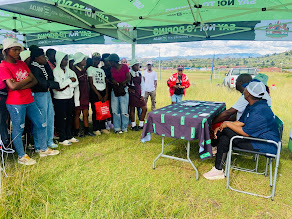
Botha-Bothe, Feb. 17 — The Ministry of Tourism, Sports, Arts and Culture on Saturday educated young people on the dangers of drug use and various forms of abuse in sport during a gathering held at Pitso Ground.
Speaking at the event, Anti-Doping Education Officer Mr. Thabo Kholopo said it has become evident that some young athletes use prohibited substances, sometimes unknowingly, while others do so despite being aware of the consequences.
“The use of drugs has negative effects on the life and career of an athlete. In sport, there are laws and regulations that govern all disciplines. It has been agreed worldwide that the use of prohibited substances is considered cheating,” he said.
Kholopo explained that athletes found guilty of doping face heavy penalties, including fines and lengthy suspensions from competition. In some cases, players can be banned from participating in sport for up to 10 years if they test positive during competitions or in out-of-competition tests.
He stressed that it is the responsibility of everyone including parents, coaches and administrators to ensure that young athletes understand the dangers and long-term consequences of using banned substances.
Meanwhile, Mrs. Mats’epo Khau also addressed the youth on various forms of abuse that occur in sport, urging them to be vigilant and report any misconduct.
She highlighted sexual harassment as one of the major concerns, emphasizing that coaches are not allowed to touch athletes inappropriately and are only mandated to train and guide them in their respective sports.
“When a coach decides to touch you in ways you do not approve of, you have the right to say no and report the matter. It must start with you, the current generation, refusing to tolerate abuse in pursuit of opportunities,” she said.
Khau further warned about grooming, where some coaches or officials buy athletes equipment or other items and later demand sexual favors in return.
“It is wrong to groom players and later demand sex from them. Support given to an athlete must be transparent and publicly known,” she added.
Anti-doping refers to the rules and regulations put in place to prevent athletes from using prohibited substances or methods to enhance performance unfairly. Globally, anti-doping efforts are guided by the World Anti-Doping Agency (WADA), which sets standards and publishes a list of banned substances each year.
In Lesotho, anti-doping education is carried out to ensure that athletes compete fairly, protect their health, and uphold the integrity of sport. Doping not only damages an athlete’s reputation but can also have serious health risks, including heart problems, hormonal imbalance and psychological effects.
Ends/MJL/tl
