
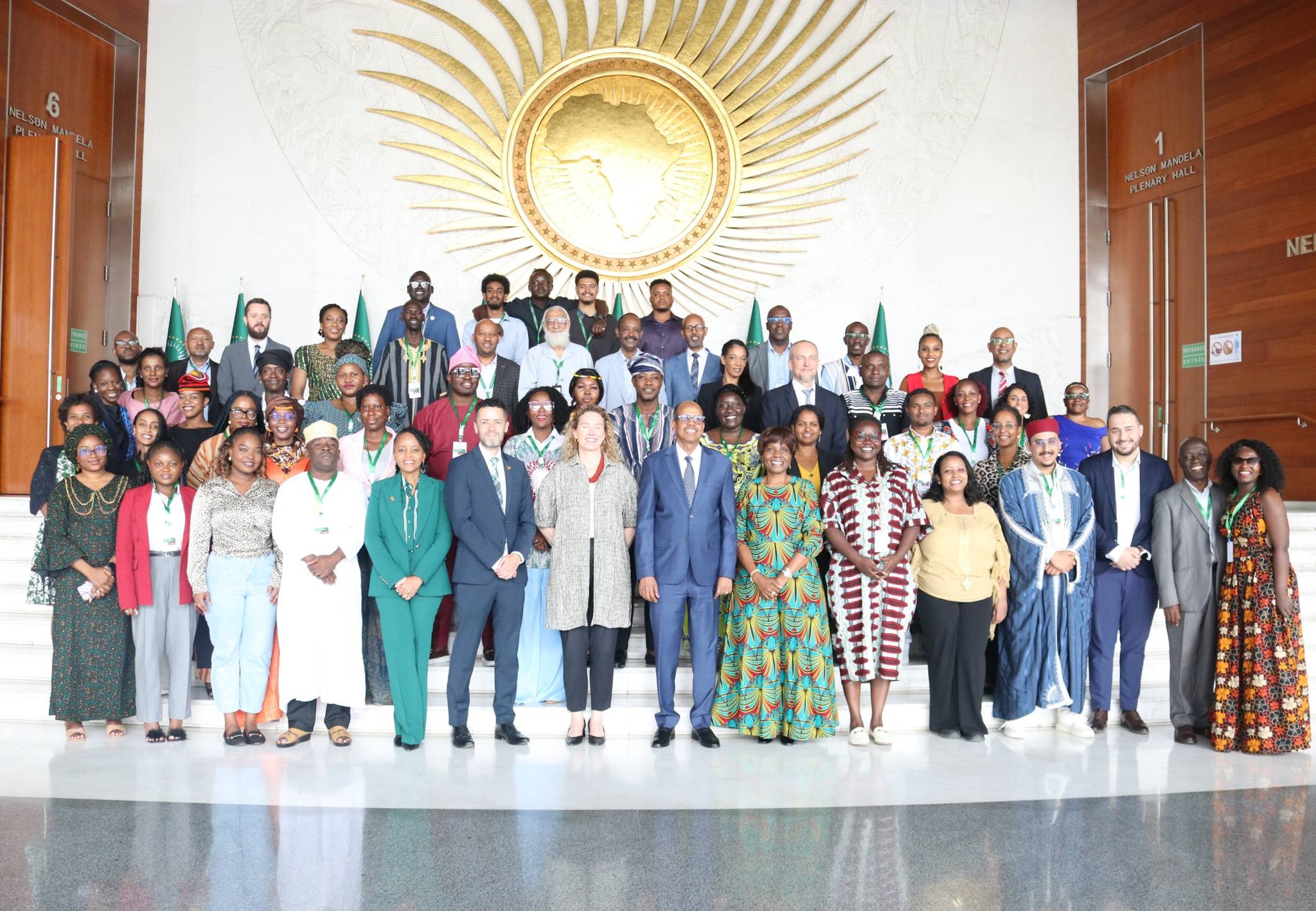
Addis Ababa, Mar. 15 — The African Union (AU) has officially launched the third cohort of its Media Fellowship Programme, bringing together 22 journalists from across Africa to strengthen their reporting and amplify African-led narratives on the continent’s development.
The Programme is designed to equip journalists with the tools, networks and knowledge necessary to tell Africa’s development story with depth and credibility.
Speaking at the official opening ceremony, Willy Nyamitwe, Ambassador of the Republic of Burundi and Chairperson of the Committee of Permanent Representatives (COREP), stressed that responsible journalism is increasingly vital in today’s rapidly evolving information landscape.
“In a world where information circulates at an unprecedented speed and where perceptions profoundly influence political, economic and social dynamics, the role of professional, responsible and ethical journalism is more essential than ever,” he said.
Nyamitwe emphasized that the partnership between the African Union and the media community is key to advancing narratives that promote peace, unity and development across the continent.
“Together we must continue to promote professional standards, ethical reporting and narratives that advance peace, unity and development across our continent,” he said.
Highlighting the importance of storytelling, he noted that narratives play a powerful role in shaping collective memory.
“It is often said that the one who tells the story shapes the collective memory. Today, through this fellowship, our continent affirms its will to tell its own story,” he added.
Nyamitwe also reflected on his personal background in journalism and mass communication before entering diplomacy, noting that he previously worked at the Presidency of Burundi as Head of Communication and Spokesperson for the President, where he helped establish print, radio and television media outlets.
“This experience has deeply influenced my understanding of the essential role that information plays in our societies,” he said. “Journalism reminds us that information does not only consist of reporting facts; it also contributes to enlightening citizens, nourishing public debate and strengthening understanding between peoples. Journalists are not only observers of history; they are also, to a large extent, its narrators.”
He described the fellowship as a valuable opportunity for journalists to understand continental institutions better and contribute to telling Africa’s story with professionalism, rigor and responsibility.
Quoting Evariste Ndayishimiye, President of Burundi and current Chairperson of the AU, Nyamitwe emphasized the role of storytelling in shaping the continent’s future.
“The Africa we want will not be built tomorrow, but it is being built today, every day. And the Africa we want is also built through the stories that we carry,” he said.
Also addressing the fellows, Mahmoud Ali Youssouf, Chairperson of the African Union Commission, encouraged fellows to use the programme to deepen their understanding of the AU and collaborate across borders while practicing journalism that informs, inspires and holds institutions accountable.
“Africans must write the future of Africa, and today we celebrate the fact that many of those voices are in this room,” he said, emphasizing solution-based journalism.
According to Wynne Musabayana, Head of Communication at the AU, the fellowship programme began in 2022 with its first cohort, followed by a second cohort in 2023–2024.
“Today, we are honoured to welcome 22 outstanding media practitioners representing 18 African countries, selected from an exceptionally competitive pool of over 100,000 applicants,” she said.
Over the next 16 months, the fellows will benefit from mentorship by three distinguished media professionals who will guide them through a journey of professional growth, learning and collaboration.
Musabayana noted that the achievements of the first two cohorts already demonstrate the programme’s impact, with nearly 250 high-quality stories produced across print, broadcast and digital platforms.
Across the continent, she said, the media plays a vital role in informing societies, stimulating public debate and safeguarding democratic values.
“Through their work, journalists inform and educate our societies, help frame the world around us, and stimulate public debate on the issues that shape our collective future,” she said. “They safeguard democratic values by speaking truth to power and monitoring the implementation of decisions.”
She added that African journalists also contribute significantly to the global body of knowledge about Africa, particularly in the digital space where the continent remains underrepresented.
The programme was developed in response to long-standing requests from media professionals for greater access to information, improved access to decision-makers and enhanced capacity building in an evolving media landscape.
“The programme responds to all three of these requests by supporting journalists and content creators as they navigate the changing dynamics of both continental and global information ecosystems,” Musabayana explained.
The fellowship also aligns with the AU’s development blueprint, Agenda 2063, and is rooted in the 2017 decision of the AU Specialized Technical Committee on Communication and Information and Communication Technologies calling for stronger engagement with African journalists.
She further noted that the programme supports key continental frameworks such as the African Charter on Human and Peoples’ Rights, which guarantees the right to receive information, and the Declaration of Principles on Freedom of Expression and Access to Information in Africa, which emphasizes transparency and access to information.
Through the programme, she said fellows will produce and distribute high-quality content across multiple platforms while strengthening developmental journalism and storytelling capacity.
Participants will also gain exposure to global media practices through study tours, access AU knowledge resources and receive grants to support in-depth reporting.
Beyond the 16-month mentorship programme, the AU says it aims to build a lasting community of media practitioners who report on Africa’s development journey from a position of knowledge, context and informed understanding.
Ultimately, the Fellowship reflects the AU’s commitment to putting Africa first by empowering African journalists to tell the continent’s stories with professionalism, accuracy and context ensuring that Africa’s realities, innovations and aspirations are shared with the world through African voices.
The initiative has also attracted support from several partners. Margaret Muigai Edwin, Director of Communication and Public Information at the Africa Centres for Disease Control and Prevention (Africa CDC), said the institution will sponsor five fellows focusing on public health reporting.
“Our goal is to strengthen a new generation of journalists who are equipped to report on health issues with accuracy, depth and responsibility,” she said, noting that misinformation often spreads faster than the truth.
Similarly, David Gudisch, Deputy Permanent Observer of the Embassy of Germany to the AU, emphasized that cooperation and integration are essential for achieving peace, security and shared prosperity across the continent.
The European Union (EU), a key partner supporting the fellowship for the third consecutive year, also reaffirmed its commitment to strengthening journalism and African-led narratives.
Karin Stanghed, Deputy Head of the EU Delegation to the AU, said the growing number of applicants demonstrates the strong interest among African journalists in telling the continent’s story and engaging with the AU’s integration agenda.
“In an increasingly fragmented world marked by disinformation, we need more professionals able to report on African and global issues with skill, independence and professionalism,” she said.
She also announced that the partnership will include a study tour of EU institutions in Brussels and efforts to strengthen the alumni network of the fellowship.
Speaking on behalf of the fellows and mentors, Anita Eboigbe expressed appreciation to the AU and its partners for the initiative, noting that journalists serve as a bridge between policymakers and citizens.
“Journalists are a bridge between policymakers and the public, and our job is to explain to Africans what is happening across the continent. We are committed to walking this journey with the AU toward the attainment of the Africa we want,” she said.
As this third cohort of journalists begins its journey, the Fellowship signals a new era in which Africans are taking ownership of their own narratives. Beyond reporting facts, these journalists will shape how the continent is understood at home and abroad, connecting citizens, institutions, and the world through stories that reflect Africa’s realities, innovations, and aspirations.
Ends/MM/tl
