
Maseru, Apr. 24 — With the Lesotho Highlands Water Treaty up for review, communities that were affected by the Mohale and Katse dams construction want 20 percent of water royalties.
The 1986 Lesotho Highlands Water Project (LHWP) Treaty undergoes a review every 12 years and 2026 marks its 40th anniversary, heavily focused on actively renegotiating the treaty and advancing Phase II.
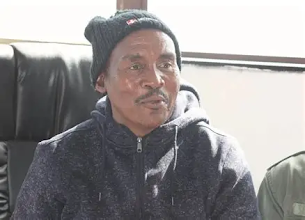
Speaking in an interview, Mr. Lenka Thamae, Advisor and Expert on the Lives of Communities affected by LHWP said now the treaty is due for review, they would among others things which they want to be included in the review, that the 20 percent of water royalties to go to the affected communities instead of all the money going into the government’s purse.
He said with the said 20 percent they would be able to pay an old age pension for their community members while at the same time improving their lives.
He said the compensation which is currently for 50 years should be changed to lifetime saying due to the project, they suffer multiple injustices, landlessness, poverty as well as loss of livelihoods. He added that they used to make a living from their land and even take their children to school by selling their livestock and agricultural produce but today that is difficult.
Mr. Thamae stated that water and sanitation should be included as basic rights saying they should not be sold. Again, he noted that water provision should be to all people of Lesotho and South Africa saying it is shameful that there are communities including those affected by LHWP in Lesotho without water yet it is referred to as the country’s white gold.
“Standard of living for affected communities should be improved if inferior to that obtaining the project. This is contrary to Article 7 which states that the treaty is to maintain a standard of living not inferior to that obtained at the time of such a project. The review of the treaty should also include that it should develop and eradicate poverty in Lesotho”, he said.
Moreover, he mentioned that it should be legally binding that as stakeholders they are included in the review citing that ‘nothing for us without us’.
Sharing the same sentiments, Mr. Tsotang Piti residing at Likalaneng Ha Mohale said they want 20 percent of water royalties saying the project has changed their lives.
“We have lost our fields and land and for that we do not benefit from anything as the compensation that we are getting is not enough for our daily needs. We fail to take our children to schools and the review should include establishing projects for the community so that they make a living and create employment for themselves,” he said.
He said through the treaty there should be an investment in the education of the children of the affected communities saying they should be taken to post primary schools as well as tertiary.
Earlier during the budget presentation Minister of Finance and Development Planning Dr. Rets’elisitsoe Matlanyane highlighted that non-tax revenues will also receive renewed attention saying fees, charges and resource-based revenues will be managed with greater transparency and predictability to ensure fair and reliable returns from public assets.
She said in this regard, the government is actively engaging the Republic of South Africa on the review of the water royalty framework under the Lesotho Highlands Water arrangements, to better reflect the economic value of this strategic national resource, evolving cost structures and long-term sustainability, in a cooperative and mutually beneficial manner.
On the other hand, LHWP Chief Delegate Mr. Mafiroane Motanyane said the review has not yet started saying the government is due to officially announce. He assured that once the review exercise starts, there will be public consultations to ensure that public views are incorporated.
He however highlighted that the two countries each have the right to propose areas they would want reviewed in the treaty.
The 1986 Treaty, signed by the governments of the Kingdom of Lesotho and the Republic of South Africa, governs the design, construction, operation and maintenance of the Lesotho Highlands Water Project and the export of water to South Africa.
The LHWP is managed through the Lesotho Highlands Development Authority (LHDA) based in Lesotho and the Trans-Caledon Tunnel Authority (TCTA), which is located in South Africa as stipulated by Article 6 of the LHWP. The LHDA has the duty to supply precise quantities of water to South Africa. The TCTA has the duty to administer facets of the project in South Africa. The LHWP is divided into four phases. Phase I had two sub-phases: Phase I led to the construction of the Katse and Mohale dams and the Muela hydropower plant. Phases II, III and IV will encompass the building of the Mashai, Tsoelike and Ntoahae reservoirs. Phase 1 was completed in 1997 with the provision of water to South Africa commencing in 1998.
Lesotho gets around M298 million monthly from South Africa as royalties for water supply.
Ends/AT/tl
