

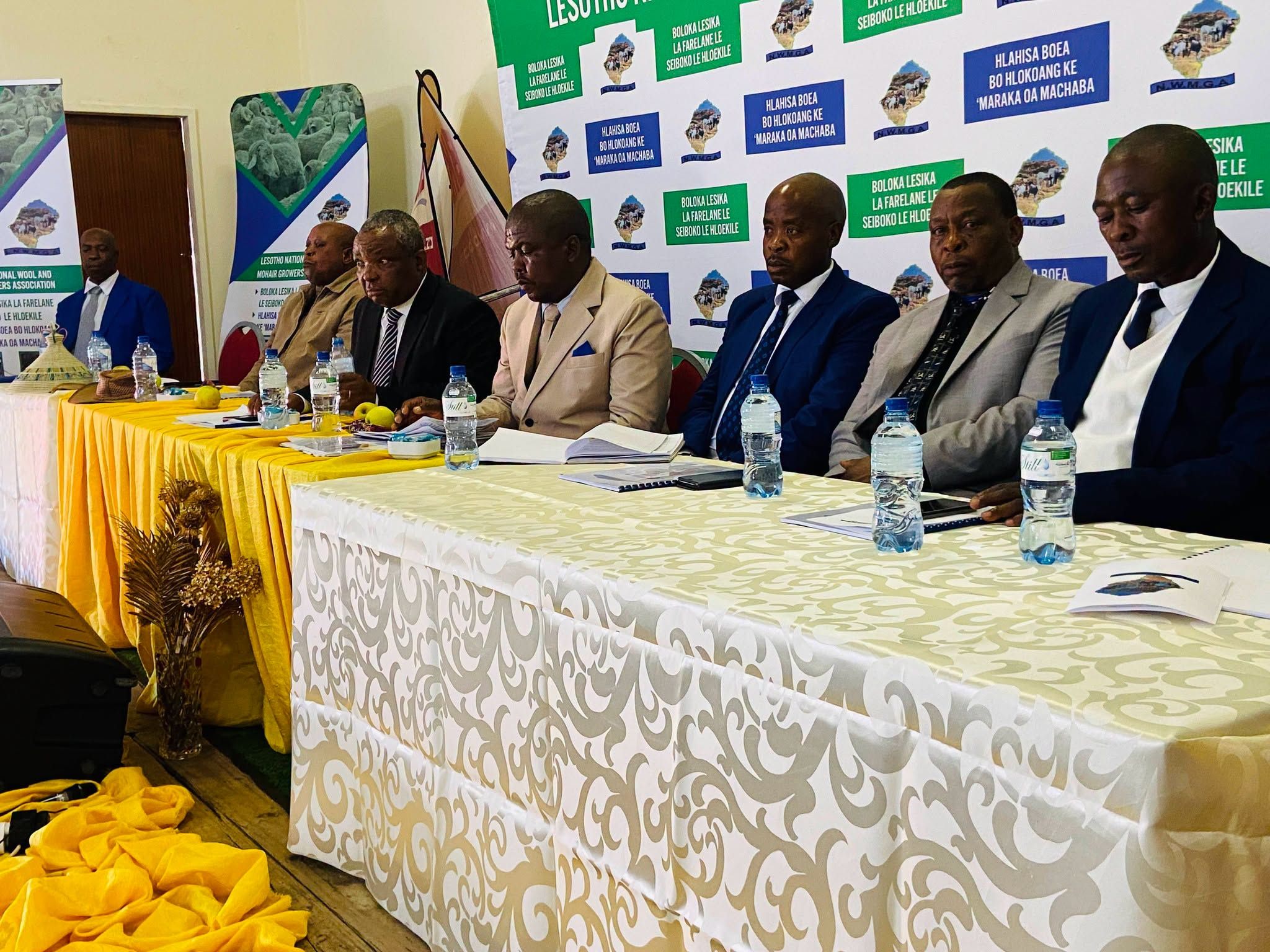
Botha-Bothe, Aug. 27 — Minister of Agriculture, Food Security and Nutrition Mr. Selibe Mochoboroane has challenged wool and mohair farmers to consider investing in abattoirs as a way of diversifying their income and preparing for future challenges in the industry.
Mr. Mochoboroane said farmers should take note of current global trends, particularly the production of synthetic alternatives to wool and mohair, which could negatively affect demand for the products and, consequently, farmers’ markets.
“If there is a time when Lesotho would face a challenge because of diminishing grazing lands, which will affect the production of wool and mohair, we need to rethink and see what we can do.
“I therefore would like to challenge you farmers about owning a big abattoir in Lesotho and having smaller ones in the districts that will supply the big one. In that way, we will be benefiting not only from the sale of wool and mohair but also from the sale of meat,” he said.
He added that lamb chops, which he described as among the most expensive and delicious meat products, present an opportunity that farmers have yet to fully explore.
Minister Mochoboroane said venturing into meat production and processing would help farmers prepare for a possible future in which countries increasingly turn to synthetic wool and mohair.
He also traced the history of Lesotho’s wool and mohair industry, saying that following independence in 1966, the country experienced a decline in the sale of wool and mohair.
He attributed this partly to diminishing grazing lands that were not properly managed, as well as the production of synthetic wool and mohair at the time.
He further noted that disputes surrounding wool and mohair regulations in 2018 also contributed to a decline in the export of the products.
Mr. Mochoboroane said reports indicate that Lesotho is among the leading producers of wool and mohair in Africa and globally, ranking second in mohair production and 31st in wool production.
“This says that, to this stage, Lesotho is one of the respected countries in the production of wool and mohair because of the weather and the terrains that Lesotho holds. I have also been told by our officers in the Ministry that Lesotho currently owns two million sheep and one million goats.
“Lesotho currently exports approximately 8.2 tonnes of wool and mohair per shearing season, and that makes up to M1.2 billion to M1.4 billion. This says wool and mohair is one of the biggest exports for Lesotho that contributes highly to the economy of this country,” he said.
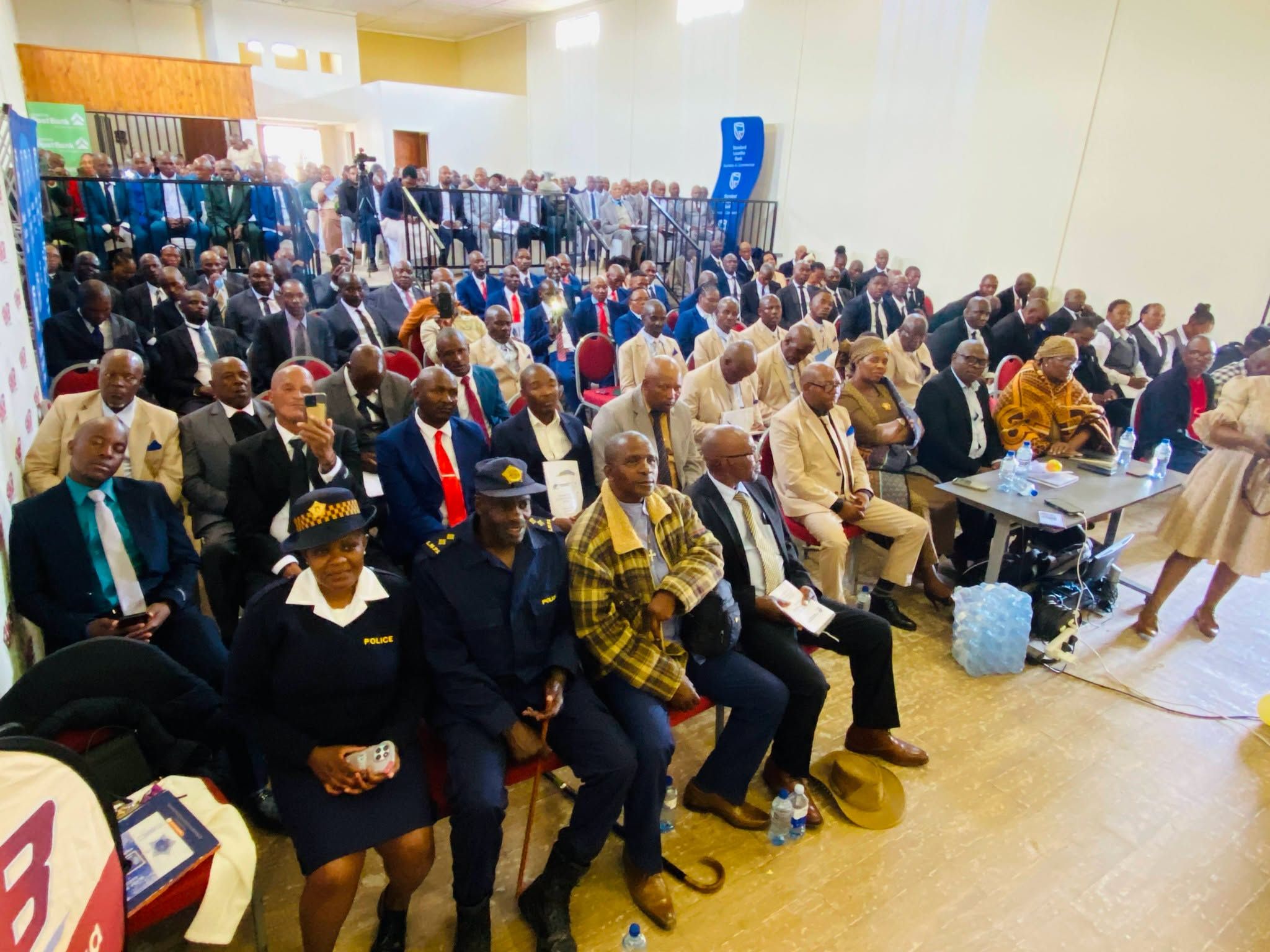
Meanwhile, Wool and Mohair Growers Association President Mokoenehi Thinyane explained that the association’s Annual General Meeting (AGM) was intended to report to members on the association’s finances, successes and challenges experienced throughout the year.
He said the AGM also provides an opportunity for members to discuss the state of the industry and plan for its future.
One of the achievements the association is proud of this year, Thinyane said, is securing a M42 million grant from the International Fund for Agricultural Development (IFAD), which will be used to develop shearing sheds across the country.
He said the improved shearing sheds would enable farmers to obtain compliance certificates, which could help them secure better prices for their wool and mohair.
However, Thinyane identified Foot-and-Mouth Disease (FMD) as the biggest challenge faced by the industry this year, saying it resulted in wool and mohair being trapped at borders.
The AGM was the 16th successfully held by the association and brought together wool and mohair farmers from across the country.
Ends/MAJL
