
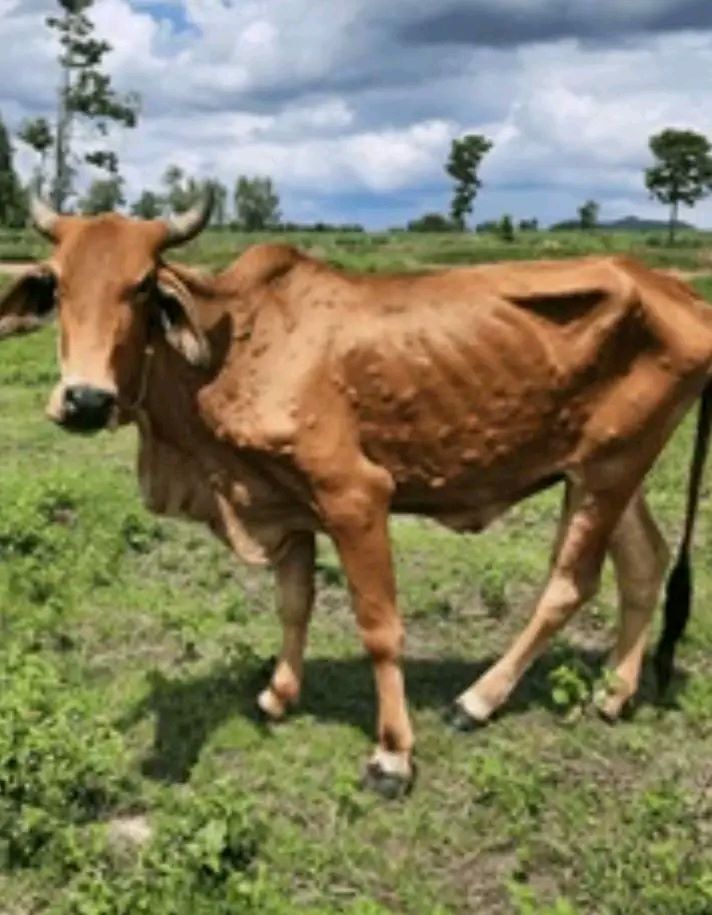
Qacha’s Nek, Jan. 18– District Veterinary Officer Dr. Bokang Lefa has urged farmers to carefully check their cattle every morning before herding and again in the afternoon after returning from grazing to detect any signs of Lumpy Skin Disease (LSD).
This comes after Qacha’s Nek recorded its first case of LSD in Mosenekeng on Tuesday.
Speaking to the Agency, he defined LSD as a contagious viral infection affecting cattle and, historically, water buffalo. “It spreads through biting flies and direct contact, and outbreaks are more likely during the rainy and hot seasons,” he said.
Dr. Lefa explained that early detection is important. “LSD has three forms: acute, mild, and subclinical and monitoring cattle closely helps prevent the disease from spreading within a herd,” he added.
He said symptoms include fever, loss of appetite, and firm, raised lumps up to 5 cm appear on the skin, head, neck, genitals, and limbs, eventually scabbing and leaving holes.
He further said some cattle may also develop intestinal issues or pneumonia. “Signs typically appear four to fourteen days after infection,” said Dr. Lefa.
While LSD rarely kills cattle, he revealed that mortality is only 1 to 5 percent. “It can spread quickly if not managed, potentially affecting multiple animals in a herd. The disease also has economic consequences, including reduced milk production, hide damage, and trade restrictions.”

He said prevention measures include vaccination, use of protective equipment, controlling animal movement, and isolating sick animals.
Dr. Lefa said that awareness campaigns are already underway to educate farmers about the disease and preventive measures. “Providing guidance and information to farmers helps reduce the spread and ensures cattle are monitored effectively,” he explained.
He said veterinary authorities will soon advise the Ministry of Agriculture, Food Security and Nutrition (MAFSN) on which vaccine to procure, as vaccines target specific strains.
Dr. Lefa also cautioned against unproven treatments circulating on social media, such as injecting animals with ‘dettol’, spirits, or madubula. “These methods are not scientifically proven. Farmers should report suspected cases to veterinary authorities immediately,” he said.
Mosenekeng Chief Lekhetho Makhaola confirmed the case and highlighted the importance of following veterinary advice. “Since LSD is uncommon here, isolating infected animals is critical. However, with limited resources, preventing contact can be challenging,” he said.
Lesotho first recorded LSD in November 2025 in Maseru, with subsequent cases reported in Leribe, Butha-Buthe, Berea, Mafeteng, Mohale’s Hoek, and now Qacha’s Nek.
The first confirmed LSD case in Qacha’s Nek highlights the importance of daily cattle monitoring and timely reporting. Through awareness campaigns, careful observation, and adherence to veterinary guidance, farmers can effectively manage the disease, protecting both their livestock and livelihoods.
Veterinary support is available to assist with the prevention, monitoring, and treatment of affected animals. Farmers can report suspected cases or request veterinary assistance by contacting Dr. Lefa at 6266 1072.
Ends/MAPM/ml
