
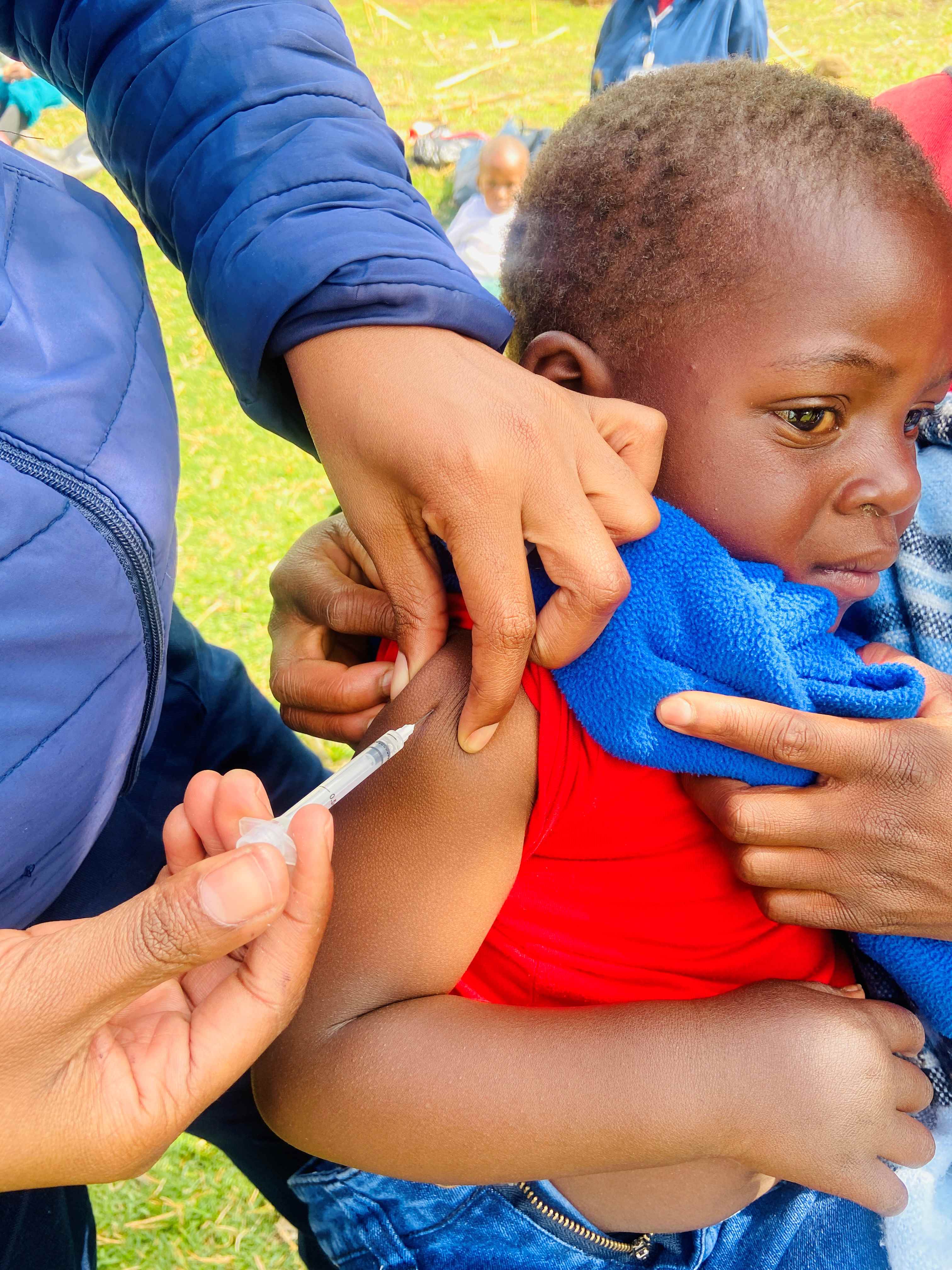
Botha-Bothe, Oct. 23 — As the morning sun rises and mothers strap their children on their backs heading to the nearest vaccination points to protect them against measles and rubella, a few fathers in Botha-Bothe are also stepping forward — carrying their under-five children to ensure they are protected from preventable diseases.
One of them is Motebang Samuel, a 42-year-old father who walked to the clinic to have his three-year-old son vaccinated.
“My wife works in Botha-Bothe town in one of the shops,” he says, slipping the clinic booklet into his pocket as he prepares to carry his son in his arms. “She stays in town because it is too far for her to commute daily. So, in her absence, I decided to take our child for vaccination.”
For many Basotho, scenes like this remain unusual. Traditionally, it is women who carry the weight of childcare — walking long distances to health centres for their children’s health needs — while fathers are often preoccupied with work, ploughing fields, or tending livestock.
But as economic realities shift, so do gender roles. Over the years, many men have lost their jobs in South African mines, forcing women to step up and find employment to sustain their families. Today, large numbers of rural women work in South Africa and nearby towns as nannies, domestic workers, and shopkeepers.
Meanwhile, some men now stay home, taking on caregiving responsibilities once considered strictly women’s work. During the ongoing Measles and Rubella (MR) vaccination campaign, fathers like Mr. Samuel are not only taking care of their children but also ensuring they are protected from dangerous diseases.
Men Taking the Lead
At Ha Maama, one of the village health workers – himself a father – Mr. Lechasa Maama, says he has witnessed a gradual shift in attitudes among men.
“Times have changed,” he says. “We are now seeing men bringing their children to access health care, something that was rare in the past. Back then, men were not expected to get involved in their children’s health. Taking a child to the clinic was seen as women’s work, and men who did it were often ridiculed.”
He adds that this change is important for the community.
“When fathers take their children to access health care services, it helps change the narrative. It shows that caring for children is everyone’s responsibility.”
For Rantholi Rantholi, a 29-year-old father from Ha Maama, bringing his two-year-old son to the clinic is about more than just vaccination — it is about taking responsibility.
“My wife works in Maseru while I work from home,” he explains. “That means I am the one who takes our son for vaccines and check-ups. If I waited for my wife to return, our son would miss his scheduled appointments. His health is also my responsibility.”
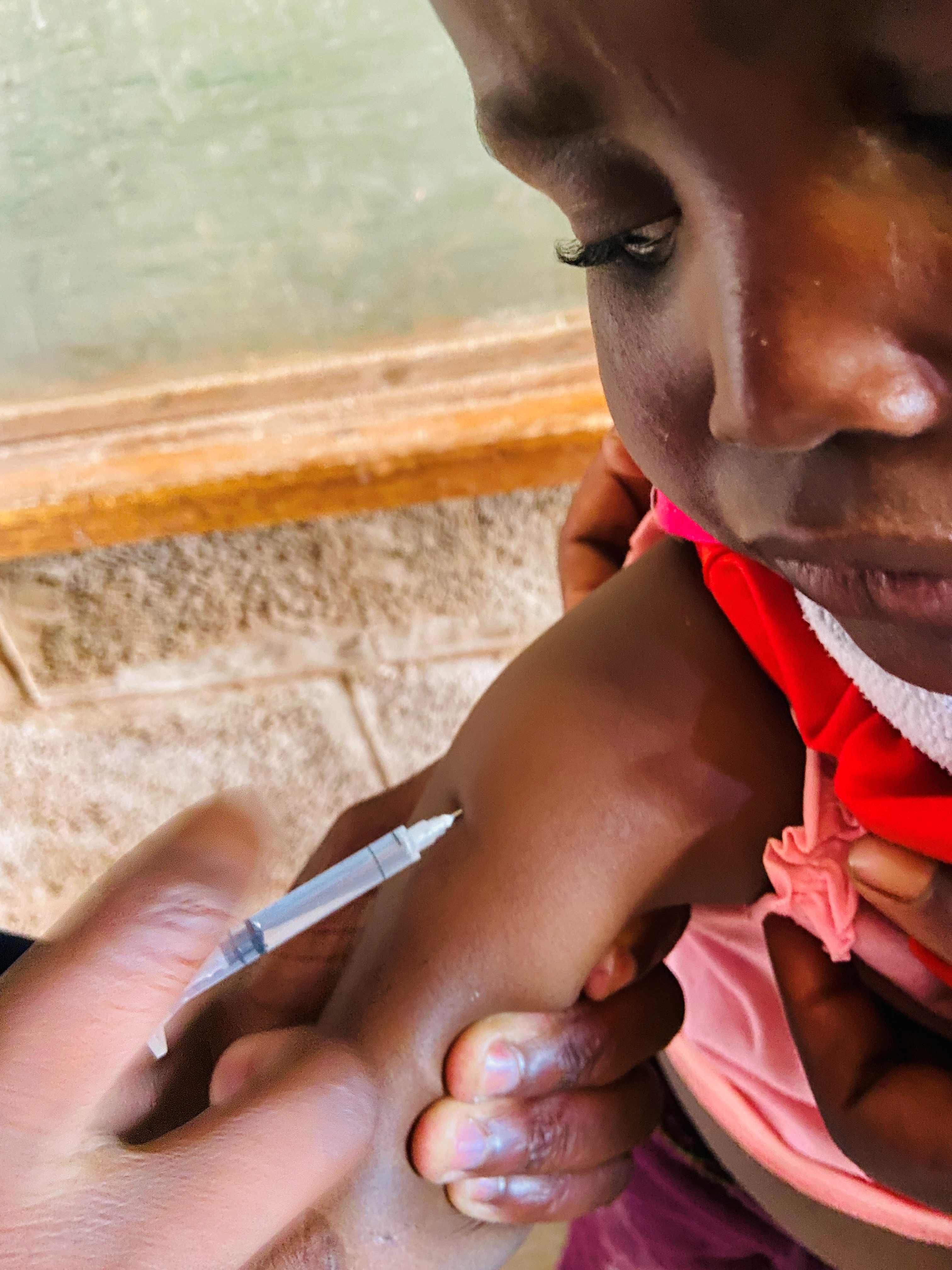
At the clinic, Mr. Rantholi carefully undresses his son when the nurse calls them in. The little boy clings to him as he realises an injection is coming.
“Sorry, my boy,” the father says softly, holding him close after the shot. He dresses him again, carries him on his arm, and leaves the vaccination room, quietly soothing the crying child.
Outside, women waiting in line watch with interest. One whispers to another, “His wife is lucky. My husband would never do that.” The group bursts into laughter, acknowledging how rare such a sight remains.
But for Mr. Rantholi, this is not about embarrassment — it is about love and shared duty.
“Some men ask why I let my wife stay alone in Maseru while I take care of our child,” he says. “Others look at me in surprise when they see me at the clinic. But I believe taking care of my son doesn’t make me less of a man — it makes me a better father.”
Health Workers Encourage Community Participation
With some members of the public still sceptical about the Measles and Rubella vaccine, health officials in Botha-Bothe have intensified efforts to educate communities about its importance and to dispel misinformation that circulated during previous campaigns.

During community mobilisation gatherings at Makopo and Ha Letšolo, residents expressed a renewed understanding of the value of vaccination. This followed a presentation by Ms. Mathe Molapo from the Ministry of Health’s Risk Communication and Stakeholders Engagement Team.
One participant, Mr. Bereng Mathafeng, said he was now convinced about the need to vaccinate all children.
“I plead with all parents to take this opportunity seriously,” he said. “We now understand the risks children face if they are not vaccinated, and no parent would want their child to suffer from preventable diseases. We were also taught how to handle any mild reactions after vaccination.”
Another community member, Mr. Ntaiso Katso, urged parents to ignore rumours and seek accurate information from health professionals.
“People’s bodies react differently to vaccines, and health workers have explained possible after-effects,” he said. “Life is precious. We must do everything possible to protect our children’s health.”
Lesotho recently launched its Measles and Rubella Vaccination Campaign targeting all children under the age of five. The campaign aims to curb outbreaks of these highly contagious diseases, which remain a threat in communities with low immunisation coverage.
According to the Ministry of Health, the campaign is part of a broader effort to strengthen child health services across the country, ensuring that no child is left behind due to distance, misinformation, or gender-based caregiving norms.
Health officials have also stressed that the involvement of both parents — mothers and fathers alike — is key to improving vaccination rates and building a culture of shared responsibility for children’s wellbeing.
As fathers in Botha-Bothe continue to line up alongside mothers at vaccination points, they are quietly rewriting the story of parenting in Lesotho — one child, one vaccine, and one act of love at a time.
Ends
