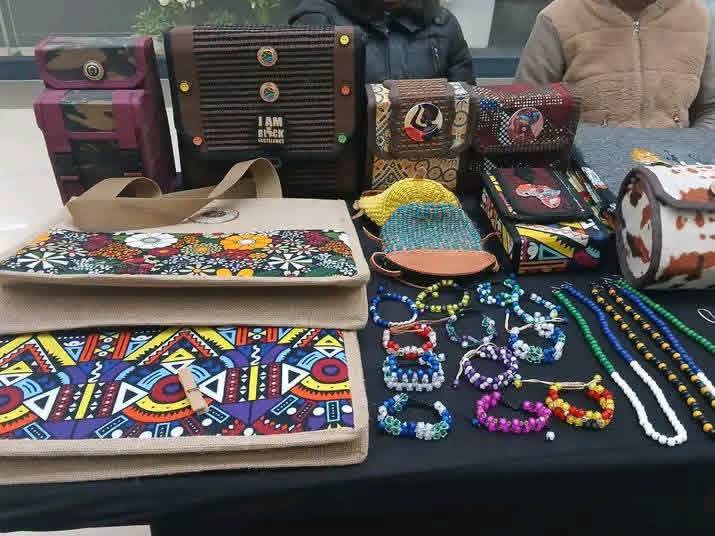
Maseru, July.27—Lesotho through eight Micro, Small and Medium Enterprises (MSMEs) is currently participating at the 9th Annual Southern African Development Community (SADC) Industrialization Week (SIW) hosted by the SADC, in collaboration with the Government of the Republic of South Africa and the SADC Business Council staged at the Durban International Convention Centre (ICC), KwaZulu-Natal, South Africa from July 27 to 31.
The participating MSMEs are in sectors including leather, cosmetics, beekeeping, handicraft and light industry.Held under the theme, “Resilient, Sustainable and Inclusive Industrialisation through Infrastructure Development, Agricultural and Critical Minerals Transformation in Pursuit of a Just World”, the event serves as a high-level precursor to the 46th SADC Summit of Heads of State and Government.
The SIW is the region’s premier public-private platform for advancing industrial development, promoting investment, strengthening regional integration and accelerating economic transformation.
The week-long programme brings together policymakers, business leaders, investors, academia, researchers, development finance institutions and other strategic stakeholders from across the SADC region and beyond. It also provides a platform for dialogue, knowledge exchange, partnership building and the identification of practical solutions to advance industrialisation and sustainable economic growth.
Speaking in an interview, Acting Director Trade Mr. Mpeshe Selebalo said Lesotho has eight MSMEs who have been supported to take part in the SIW exhibition saying this platform provides them with a good opportunity to pitch to regional and international buyers and investors, while also engaging in high-level trade and investment forums.
He said the participation of these enterprises reflects the country’s strong commitment to advancing trade and investment and to strengthening regional value chains across different sectors including textiles and apparel, leather, agro‑processing, handicrafts and wool and mohair.
He also said Lesotho seeks partnerships with investors who can bring technology, finance and market access to boost local value addition, create employment and enhance export competitiveness saying these efforts are fully aligned with the SADC Industrialization Strategy.
Commenting on how Lesotho plans to plug into regional critical mineral and agricultural value chains rather than just exporting raw materials, he said, in an effort to diversify the economy continues to support value addition and full integration into the regional value chains.
“This is pursued both at the national level through targeted support programmes and at the regional level through frameworks such as the SACU and SADC value chain development agendas”.
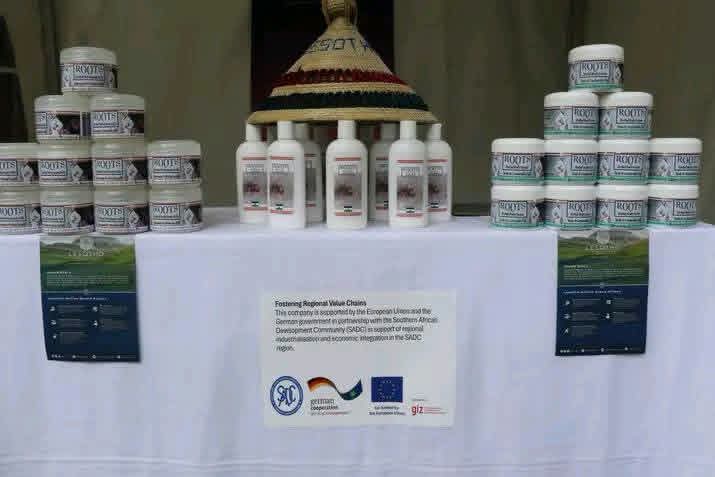
Moreover, he said there are initiatives under the Ministry such as the Regional Value Chain Lesotho+ Project that is financed by the European Union and the Government of Germany.
This programme promotes value addition by transforming Lesotho’s indigenous plants into cosmetics, essential oils and herbs and spices.
Furthermore, he elaborated that the Competitiveness and Financial Inclusion Project (CAFI) supported by the World Bank is scaling up MSMEs’ productive capacity through incubation and acceleration processes saying these efforts enable enterprises to move beyond exporting raw materials by promoting local processing of agricultural products, thereby enhancing competitiveness, creating jobs and strengthening Lesotho’s position in regional and international markets.
Mr. Selebalo highlighted that SADC supports MSMEs through trade facilitation programmes that ease cross-border trade bottlenecks and strengthen export readiness. He said these initiatives build the competitiveness and capacity of MSMEs to access regional and international markets.
In addition, he said SADC promotes the development of regional value chains, ensuring that MSMEs are integrated into broader production networks.On the other hand, the Acting Director Trade elaborated that Lesotho has undertaken various trade facilitation initiatives aimed to reduce the costs of doing business for local entrepreneurs.
He said Lesotho has developed a National Single Window Programme, to reduce time and costs of exporting and importing procedures for the private sector. Additionally, he mentioned that automation of customs procedures have been undertaken to enhance efficiencies for processing of exports and imports.
He said, “Lesotho is also embarking on regional trade facilitation programmes and is in the processes of establishing a One-Stop Border Post for Maseru Bridge and Maputsoe/Ficksburg border posts”.
Commenting on the measurable outcomes or signed trade agreements the Ministry expect from the Durban meeting, Mr. Selebalo further indicated that the Ministry anticipates securing meaningful trade and investment leads through the facilitation of business to business linkages.
He emphasised that by creating these connections, the Ministry aims to position enterprises to access new buyers and investors as well as build partnerships that lead to signing of business contracts.Meanwhile the SADC Industrialisation Week contributes to the implementation of the SADC Industrialisation Strategy and Roadmap (2015-2063), which is anchored on three strategic pillars: industrialisation, competitiveness and regional integration.
The Strategy aims to enhance regional productive capacities, promote value addition and beneficiation, strengthen industrial competitiveness and foster the development of integrated and competitive regional value chains.The 2026 edition of the SIW will focus on key strategic priorities, including: Strengthening regional value chains in agro-processing, pharmaceuticals, consumer goods and critical minerals beneficiation; Promoting infrastructure development in energy, transport, logistics, water and information and communication technologies (ICT); Mobilising investment and fostering industrial partnerships; Advancing women and youth empowerment, innovation, entrepreneurship and digital transformation.
The programme in the next coming days is also expected to feature high-level policy dialogues, technical sessions, strategic discussions, seminars, workshops and stakeholder engagements focusing on industrialisation, trade, investment, infrastructure development, energy, regional value chains and private sector development.
The SADC Industrialisation Week provides an important platform for Member States, the private sector, development finance institutions and partners to address constraints affecting regional production systems, unlock investment opportunities and advance measures that support resilient, inclusive and sustainable industrial growth.
Through the SIW, SADC continues to reaffirm its commitment to deepening regional cooperation, accelerating economic integration and promoting industrial transformation as a foundation for job creation, enhanced competitiveness and shared prosperity across the region.
Ends/AT
