
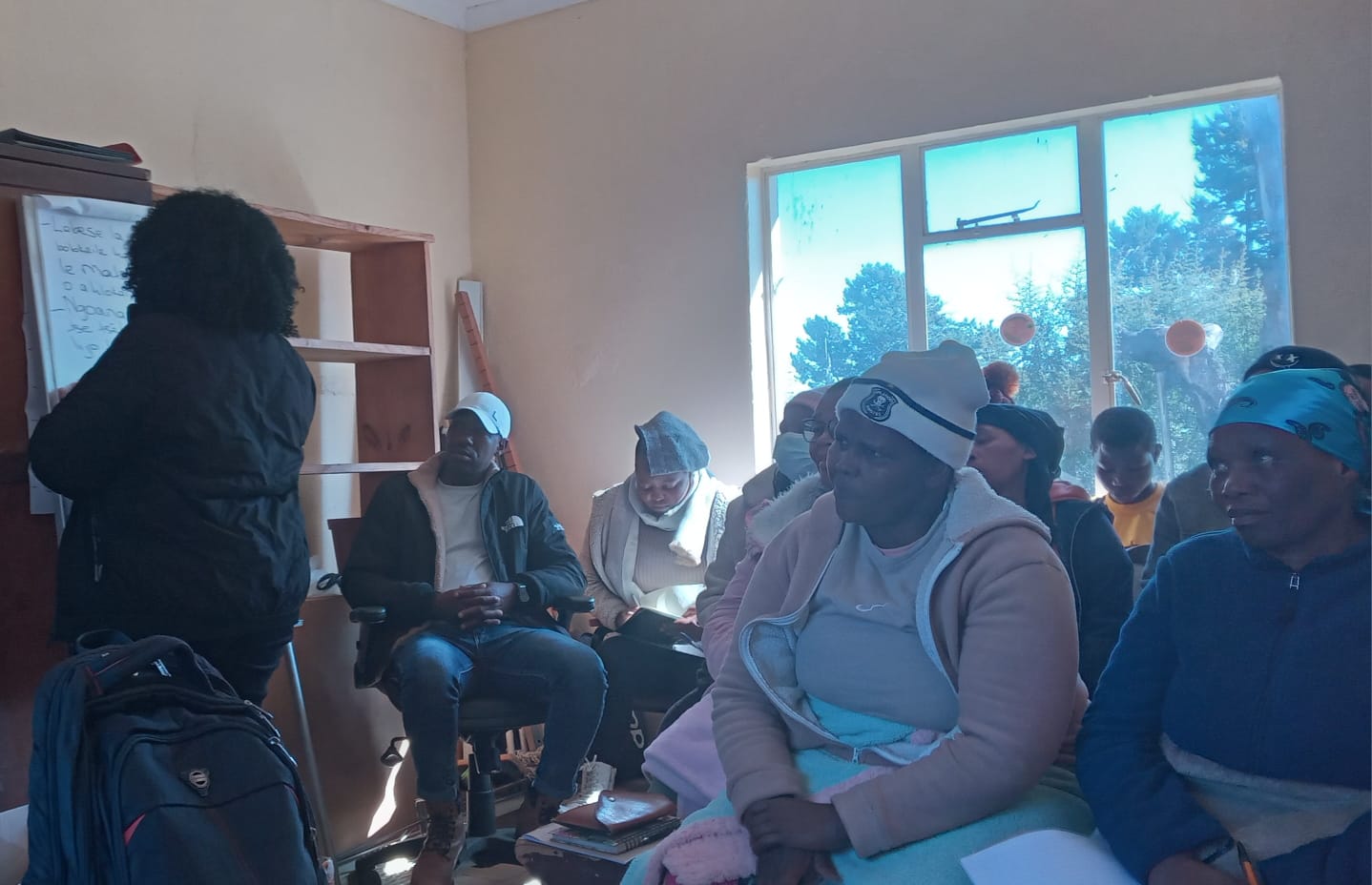
Quthing, July 15 — Volunteers from four Nutrition Clubs under the Ntlafatso Bana – Improvement of Children Nutrition project in Tosing and Telle community councils attended a one-day refresher training at Koali Agricultural Resource Centre on Wednesday.
The training, organized by the District Nutrition Coordinating Office in collaboration with the Lesotho Red Cross Society (LRCS), aimed to equip participants with skills to disseminate accurate and timely nutrition messages promoting good health of children under five at village level.
These messages will be shared through the Strengthening Nutrition Messaging, Risk Communication, Community Engagement (RCCE), and Accountability to Affected Populations (AAP) project, implemented by LRCS and funded by United Nations Children’s Fund (UNICEF).
Project Coordinator, Ms. Lintle Mathosi explained that the training followed a baseline assessment which revealed gaps in community access to proper nutrition information. She emphasized that participants, trusted within their villages, will serve as the ‘hands of the district nutrition team’ to ensure messages reach households effectively.
FNCO District Coordinator, Ms. Matseko Ts’eole highlighted the importance of the first 1,000 days of child development, from conception to a child’s second birthday. She stressed exclusive breastfeeding, proper nutrition, and hygiene practices as foundations for lifelong health.
Mr. Kholile Mabitle, a Nutritionist from the Department of Health, highlighted the role of health clinic checkups during pregnancy, where mothers receive supplements to support unborn children’s health. He also encouraged proper use of multivitamin powders provided during child growth monitoring and vaccination at health clicks as they provide all nutrients and micro-nutrients needed for healthy child growth
Ms. Ntlhokomeleng Bulane, a Nutritionist from the Department of Agriculture and Food Security, emphasized the need for children under five to consume foods from 12 core food groups to ensure nutrient diversity. She encouraged food production and preservation of foods for sustainable access year-round.
In an interview participants expressed gratitude for the training stating that it has motivated them to disseminate nutrition messages from family to different public groups at their villages and neighboring villages. Participants were from Ha-Robi and Ha Moseneke in Tosing community councils, and Ha-Jobo and Ts’itsong in Telle community councils.
Similar activities will be rolled out in Qacha’s Nek, Thaba-Tseka, Mohale’s Hoek, and Mafeteng. This partnership signals a shift toward strengthening community ownership of nutrition interventions, building resilient families and healthier communities across Lesotho.
Ends/NS/tl
