
Maseru, June 23 — Political parties in Lesotho should stop relying on patronage politics and instead adopt programmatic approaches that promote development for all and stronger democratic institutions, and international elections.
Speaking during a political party training workshop in Maseru, Mrs. Rindai Vava, an International Facilitator with the European Centre for Elections, said political parties should be guided by policies and broad representation of people, not by individual leaders and patronage networks.
Mrs. Vava explained the difference between programmatic parties and clientelistic parties, she said programmatic parties keep strong links with the people through regular consultation and representation while clientelistic parties are often controlled by powerful individuals and only reward a small group of supporters.
She said programmatic politics encourage governments to provide services and development opportunities fairly across society. This means communities can access infrastructure, education and economic opportunities regardless of which political party they support.
According to Mrs. Vava, political parties that focus on policies instead of personalities are in a better position to promote national development and include everyone in society.
She also warned against violent competition inside political parties. She gave examples from other countries where leadership contests and primary elections had led to intimidation, suspicious deaths and political instability.
Mrs. Vava stressed that political parties need strong institutions and clear rules to manage internal competition and prevent conflicts that damage democratic processes.
She further urged political parties to move beyond tribal, regional or factional interests. She said parties should build structures that represent the wider interests of all people in society.
“The goal is to move away from clientelistic political behaviour and build parties that respond to the needs of all citizens,” she said.
Meanwhile, Senior District Electoral Officer for Qacha’s Nek, Mr. Kamohelo Chobokoane, spoke about the importance of institutional capacity in strengthening political parties.
Mr. Chobokoane described programmatic parties as organizations built on clear ideas, structured rules and collective interests.
He said parties must be able to collect and bring together the views of their members into clear policies that solve real problems in society.
According to Mr. Chobokoane, successful political parties need good recruitment, integration and mobilisation plans to make sure members feel included and committed to the party’s vision.
He said recruitment should not just be about increasing numbers. It should also teach members about the party’s ideas and goals.
Mr. Chobokoane also said communication and information management are key to success. He warned that poor networking and weak communication channels often cause problems inside parties.
He encouraged parties to invest in leadership development by creating chances for members to move up through different levels of responsibility and contribute to the growth of the organization.
Meanwhile, a candidate from the African Transformation Movement, Mr. Ts’ele Lekaota said he learned that recruitment should go beyond increasing numbers.
“I now understand that we must teach new members the party’s ideology so they work toward the same goals,” he said.
He added that he plans to use clear communication channels to keep members informed between elections
He said that training also changed how he understands party finances.
“We used to just collect money during campaigns, now I understand that all funds must go into one account and we must keep clear records to show electoral authorities how the money was used,” he said.
He added that learning about the ‘ten-ten’ funding formula and financial transparency made him see how proper money management can protect the party and build trust with voters.
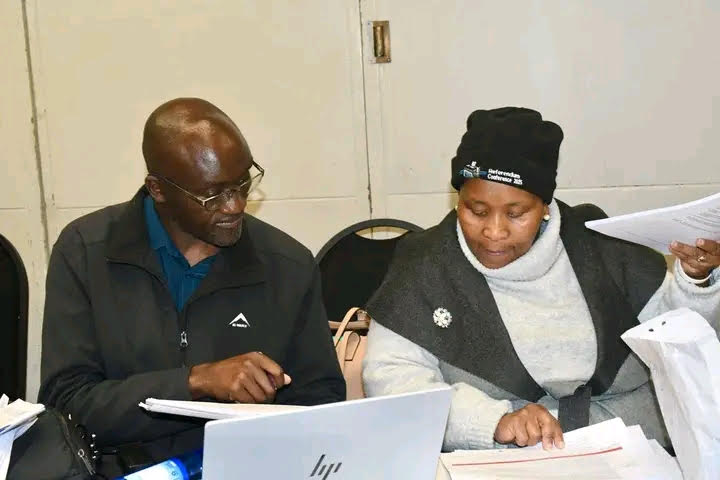
The workshop brought together political stakeholders to discuss ways to strengthen party structures, promote democratic participation and improve political representation in Lesotho.
Ends/TS/tl
