
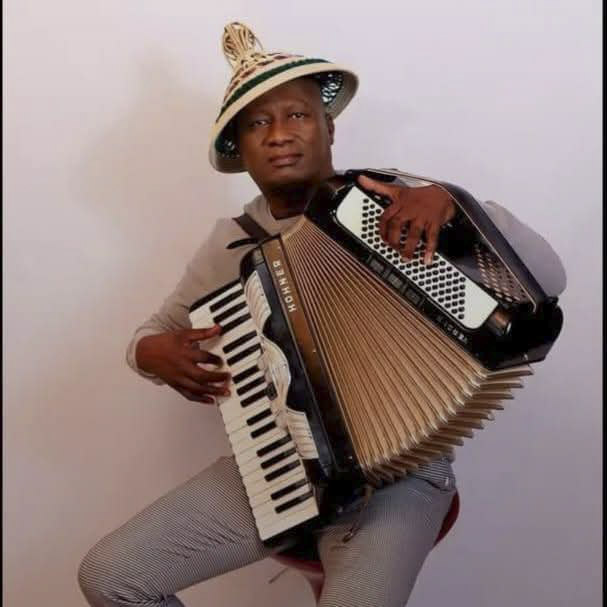
Qacha’s Nek, Aug. 13 — When Lephoi Mohale, better known by his stage name Mants’a, received his first royalties in 2010, he had already spent more than two decades making music.
Mohale started recording in 1987. But Lesotho lacked the recording infrastructure he needed, so he crossed the border into South Africa, where he recorded, built a name for himself and eventually received his first major award.
His first royalties came through the Southern African Music Rights Organisation (SAMRO). “At the time, I didn’t even know they were called royalties,” Mohale recalls.
He had assumed that radio stations paid artists directly. He even followed up with Radio Lesotho, believing that was where payment for his music would come from.
It was only later that he learned that the money was collected through a collective organisation representing creators.
The discovery brought mixed emotions. “It was painful that I earned from another country, but I was happy to get something from my work,” he says.
Mohale says he had wondered why such a system did not exist in Lesotho and followed developments in the country. Now, decades after he first entered the recording industry, he has registered with the Lesotho Copyright Society of Authors and Artists (LESCOSAA), established in 2021.
For him, registering was not difficult. “It was very easy for me because I have been longing for this since forever and I am happy about the establishment of such an institution,” he says. Mohale now encourages other artists to register.
When he meets an artist who is not registered, he says he pushes them to do so because he has already experienced the benefit of being part of a collecting organisation.
His concern is not only about what an artist earns while they are still performing. “Artists get tired,” he says. “One might think he or she earns enough through bookings, but what will happen when there is no more energy to record or even perform?” he asks.
For Mohale, royalties offer the possibility of earning from music beyond the years when an artist can continue performing. He also points to what happens after an artist dies.
Even then, he says, children can continue to benefit from their parent’s creative work. That is why he continues encouraging artists to understand the business side of their music.
Mohale’s experience with SAMRO gave him a practical understanding of what a collecting organisation can do. But some artists in Lesotho are still trying to understand whether such a system exists at all.
Gospel singer Khothalang Paki says he is not registered with LESCOSAA because he was unaware of the organisation. “I would really love to earn from my music apart from YouTube,” he says.
At New Central Hotel, owner ’Mamots’elisi Shata gives a similar explanation for why her establishment has not registered with LESCOSAA. She says she was unaware of the organisation. “Maybe they are yet to come to my establishment and it’s only then that I will know what to do,” she says.
For Thesele Rajoale, known as DJ Thez, the situation is different. He has already paid for a LESCOSAA licence. Rajoale says he paid the annual M2,300 licence fee after receiving advice from colleagues and amid information that the police would soon enforce the law against commercial music users without a licence.
“I understand the importance of this licence and encourage other commercial music users to pay as well,” he says.
He also encourages fellow artists to register. Registering, he says, can help artists continue benefiting from their work.
In Qacha’sNek, however, the licensing question looks different from the perspective of a community broadcaster.
Thapelo Rantle, station manager of Souru FM, says music is central to the station’s work.
“Music is very important to our radio station because it is one of the tools we use to attract and connect with our listeners,” he says.
“Music entertains people and we are also able to promote and support local artists.”
The station uses music to attract listeners, while also giving local artists a platform through interviews and promotion of their shows. But Souru FM has not obtained a licence from LESCOSAA.
Rantle says the station has not signed documentation authorising it to play protected music. “Our station doesn’t have a licence to this day,” he says.
He says the station’s understanding of the requirements was limited.
Part of the confusion, he says, came from the station’s existing registration with the Lesotho Communications Authority (LCA). “Our understanding of protected music was that it was not supposed to be played on our programmes based on the law, but with our limited understanding we thought that because we were registered with the LCA, that meant we could play any music we came across.”
Rantle says no one had come to the station to explain the need for a licence and its requirements. There is also an economic concern.
Community radio stations are not supposed to operate for profit, he says, while licence fees and other operational costs can be expensive and the stations can take time to generate enough revenue to cover their operations.
Rantle believes LESCOSAA could work with community broadcasters in a way that recognises what each side contributes.
“When we play local artists’ music, we give them interviews, we promote their shows, they benefit from that and we also benefit from playing music by local artists because Basotho like them,” he says.
For Rantle, community radio is not simply another commercial user of music. The stations provide exposure to artists and connect them with audiences, while the music helps attract listeners.
He believes the two sides could find a model that protects artists’ rights while recognising the circumstances under which community broadcasters operate.
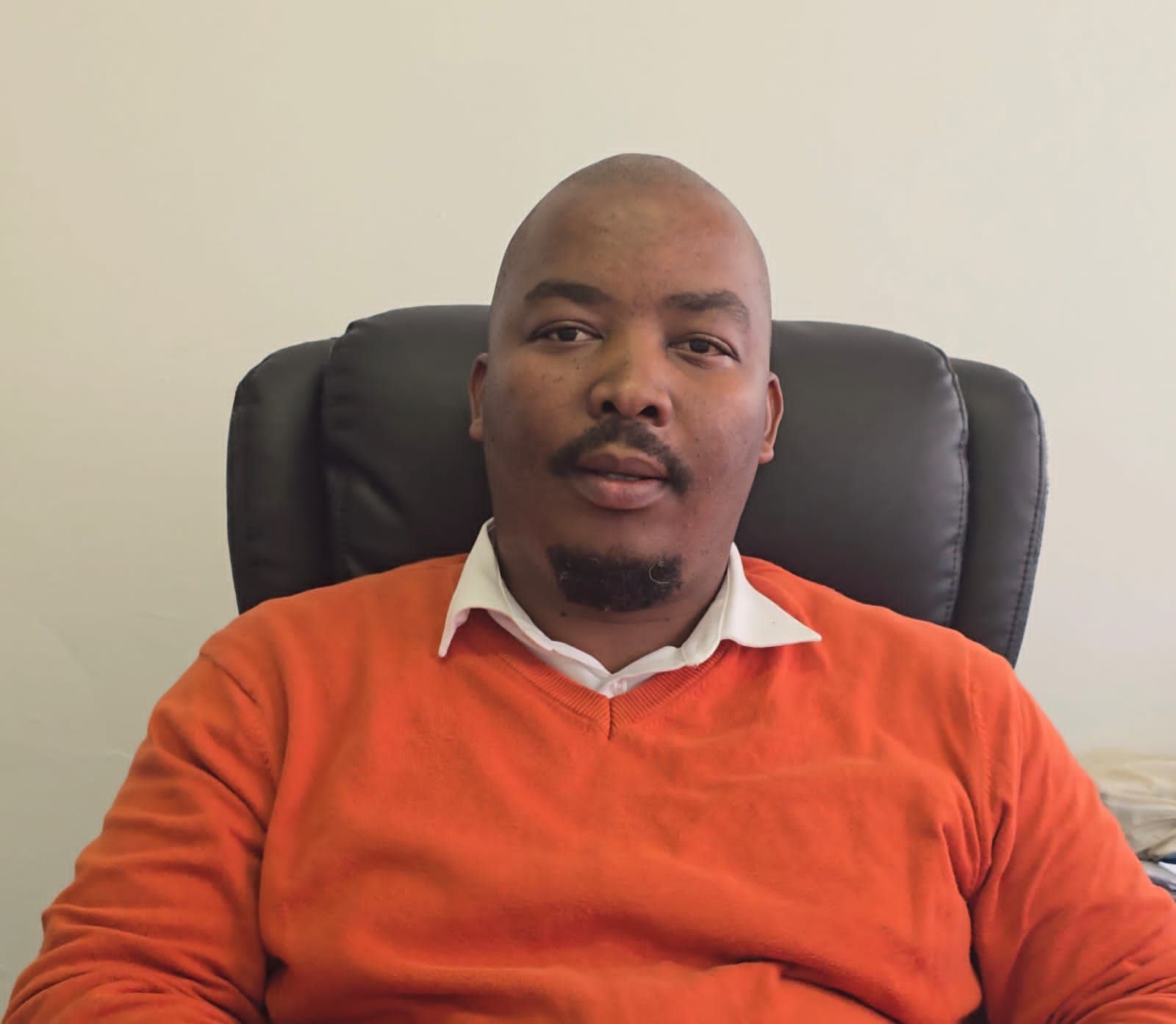
LESCOSAA Chief Executive Officer (CEO) Advocate Maema Chaka says copyright is part of intellectual property that protects creations of the mind, including books, art and music.
Copyright gives the owner control over how their work is used, he says, and people who want to reproduce or commercially use protected work may need permission and must pay where required.
But an individual artist cannot realistically approach every radio station, hotel, restaurant or other business using their music to negotiate a licence. Neither can every business locate and negotiate separately with every songwriter, performer, producer and publisher whose work it uses.
That is where a collective management organisation comes in.
Advocate Chaka says LESCOSAA acts as a bridge between creators and users of protected works. “Artists who register with LESCOSAA give the organisation a mandate to manage their rights. Businesses and other commercial users obtain licences to use protected works, while LESCOSAA collects payments and distributes royalties to the rights holders,” he explains.
African Regional Intellectual Property Organization (ARIPO) describes collective management organisations in similar terms, saying they link creative artists with users of their works and can license use, monitor where and by whom works are used, negotiate tariffs, collect royalties and distribute them to rights holders.
Advocate Chaka says LESCOSAA is a membership-based organisation mandated by artists to license, collect and distribute royalties. But the organisation is still at the beginning of that process.
About 220 artists have registered with LESCOSAA, Advocate Chaka says, against an estimated 2,000 artists in Lesotho.
At the time of reporting, none of the registered artists had received royalties from LESCOSAA. Advocate Chaka says this is because the organisation only began licensing in January 2025 and was still in the collection stage.
The next stage involves matching and calculating the money collected according to the organisation’s distribution rules. “Should things go according to plan, by the end of September we will be done with collection for 2025,” he says.
The fact that registered artists had not yet received royalties, he says, should therefore be understood in the context of the stage at which the organisation was operating.
“Licensing is continuing, and licensed businesses are required to renew their licences annually,” he said.
Once money is collected, Chaka says, users who have been licensed have an obligation to provide reports showing what music they have used. LESCOSAA monitors usage and applies its distribution rules.
When a song is registered, he said the people who contributed to it must have agreed on how royalties will be divided.
Advocate Chaka gives the example of a song that generates M100. Part of the money could go to the people responsible for the lyrics and composition and the publisher, while another portion could go to producers and performers, depending on the rights involved. “When people come to register a song with us, they come having already agreed on royalty distributions,” he says.
But the system also has to deal with music whose creators have not registered. Advocate Chaka says if LESCOSAA identifies that an artist’s music has generated money but the artist is not registered, the organisation cannot immediately allocate the money to that person.
“Instead, the money is held while the artist is informed and allowed to register. The artist has three years to come forward after being informed. If the artist does not register within that period, the money can eventually be used for the advancement of the creative industry,” Advocate Chaka said.
To register with LESCOSAA, he said an artist needs an identity document, banking details, information about their songs and everyone who played a role in creating the songs, next-of-kin details and a once-off M100 registration fee.
Advocate Chaka revealed that the organisation has faced resistance from both artists and businesses. For artists, he says, part of the problem is a lack of understanding and trust. Some have been asking for royalties for years, he says, and are now reluctant to believe that a system will finally deliver them. “They have been asking to earn royalties since forever and they are reluctant as they don’t believe it will finally happen,” he says.
He said LESCOSAA is therefore conducting awareness campaigns and looking for other ways of reaching artists and other stakeholders. Advocate Chaka says artists who do not register will not be able to benefit directly from royalties collected for their works.
Some artists, he says, may currently be earning from bookings and performances and may therefore not feel an immediate need to register. But that income may not continue indefinitely. “What will happen if such no longer comes yet their music keeps being played?” he asks.
Royalties, he says, can provide another form of income, particularly where songs continue to be used over generations. The organisation also says membership can bring other benefits, including promotion of artists and opportunities that LESCOSAA can help facilitate.
On the other side of the system are the businesses and organisations that use music. Advocate Chaka says licensing has been met with resistance partly because commercial users were not routinely paying for music use for many years. “Since 1989, people were not paying, so now there is enforcement of law,” he says.
“People question why now, especially when they have to pay but didn’t change anything in their business.”
He says licensing is therefore slow because some businesses are resistant to paying.
The legal framework behind the licensing system dates back to the Copyright Order of 1989, while Copyright Regulations were issued in 2015. The 2015 regulations were made under the 1989 Order and include provisions dealing with licensing bodies and copyright administration.
Advocate Chaka says the law now needs to be updated, particularly to address the exploitation of creative works in the digital environment.
Music consumption has changed significantly since 1989. Songs can now be streamed, shared and accessed across borders without the creator and user ever meeting.
The legal and administrative systems that identify the rights holder and collect payment therefore have to operate across an increasingly complicated chain of creators, platforms, broadcasters and other users.
The challenge is not unique to Lesotho.
ARIPO’s own work on copyright identifies updating national laws, improving Collective Management Organisations (CMOs), strengthening enforcement and developing better copyright data as regional priorities. Its copyright framework also recognises the role of collective management organisations in licensing, collecting and distributing royalties.
An ARIPO survey of CMOs in member states has also documented their growth across the region and their role in negotiating, collecting and distributing royalties. Meanwhile, the economic value of copyright-protected music is growing rapidly in other parts of Africa and globally.
According to the International Confederation of Societies of Authors and Composers (CISAC), creator royalty collections across Africa reached €90 million in 2024, an increase of 14.2 percent from the previous year. Broadcast and live performance were among the main drivers, while music accounted for nearly €80 million of the continent’s collections.
Globally, creator royalty collections reached €13.97 billion in 2024, with music accounting for €12.59 billion. Digital collections across all repertoires exceeded €5 billion for the first time.
Streaming has also changed the way African music reaches audiences outside its home markets. Spotify says more than half of the artists who generated at least US$1,000 in royalties on its platform in 2024 earned the majority of their royalties from listeners outside their home country. The company says it paid more than US$10 billion to the music industry globally in 2024.
South African music offers one illustration of how far a locally rooted sound can travel. Spotify reported that Amapiano generated more than 1.4 billion streams on the platform in 2023, with 55 percent of the music being played from outside South Africa.
In Lesotho, the scale is much smaller. But streaming and digital distribution have created the same problem of identifying who should benefit when music travels beyond its original market.
Advocate Chaka argues that the answer requires a change in how the creative industry is viewed. Artists, he says, need to learn the business side of their profession and treat royalties as part of their income. “Royalties are part of income as an artist,” he says, urging artists to take advantage of the opportunity to earn from their creativity.
He also argues that the creative sector should be treated as a business rather than something pursued only for fun.
He points to the United States, Hollywood, Nigeria’s Nollywood and South Africa as examples of the economic activity that can develop around creative work. Nigeria’s film and music industries, he says, demonstrate how creative production can contribute to economic activity and create employment.
He says Lesotho’s education system should also identify and support children with creative talent rather than treating academic achievement as the only path to a worthwhile future.
Government, businesses and other stakeholders, he argues, should recognise the economic potential of music, film, art and other creative industries. But before that potential can be measured, he said the basic machinery has to work.
“For the system to work, artists need to register their works, businesses and broadcasters need to obtain licences where required, and music usage needs to be accurately reported so that creators and rights holders can be identified. Only then can money be collected and, ultimately, distributed to those entitled to receive it,” he said.
Lesotho has begun putting in place the machinery through which copyright can generate income for creators.
Artists are registering, LESCOSAA is licensing music users and collecting royalties, and the organisation is preparing for their eventual distribution. But the system will ultimately be judged not by the number of registrations or licences it records, but by whether it can accurately connect music to its creators and ensure that money collected for their work reaches them.
That is the next test for Lesotho’s copyright system: not simply protecting creative work, but making that protection work for the people who create it.
Ends/MAPM
