
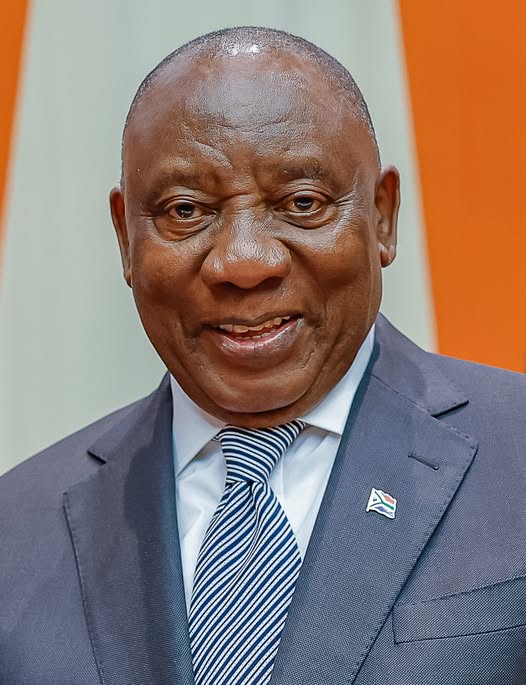
Maseru, June 05 — South African President Cyril Ramaphosa has rejected claims that South Africans are inherently xenophobic, arguing instead that growing public concerns over migration should be addressed through regional cooperation and sustainable economic development.
The president’s remarks come amid renewed tensions over immigration in South Africa (SA), where anti-immigrant protests and calls for stricter border controls have intensified in recent months.
Speaking during a joint media briefing with Kenyan President William Ruto, Ramaphosa said South Africans are not opposed to living alongside people from other African countries.
“I explained that South Africans are not xenophobic. South Africans are Africans. They want to live with other Africans peacefully, and our people are calling on us as leaders to resolve the many challenges that are brought to bear by the challenge of migration,” he said.
Ramaphosa further called for African leaders to work together in addressing the economic and social factors that contribute to migration across the continent. He emphasized the need for what he described as “African solutions for African problems,” saying that job creation, economic growth and political stability in African countries could help reduce migration pressures.
The issue remains highly sensitive in SA, which hosts millions of migrants from neighbouring countries and elsewhere on the continent. While many migrants contribute significantly to the economy through employment, entrepreneurship and skills, concerns over unemployment, crime and competition for limited resources have fuelled anti-immigrant sentiment in some communities.
For Lesotho, developments in SA are of particular importance. SA remains the primary destination for Basotho migrant workers, students and business people. Thousands of Basotho cross the border daily for employment, education, healthcare and trade, while many families in Lesotho depend on income earned by relatives working in SA.
Over the years, Basotho nationals have occasionally been affected by xenophobic violence and anti-immigrant operations in SA, despite the close historical, economic and cultural ties between the two countries. Incidents of unrest have often created fear among migrant communities and raised concerns about the safety of foreign nationals living and working in South Africa.
Analysts say the debate surrounding migration in South Africa reflects broader challenges facing the region, including high unemployment, poverty, inequality and weak economic growth. They argue that addressing these underlying issues will require stronger cooperation among Southern African countries, including efforts to create jobs and economic opportunities closer to home.
Ends/MP/tl
