
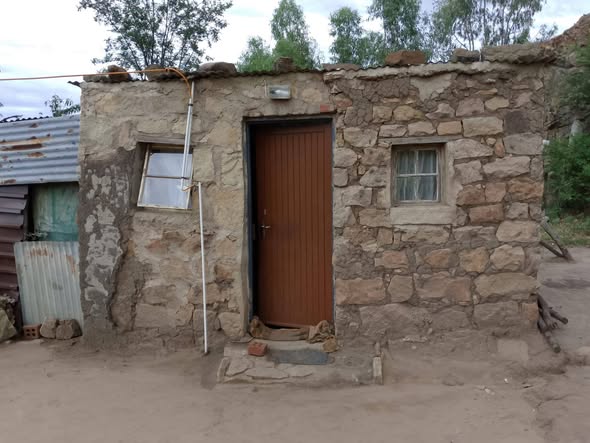
Maseru, June 07 — Ms. Matlotliso Khats’eane, 45, is an unemployed mother at Ha Jimisi, Mazenod surviving on traditional beer sales and laundry work.
She cares for her 18 year-old daughter, who cannot walk or speak. The government’s Disability Grant is only M750 a quarter, which barely covers food, shelter and diapers for her child.
At 45, the lines on her face told a story of hardship and devotion. She took a deep breath, wiping the sweat from her brow with the back of her hand, before turning her attention to the corner of the room where her 18 year old daughter lay.
“My beautiful girl,” Ms. Khats’eane whispered, her voice a mix of profound sorrow and tender love.
The story of her daughter was a tragedy that unfolded in slow motion. She vividly remembered the day of delivery.
The baby had arrived without a single cry, though she seemed physically healthy enough to be discharged from the hospital. Trusting the professionals, the young mother took her baby home. But at the six-month routine check-up, she voiced her growing concern to the nurses.
“When she cries, her voice doesn’t come out,” she had pleaded. But the nurses only calmed her down, assuring her that nothing seemed to be a problem.
But mother’s intuition is a fierce, unrelenting thing and Ms. Khats’eane’s unease only grew.
When her beautiful little girl reached the age where she was supposed to discover the world on two feet, a terrifying regression occurred. Instead of taking her first steps, the child shrunk back into the physical and cognitive state of an infant. From that exact moment, the little girl lost all ability to walk and speak.
The tragedy fractured the foundations of her home. Matlotliso was married at the time, but as the reality of their child’s irreversible regression settled in, her husband packed his bags and left. He could not bear the burden, but for her, walking away was never an option.
Since that day, it has been a relentless battle for survival.
Having lost her parents and siblings, Matlotliso relies entirely on her elderly maternal aunt and her younger daughter, now 13. Together, the three women do everything in their power to keep their tiny family afloat.
Matlotliso has learned to accept her circumstances, but the acceptance does not completely numb the pain.
Her heart breaks every time she watches her daughter’s age mates put on their uniforms, laughing and playing on their way to school, well aware that her daughter will never reach those milestones.
She desperately tried to enroll her child into special schools, hoping to give her a chance to learn and socialize. Her hopes were dashed when a nearby school turned them away, explaining that they only accepted students who could walk, despite any physical or cognitive disabilities they might have.
“If only she could walk, the speech impairment would not have been such an insurmountable barrier to her education,” she wispered.
Caring for a completely dependent young woman requires resources that an unemployed mother simply does not have. She must purchase at least two large packets of disposable nappies every single month.
When her daughter has a running tummy, that number jumps to three. Added to the cost of ointments to prevent bed sores, the financial strain is crushing.
In the 18 years of her daughter’s disability, she received nappies only twice from the ministry and has since been told that they are not available.
On hot days, Ms. Khats’eane’s routine brings a small, bittersweet moment of relief. She carefully lifts her daughter into a wheelchair given to her by her aunt.
However, because of her daughter’s physical condition where she cannot sit on her own, she has to wedge pillows and use her own body to prop her up, ensuring her daughter can feel the warmth of the sun and catch a glimpse of the world outside their leaky doors.
As she returned to her brewing pot, washing a load of laundry by hand in between stirs, she held on to a quiet, stubborn resilience.
She had no one else to lean on, no extra hands to help and very little money, but her love for her daughter remained as boundless as the sky. She would brew her beer, she would scrub the clothes and she would move mountains to ensure her daughter was cared for, loved and never alone.
Moreover, their living situation compounds the daily stress. The family is crammed into a tiny, dilapidated one-room house. The roof is so severely damaged that whenever it rains, the water leaks straight inside, destroying what little they have and threatening their health.
Her primary source of state support is a Disability Grant from the Ministry of Social Development, but it only amounts to M750 per quarter.
The amount falls woefully short of covering her daughter’s basic survival needs, leaving the family desperate for steady food supplies, more disposable nappies and a secure, waterproof roof over their heads.
On the other hand, Ministry of Social Development Public Relations Ms. Mpho Makhetha clarified that the government uses a standard baseline for disability grants, meaning, the amount of money a beneficiary receives does not depend on the gravity or severity of their disability.
However, she explained that if a person requires a caretaker, an extra M450 is added to the grant as “granting aid” to specifically pay the caretaker.
She also stated that disposable nappies are provided as part of the disability package for individuals who have that specific need.
She emphasized that food packages are strictly not given to people who are already receiving the monetary disability grant.
Mrs.Sophie Ralejoe, acting District Disaster Manager stated that the agency is currently conducting assessments for individuals affected by the recent heavy rains and strong winds. She confirmed that this specific family was among those assessed on Friday.
According to Mrs. Ralejoe, once the data collection process is complete, the DMA will review the findings to prioritize and identify those requiring immediate, urgent attention.
Furthermore, she emphasized that this official process should not discourage members of the public from helping. She invited all Basotho of goodwill who wish to assist to approach the DMA office directly, ensuring a coordinated and collaborative effort to support the vulnerable families.
Community Councilor Mrs. ‘Madaniel Phenethi provided a sail to cover the Khats’eane family’s bed and dug furrows to redirect floodwaters away from their home. She urgently appealed to the central government to build a larger house for the family, noting that recent heavy rains have drastically exacerbated the vulnerability of many residents in the area.
Earlier Minister of Social Development Mr. Pitso Lesaoana told the National Assembly that his ministry will increase number of disability grant beneficiaries from 2000 to 4904 in this financial year, requesting the august to allocate M1,480,878,657.00.
Meanwhile the Convention on the Rights of Persons with Disabilities (CRPD), Article 9, mandates the identification and elimination of obstacles in buildings, roads, housing, schools, medical facilities and workplaces, both in urban and rural areas.
It states that governments and private entities must make necessary and appropriate modifications and adjustments provided they do not impose a “disproportionate or undue burden”, to ensure individuals with disabilities enjoy their human rights equally.
Ha Jimisi is located less than 20km from Maseru town.
Ends/AT/tl
