
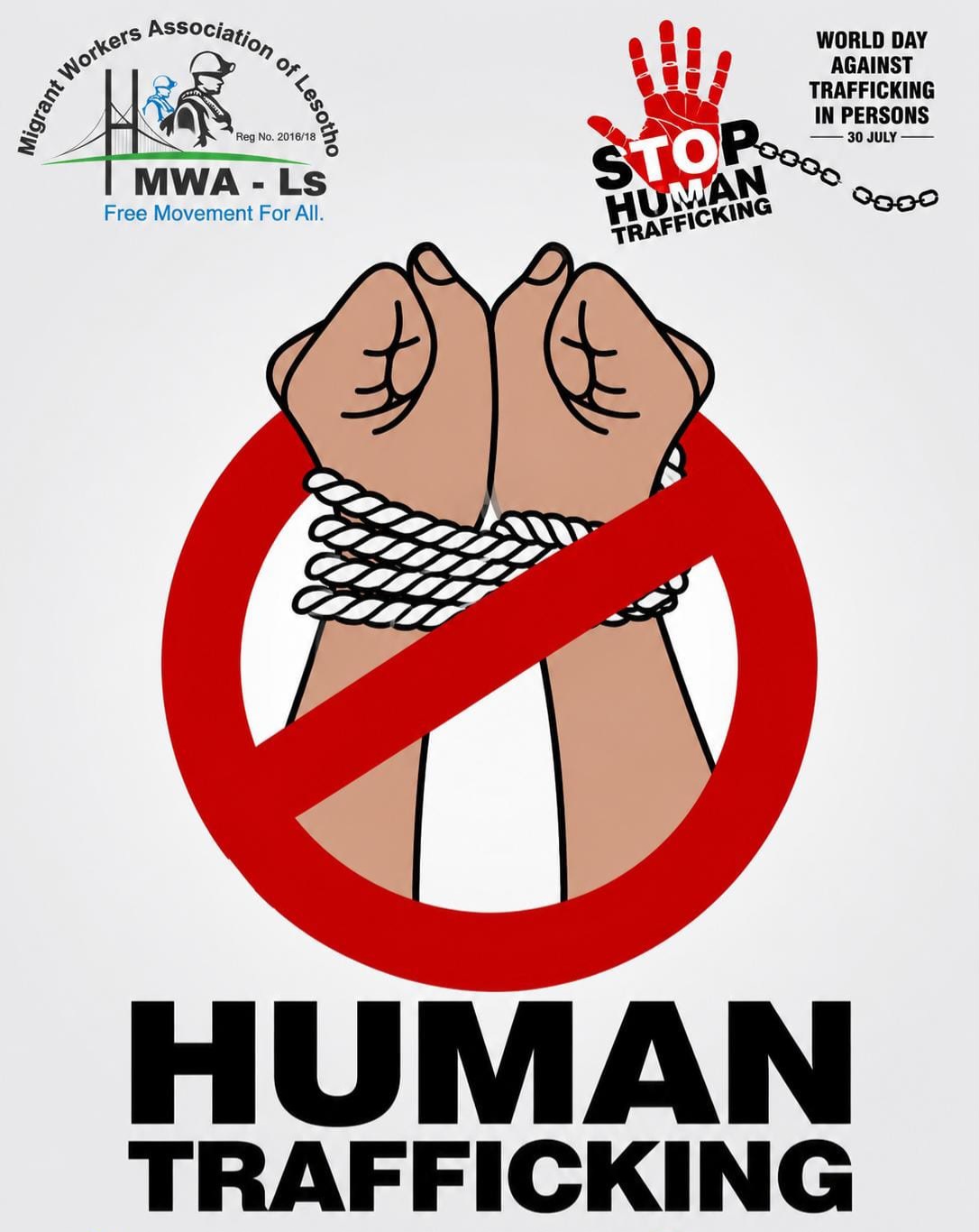
Maseru, July 30 — Basotho seeking employment abroad have been urged to exercise caution as human traffickers increasingly use fake job offers on social media and through recruitment agencies to lure victims.
Speaking with the Agency on the sidelines of the World Day Against Trafficking in Persons commemoration, Executive Director of the Migrant Workers Association of Lesotho (MWA-Ls) Mr. Lerato Nkhets’e said Lesotho remains among countries affected by human trafficking, with many victims deceived by promises of well-paying jobs overseas.
Mr. Nkhets’e said traffickers advertise attractive employment opportunities with free transportation and lucrative salaries, only for victims to discover the offers are fraudulent after leaving the country.
He said while some operate through social media platforms, others hide behind recruitment agencies that claim to place Basotho in jobs abroad.
According to Mr. Nkhets’e, domestic workers are among the most vulnerable groups targeted.
He said women and girls are frequently lured with promises of domestic work or modelling opportunities, while men are promised placements in football clubs or construction jobs, only to end up in exploitative conditions such as herding livestock on remote farms.
He also warned of a growing trend where Basotho are promised English teaching jobs in China or nursing opportunities in Canada, but instead become victims of trafficking.
“They use online application forms written in simple English to make it easy for people to apply. The contracts often promise attractive salaries and benefits, convincing victims that the opportunities are genuine,” Mr. Nkhets’e said.
Mr. Nkhets’e cautioned that the search for greener pastures can become a trap if people fail to verify employment offers.
He encouraged Basotho to consult MWA-Ls before signing contracts or travelling abroad, noting the association offers free consultation services to assess the legitimacy of overseas employment.
While acknowledging the government has enacted laws to combat human trafficking, Mr. Nkhets’e said legislation alone is not enough.
“We need continuous education and awareness so that people understand the warning signs of trafficking and know how to protect themselves,” he said.
He said the association conducts pre-departure training, holds awareness gatherings in villages, works with principal chiefs and uses radio programmes to educate communities about trafficking dangers and safe migration.
World Day Against Trafficking in Persons is observed annually on 30 July to raise awareness about human trafficking and promote the protection of victims.
This year’s commemoration highlights the growing use of deceptive online recruitment and fake employment opportunities by traffickers, underscoring the need for stronger public awareness, prevention and international cooperation to combat the crime.
ENDS/TS/tl
