
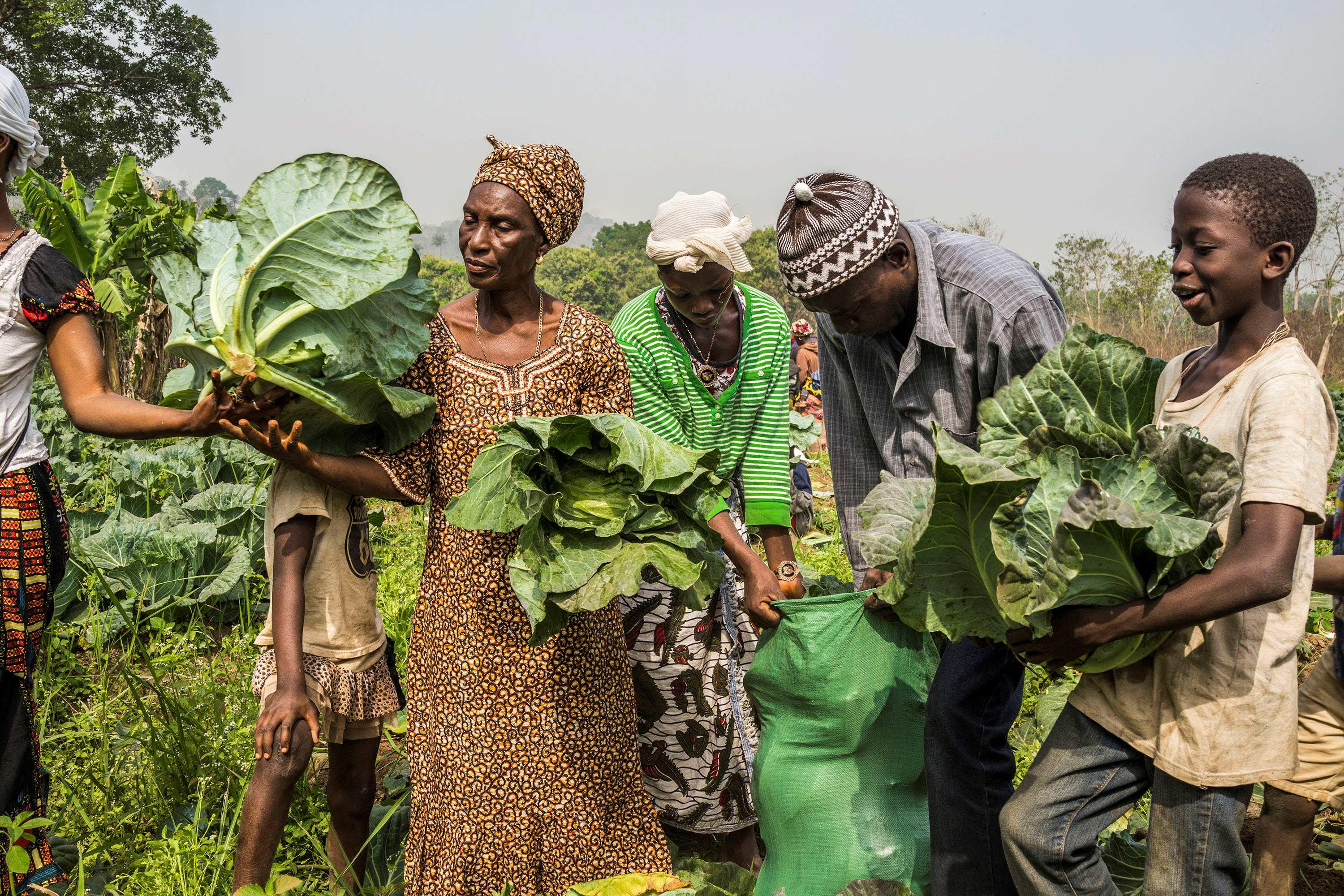
Maseru, Oct.16 — Today, the Southern African Development Community (SADC) has joined the global community in commemorating World Food Day 2025 under the theme “Hand in Hand for Better Foods and a Better Future.”
This theme is a powerful reminder that achieving food and nutrition security requires collective action, cross-sectoral partnerships and a shared vision for a prosperous and resilient future. Food and nutrition security remain central to SADC’s regional integration agenda.
The SADC Secretariat Mr. Elias Magosi said the Secretariat continues to support Member States in building resilient agrifood systems by strengthening policies that promote equitable access to land, water, forests, fisheries, livestock, and agricultural inputs. “We also advance nutrition-sensitive approaches that address the needs of women, infants and young children, youth, smallholders, and vulnerable populations”.
He said despite these efforts, food and nutritional insecurity across Southern Africa remains unacceptably high. According to the 2024 SADC State of Food and Nutrition Security Report, an estimated 67.7 million people across 16 Member States were food insecure during the 2024–2025 period. Child malnutrition remains a serious concern, with approximately 23 million children under five estimated to be stunted, and 49 million affected by child food poverty, meaning they lack access to the diverse food groups necessary for optimal growth.
To address these challenges, the SADC Secretariat, with support from its partners, continues to implement strategic interventions to strengthen agrifood systems. The EUR 10 million European Union-funded project “Support Towards the Operationalization of the SADC Regional Agricultural Policy” (STOSAR II), implemented in partnership with the Food and Agriculture Organization of the United Nations (FAO) and SADC Member States, has been instrumental in advancing these efforts and accelerating the implementation of the SADC Regional Agricultural Policy (RAP).
Phase I of the STOSAR Project laid critical foundations by supporting the development of harmonized regional policy frameworks, strengthening agricultural information systems, particularly through the SADC Agricultural Information Management System (AIMS), and improving institutional coordination.
It also enhanced productivity in both crop and livestock sectors through improved plant and animal health management, disease and pest surveillance, promotion of safe trade, and support for food fortification strategies and policies. . .
Ends
