
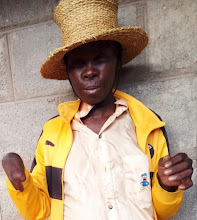
Qacha’s Nek, Jan. 26 — Accused of livestock theft nearly three decades ago, Molahlehi Pule (49) of Ha Ranatlaila has spent most of his adult life battling disability, poverty and neglect after a brutal public arrest left his right hand permanently damaged.
At the time, Pule was a herdboy, relying entirely on livestock for survival. When his employer’s animals went missing, he became the prime suspect.
Instead of receiving protection, he says he was subjected to mob punishment.
“They arrested me publicly and tortured me by breaking my right hand with handcuffs,” Pule told the Agency.
With no legal knowledge or financial means, Pule never filed a police case. He only sought treatment at a local health centre, unaware of his right to report the abuse.
“I was herding at Semphethe. I did not know I could report this to the police,” he said.
In 2020, his life took another devastating turn when he was shot at a cattle post by suspected stock thieves, sustaining a back injury that now requires regular medical check-up.
“Herding is all I know. After the gun injury, I can not do it anymore. Food is a struggle. Sometimes my sister helps, sometimes I do not eat,” he said.
The people (then bosses) involved in his arrest have since passed away, without ever assisting him.
“They never did anything to help me, even while they were alive,” Pule said.
Ha Ranatlaila councillor, ’Marorisang Lenkoane confirmed Pule’s daily struggles.
“He relies on his nephew for food. If he cannot reach his sister’s place before the child leaves for school, he waits until the child comes back to eat. He struggles a lot and needs help because he can no longer work for himself as he used to,” Lenkoane said.
Repeated attempts to access social support have so far failed. Pule has applied to the Department of Social Development, but without a file number, follow-up is difficult.
Officials say he must present himself to a local auxiliary social worker to avoid duplication and begin the assessment process for eligibility for social grants.
Pule’s experience highlights the risks faced by herders in districts like Qacha’s Nek, where livestock theft remains a problem.
According to a study by Kynoch and Ulicki (2017), as many as 85 percent of stockowners in border villages reported losing animals to thieves, often targeting herders at isolated cattle posts.
The research notes that stock theft not only strips families of income and food security but also exposes herders to physical abuse and community suspicion.
The theft of livestock has broader economic impacts, reducing wool and mohair production and deepening poverty in affected households, particularly in mountainous rural districts.
A University of Stellenbosch working paper highlights that stolen livestock directly contributes to household food insecurity, limiting the ability to sell or consume livestock products.
For Pule, the consequences went far beyond stolen animals. Allegations surrounding stock theft left him injured, unemployed and dependent on relatives for survival.
His story underscores the urgent need for better protection for herders, improved policing of stock theft, and faster access to social support in rural Lesotho.
Ends/MM/tl
