
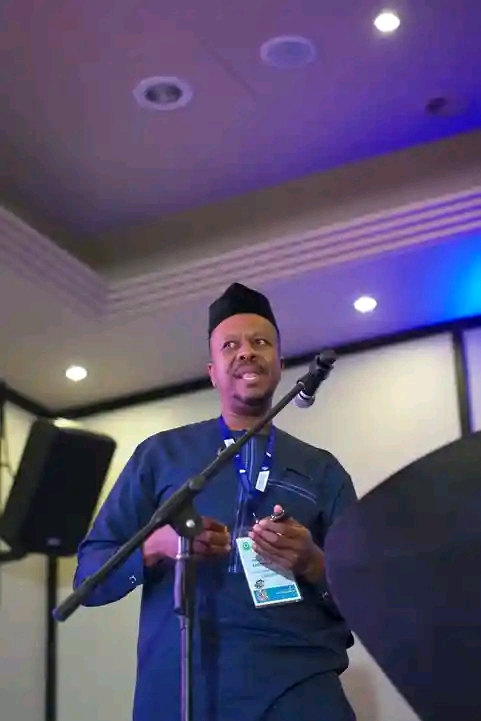
Maseru, June 16 — Assessment in Africa will fail learners until it stops copying colonial blueprints and starts reflecting the child in a rural classroom, Professor Paseka Mosia told delegates at the 15th SAAEA conference in Maseru.
“True access is only attained when a student can successfully communicate what they know,” he said.
Speaking under the theme Advancing Responsive Educational Assessments for Diverse Learners’ Needs in the Digital Era, Professor Mosia challenged the region to adopt Culturally Responsive and Equity-Driven Assessment.
The framework, he argued, must align tests with local realities and identities instead of inherited colonial frameworks that ignore Basotho, rural and disabled learners.
Prof Sarah Howie, Director at Stellenbosch University and member of the Academy of Science of South Africa, backed the call with data from more than 80 large-scale assessment studies.
“Tests must reflect local realities,” Prof Howie said. “If they do not, we fail rural, poor and disabled children. Identity and power in the curriculum must be questioned who decides what knowledge is valued,”
Prof Mosia cited Lesotho studies showing assessment drives education, meaning teachers teach to the test.
“If the test ignores rural life, then rural life is ignored in class,” he warned. With Sub-Saharan Africa home to 30% of the world’s 258 million out-of-school children, he said COVID-19 setbacks make 2030 milestones urgent.
Prof Mosia also stressed inclusion beyond enrollment. Getting children into school is not enough, he argued. He called for formalising sign language teaching so deaf learners can also “communicate what they know”.
As Maseru hosted the regional debate, Dr. Thilala summed up the mood, “If we don’t govern exams and budgets right, who will trust us to educate their children” Prof Mosia’s message now faces that same test if assessment cannot speak the learner’s language, culture and reality, then it is not assessment it is exclusion.
But reform, another panel warned, needs money and strong systems. Clementine Tsumis-Garises, Namibia’s Director of National Examinations and Assessments with 40 years in quality assurance, said governance and funding cannot be separated from fairness.
“You can not assess learners if schools have no desks, no toilets, no teachers,” Tsumis-Garises said. “Leading for quality and resource stewardship must be the foundation. Good corporate governance is integral to education quality.”
ENDS/TS/tl
