
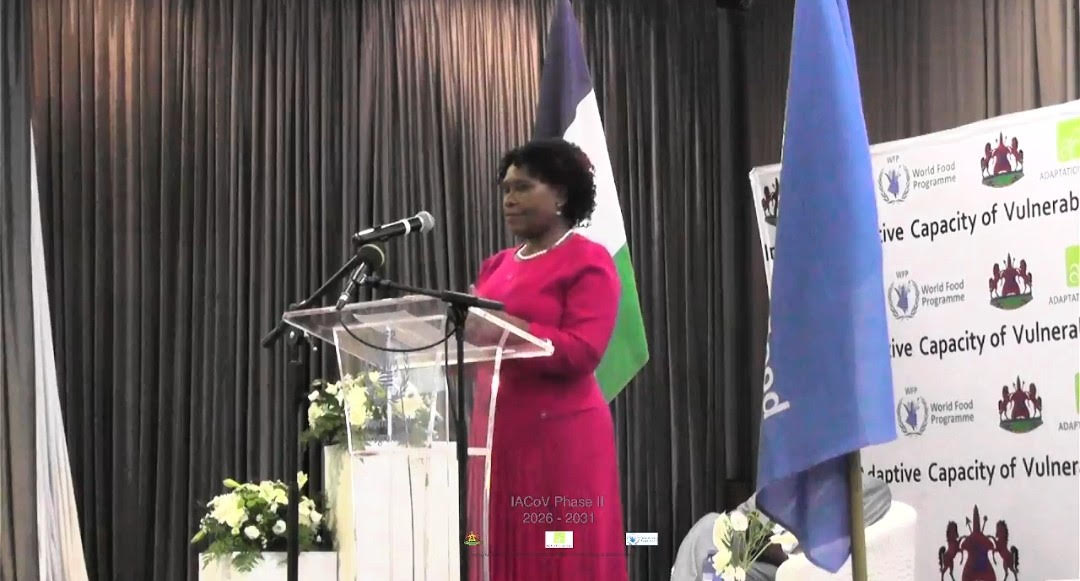
Maseru, Feb. 23 — Experts have called for the adoption of an integrated resource management model to address the growing nutrition and food security challenges facing Lesotho.
Speaking during discussions on sustainable planning, for the successful carryout of the Improving Adaptive Capacity of Vulnerable and Food Insecure Populations in Lesotho (IACoV II), the Principal Secretary for the Ministry of Environment and Forestry Mrs. ‘Maphakamile Xingwana emphasized that water, land, biodiversity and food systems are deeply interconnected and the absence of proper water and land management are directly undermining agricultural productivity, household food availability and ultimately nutrition outcomes.
She highlighted that poor water planning leads to declining crop yields, loss of livestock productivity and drying wetlands all of which reduce access to diverse and nutritious foods and communities are increasingly competing for scarce resources such as water for irrigation, fish stocks and arable land, intensifying food insecurity, particularly in rural areas.
‘Without integrated planning, we cannot talk about food security or improved nutrition. Water management, land restoration and biodiversity protection are the foundation of a healthy food system,’ she stressed.
Mrs. Xingwana warned that escalating social pressures, including gender-based violence, are often aggravated by food scarcity and economic stress within households and stressed that strengthening food systems through sustainable resource management can help reduce these social tensions.
Meanwhile , Mrs. Xingwana concluded that protecting natural resources is not only an environmental priority but a critical step toward ensuring adequate, nutritious food for all Basotho and preventing long-term economic decline.
The proposed integrated model calls for stronger coordination between ministries responsible for water, land, agriculture and environment to ensure policies support climate-resilient agriculture, soil conservation, wetland restoration and equitable land access.
By aligning resource management with nutrition-sensitive agriculture and food security strategies, Lesotho can improve resilience to climate change, enhance agricultural productivity and secure sustainable livelihoods.
Ends/NT/tl
