
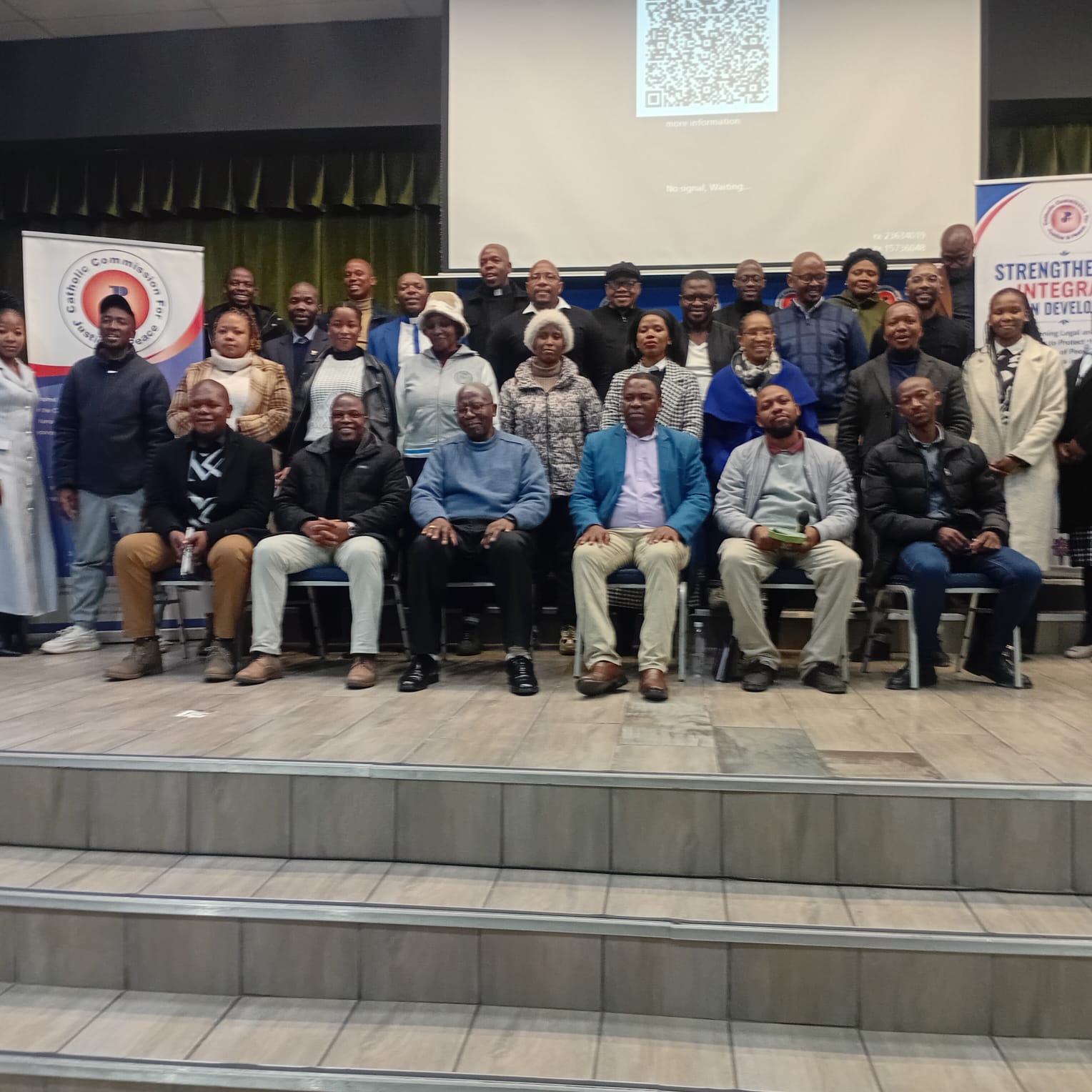
Maseru, June 24 — Parliamentary Chair of Chairs, Mr. Mokhothu Makhalanyane, has warned that mental health in Lesotho has reached a crisis stage, stressing that meaningful progress will remain elusive without strong political commitment. Makhalanyane made the remarks during a panel discussion on the legal aspects of mental health at a national dialogue hosted by the Catholic Commission for Justice and Peace (CCJP) in Maseru on Wednesday.
He said Lesotho’s mental health laws are outdated and no longer adequately respond to the realities and challenges facing people living with mental illness. According to Makhalanyane, issues that are not prioritised by legislators often struggle to gain sufficient attention in the National Assembly. He noted that mental health is one such issue and requires political will to ensure that appropriate reforms are implemented for the benefit of both the country and those affected by mental health conditions.
He observed that political processes often create competing priorities, resulting in some sectors constantly having to advocate for attention and resources. This, he said, has contributed to the limited political focus on mental health issues.
Makhalanyane further noted that addressing mental health challenges does not necessarily require a massive budget. However, he warned that the cost of responding to the consequences of untreated mental health conditions could be significantly higher if urgent interventions are not undertaken.
He also highlighted the growing burden of non-communicable diseases in Lesotho, cautioning that failure to treat such health concerns as a national priority could lead to a more severe crisis in the future.
Meanwhile, Acting Director of Mental Health, Dr. Thabo Mokhothu, identified the shortage of mental health facilities as one of the major barriers to effective service delivery. He said the lack of adequate infrastructure has placed a significant burden on Mohlomi Hospital, which has long served as the country’s primary referral centre for mental health services.
Despite these challenges, Dr. Mokhothu said efforts are underway to decentralise mental health services and integrate them into the primary health care system to improve access to care across the country.
He added that there is also a need to strengthen the capacity of village health workers through specialised training in mental health care.
Dr.Thobekile Ts’ita of Mohlomi Hospital also pointed to a shortage of specialised mental health professionals as a key challenge facing the sector. However, she noted that the national mental health policy is nearing endorsement, a development expected to strengthen the country’s response to mental health issues.
Dr. Ts’ita further stated that Lesotho lacks comprehensive data on the prevalence of mental health conditions, making evidence-based planning and decision-making difficult.
She acknowledged existing gaps in data collection and presentation but noted that institutions of higher learning are increasingly contributing research and evidence that can support policy development and informed decision-making. The dialogue brought together stakeholders from government, Parliament, civil society organisations, academia, the legal fraternity, development partners, mental health practitioners, the media, and people with lived experience of mental illness to discuss ways of strengthening mental health services and legal protections in Lesotho.
Mental health remains one of the most underfunded and neglected areas of healthcare across Africa despite a growing burden of mental, neurological, and substance-use disorders. The World Health Organization estimates that millions of Africans live with conditions such as depression, anxiety, schizophrenia, bipolar disorder, and substance abuse disorders, yet many never receive treatment.
It is reported that several challenges contribute to the situation. These include a severe shortage of mental health professionals, inadequate mental health facilities, limited funding, outdated legislation, and persistent stigma surrounding mental illness.
In many communities, mental health conditions are still associated with witchcraft, curses, or spiritual causes, discouraging individuals from seeking professional help. Access to services is particularly difficult in rural areas, where specialised mental health facilities are often unavailable.
The COVID-19 pandemic further exposed weaknesses in mental health systems across the continent, increasing cases of depression, anxiety, trauma, and substance abuse while stretching already limited services. In response, many African governments and development partners are advocating for the integration of mental health into primary healthcare systems, the adoption of modern mental health legislation, increased investment in mental health services, and greater involvement of communities and people with lived experience in shaping policies and programmes. Experts increasingly argue that improving mental health is not only a health issue but also a human rights and development imperative, given its impact on education, employment, productivity, family well-being, and social cohesion.
Ends/MP/tl
